The world we live in is controlled by “the prince of the power of the air” (Eph. 2:2). Christians know that Satan influences the moods and outlook of human beings, individually and collectively. Every person has human nature, which is actually the devil’s nature acquired throughout one’s lifetime.
Overcoming human nature is a process that begins by realizing the futility of the world’s ways and one’s own personal conduct and thinking. This understanding is the first step toward repentance—real, lasting change. This transition is always accompanied by an opening of the mind to the truth to which the world has been blinded (II Cor. 4:4).
One of the greatest truths to grasp is that of the true gospel. Jesus Christ preached, “The time is fulfilled, and the Kingdom of God is at hand: repent you and believe the gospel” (Mark 1:15). Repentance and belief are tied together in this pivotal verse. Learning about the dramatic change in how Earth will be governed during the Kingdom and how this will bring peace, abundance and equity to all should inspire us to change our lives so we can be there.
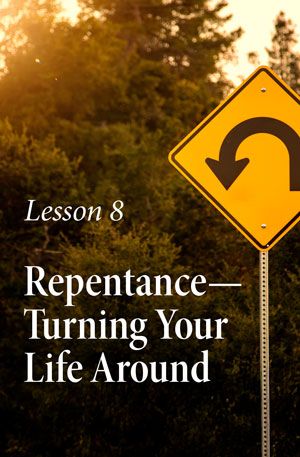
The world does not know what repentance is. Many popular churches teach a form of penitence—usually a form of self-denial accompanied by temporary remorse—instead of real, biblical repentance. Genuine repentance is far different. It encompasses a comprehensive change in the outlook, values and direction of a person’s life. We will look at many of these vital aspects.
Defining Repentance
First, notice the dictionary definition of penitent: “contrite; sorry for sin or fault and disposed to making amends.” The Roman Catholic Church defines it this way: “one who confesses sin and submits to a penance—disciplinary punishment imposed by Church authority.”
Penitence originates from a practice of the Catholic Church, and most dictionary definitions reveal this association. The words penance, penitent or penitence do not appear anywhere in the Bible.
The dictionary defines repent this way: “to feel self-reproach, compunction, or contrition for past conduct; change of one’s mind with regard to past action in consequence of dissatisfaction with it; to feel such sorry for sin or fault as to be disposed to change one’s life for the better.”
This definition is much closer to the meaning of the term used in Scripture. The terms “repent” and “repentance” occur a combined total of 72 times in the Bible.
The Hastings Dictionary of the Bible also contains helpful insights into the subject.
“Repentance for sin is commonly expressed by ‘turn’ or ‘return’ [in the Old Testament]. Repentance [in the New Testament is] considered as an indispensable condition of salvation. The [Greek] word ordinarily used (metanoia) means literally ‘change of mind.’ The change, however, is one in which not the intellect only, but the whole nature (understanding, affections, will), is involved. It is such an altered view of God and sin as carries with it heartfelt sorrow for sin, confession of it, and decisive turning from it to God and righteousness.”
A Gift from God
(1) Is repentance a state of mind one chooses, or a gift from God? Acts 5:31.
Note the phrase “to give repentance to Israel.” This shows that God has given this to Israel—not that the Israelites had worked it up by their own initiative.
(2) When the apostle Peter was relating how it was shown to him that God had opened salvation to the gentiles, did they initiate their own repentance? Acts 11:18.
As with Israel, repentance was granted by God.
(3) When the apostle Paul was instructing Timothy that the servant of God must not strive, but be apt to teach and patient, to what end was this precaution taken? II Timothy 2:25.
In this verse, we find the same conclusion: God gives repentance. The individuals do not work it up on their own. Something given is a gift. Repentance is a gift from God. In this verse, we see another connection: Repentance is accompanied by acknowledging the truth or the opening of the mind. God often grants these gifts at the same time.
(4) Does God ever grant repentance to people because of their own goodness in seeking the truth? Romans 2:4.
(5) How do God and the angels react when some- one responds to the repentance God offers? Luke 15:7.
This is cause for joy and rejoicing. The phrase at the end of verse 7, “just persons, which need no repentance,” could only refer to those who have already repented.
Recognizing the Need to Repent
(1) When God opens one’s mind and grants repentance, why is it so often a struggle to stop clinging to the ways of this world? Romans 8:7; Jeremiah 17:9.
Human nature resists the ways of God. The natural, carnal mind is God’s enemy—it is hostile to His Way. This struggle is compounded by the fact that the human mind is exceptionally deceitful and desperately wicked.
(2) Although Job defended his own righteousness at first, what was his view of himself once he came to a repentant state of mind? Job 42:6.
Although Job had been attacked by the devil, wrongly accused by his friends and abased by God, it was not until he humbled himself before God and recognized the futility of his existence that his mind was able to exalt God rather than justify himself. Repentance truly is a miracle granted by God so one can begin to see himself as He does.
(3) Why should the repentant person come to detest his carnal nature? Psalm 14:3; 39:5; Romans 7:18.
(4) On Pentecost in AD 31, many heard Peter’s inspired message. Some were deeply moved and asked what they should do. What were they told? Acts 2:38.
Thousands were baptized at that time. These Jews already understood the Sabbath and Holy Days, laws of clean and unclean meats and other basics of conduct, yet they still had to repent of their carnal, sinful natures as everyone must do.
(5) Is repentance from dead works a foundational doctrine of Christ? Hebrews 6:1-2.
This passage names six foundational doctrines, listed in chronological sequence as an overview of the salvation process. They consist of (1) repentance from dead works, (2) faith toward God—this includes the understanding of the existence of the true God and that His promises are sure, (3) baptism, (4) laying on of hands, to receive the Holy Spirit, (5) the resurrection of the dead, the hope of every Christian, and (6) eternal judgment—eternal life for those who overcome.
Repentance Involves Turning from Sin
(1) When one repents, from whose way does he turn? Ezekiel 33:9; 14:6; Proverbs 16:25.
Repentance means turning from our own way—the way we are naturally inclined to follow.
(2) Why did Esau find no place of repentance, though he sought it carefully with tears? Hebrews 12:17.
Repentance means change, and this always involves a change in one’s mind. Esau was sorry for having committed the action of trading away his birthright. His repentance was only sorrow over a past mistake—not a change in direction in life to turn from sin and follow God.
(3) Is God willing to offer mercy and forgiveness to those who turn from their sins? Ezekiel 18:21-22.
(4) Why does God express His desire to grant repentance to Israel and all mankind? Ezekiel 18:30.
The last part of verse 30 reads, “So iniquity shall not be your ruin.” This shows God’s concern for all mankind.
(5) What did John the Baptist tell the multitudes who came to him to be baptized? Luke 3:8.
To “bring forth therefore fruits worthy of repentance” means to show evidence that one is in the process of changing for the better. This is done by conscientious effort to turn from sin to righteousness.
(6) What examples did John the Baptist provide to explain his point of “fruits worthy of repentance” or evidence of a change in direction? Luke 3:10-14.
When the people asked John what they should do, he charged them to be ready and willing to share such necessities as clothing and food with those in need. Here, he was pointing out their responsibility to focus on the needs of others as opposed to selfish concerns. He charged the publicans or tax collectors to be scrupulously honest in their collection of taxes. Likewise, he told the soldiers not to use violence or to bring false charges against the people and to be content with their wages. He was proposing a radical turnaround from the usual conduct of those he was addressing.
The people were, by nature, selfish and inward. The publicans were extremely partial in how they exacted and collected taxes. The soldiers intimidated the citizens with violence and false charges while unhappy with their wages. John never demanded that the people just “repent” as some vague theological term calling for temporary remorse. He charged them to change the way they conducted their business and lived their lives.
(7) Can we continue to set our affection upon the world? I John 2:15-17.
(8) Where must one set his affection after having repented? Colossians 3:1-4.
Repentance as a Way of Life
(1) When a person has come to detest his carnal nature and seeks to follow God’s Way, what does the Bible instruct him to do? Acts 2:38.
As stated earlier, this is the sequence that God has established for one to receive the Holy Spirit and become a Christian. Repentance must precede baptism, which is followed by the receiving of the Holy Spirit.
(2) Is this process of repentance a one-time event or an ongoing way of life? Ephesians 4:31-32.
Paul admonished Christians to put away all bitterness, wrath, anger, clamor and evil speech. Verse 32 shows that Christians are to turn from—to change or repent of—certain conduct. Repentance is not complete upon baptism. It must continue throughout one’s life.
(3) Do converted Christians occasionally slip and sin without willful intent? I John 2:1-3.
Even though one “sins not” and keeps the Ten Commandments as a way of life, it is possible to slip and sin.
(4) Are there some converted people who never slip and stumble in sin? I John 1:7-10.
The answer here is a resounding no. Every faithful Christian sometimes sins.
(5) Since God is willing to pardon those who repent and seek forgiveness, should this approach not deserve greater fear than if God was closely keeping score of every infraction we commit? Psalm 130:3-4.
This principle shows much about how God expects us to appreciate His forgiveness. Our repentance toward God (Acts 20:21) must lead us to grow in gratitude and fear.
Repentance Begets Forgiveness
(1) What attitude does God honor when one seeks forgiveness? Psalm 51:16-17.
God desires a person to come before Him, grieving and very sorry for having sinned.
(2) Is God responsive to a person’s contrite state of mind when repentant, to the point that this commands His personal attention? Isaiah 66:1-2.
God declares that the things of His Creation, including His throne in heaven, do not command His attention as much as a man with a poor and contrite spirit who trembles at His Word. A truly repentant and humble attitude commands God’s special attention.
(3) Is God more willing to forgive someone with a contrite spirit than one who maintains his righteousness? Luke 18:9-14.
The Pharisee in this parable was commending his own achievement of righteousness while condemning those he felt he surpassed. The publican, by contrast, felt only shame and unworthiness before God. This man was the one to whom God granted forgiveness. Genuine repentance and humility go hand in hand, as do self-righteousness and self-exaltation.
(4) What did Christ mean when He said that He came to call sinners to repentance rather than the righteous? Mark 2:17.
Just as someone who is sick could use the services of a physician, someone who is aware of his sins is receptive to true repentance. These are the ones who can receive the calling of God. However, just as those who are well do not need the services of a physician, those who think they are righteous feel they have no reason to repent. Truly, there is none righteous (Rom. 3:10), and the righteousness mentioned in Mark 2:17 actually means self-righteousness.
Since all have sinned, Jesus came to call those capable of repenting instead of those who feel they have nothing to repent of.
(5) Are there times when God corrects His people to impress upon them the extent of their negligence and sin so that they are moved to genuine repentance? II Corinthians 7:8-11.
Paul wrote a corrective letter to the Corinthians that moved many of them to sorrow and repentance. Note this important phrase: “Godly sorrow works repentance to salvation.” Repentance is so crucial in God’s sight that salvation is impossible without it. Sorrow was necessary to drive home the seriousness of the matter and to seek forgiveness. The Corinthians were properly indignant against themselves and moved with fear, as we observed in Psalm 130:3-4. They were moved with vehement desire and zeal to “get it right” from that time forward—not to make excuses or blame someone else, but to hold themselves accountable to make amends for their thoughtlessness and iniquity.
As quoted earlier, true repentance is “an indispensable condition of salvation.” It serves not only as a transitional state of mind for those who come into God’s Way but must also be internalized and practiced throughout the Christian life.
You may want to review our booklet Just What Is Salvation? to learn more about this crucial step of repentance in the process of salvation.