
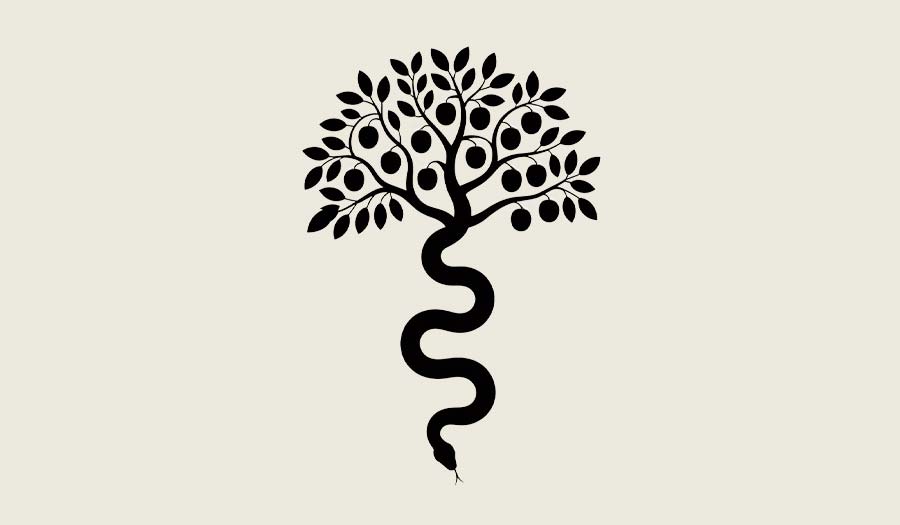
 Image generated by Freepik.
Article
Did Adam’s sin in the Garden of Eden get passed on to you and every person who has ever lived?
Learn the why behind the headlines.
Subscribe to the Real Truth for FREE news and analysis.
Subscribe NowA crying infant wriggles in the arms of his mother as a priest attempts to pour water on the child’s forehead. Mom and dad hush their son as the ceremony continues. Eventually, the baby is calm enough to be “baptized,” at which point the family steps aside for the next one waiting in line.
For many, this scene looks strange. Why are they doing this?
The practice of infant baptism traces back to a belief commonly called “original sin.” This doctrine is taught in Catholicism but is also believed by other mainstream Christian groups, such as Protestants and Eastern Orthodox, with some differences.
The basic teaching is that people have a sinful nature from birth—every human being inherited “original sin” from long ago. Hence the need to baptize a tiny infant.
Catholic.com defines original sin this way: “Original sin may be taken to mean: (I) the sin that Adam committed; (2) a consequence of this first sin, the hereditary stain with which we are born on account of our origin or descent from Adam.”
The Episcopal Church calls it: “The shared sinful condition of all humanity…drawn from the Pauline writings, such as Rom 5:12-19 and 1 Cor 15:21-22, which suggest that humanity shares by nature in the fall of Adam described in Gn 3…Original sin has been described as ‘hereditary sin.’ Augustine understood original sin to be transmitted through sexual intercourse leading to conception” (episcopalchurch.org).
Lutherans describe original sin this way: “Original sin in human nature is not only a total lack of good in spiritual, divine things, but…at the same time it replaces the lost image of God in man with a deep, wicked, abominable, bottomless, inscrutable, and inexpressible corruption of his entire nature in all its powers…As a result, since the Fall man inherits an inborn wicked stamp, an interior uncleanness of the heart and evil desires and inclinations” (cyclopedia.lcms.org).
Is this doctrine true? Does a newborn baby really inherit a “hereditary sin” and a “wicked stamp”?
Millions believe original sin is indeed biblical. Yet many who have heard it preached in their local church may have never looked deeply into what Scripture really says.
Examining what God teaches about sin turns up verses that appear to contradict this doctrine. Romans 3:23 says, “All have sinned, and come short of the glory of God.”
If “all” have sinned of their own volition, it would make no sense to blame Adam millennia later. These and other verses must be harmonized with the verses people point to for proof of original sin.
A careful look at God’s Word shows that although his choice did have deep implications, Adam’s sin was not passed down to all mankind. Instead, each person holds power over their own actions.
Did Adam’s Sin Become Yours?
Examining the Genesis account shows exactly what God said would result from Adam and Eve’s decision. In chapter 2, God told them: “The tree of the knowledge of good and evil, you shall not eat of it: for in the day that you eat thereof you shall surely die” (vs. 17).
Death was clearly identified as the consequence for disobedience. When the first humans were approached by the serpent, Satan the devil, in chapter 3, Eve accurately repeated this instruction (vs. 2-3), showing that they understood. The cunning snake responded, “You shall not surely die” (vs. 4).
God’s punishment for Adam and Eve for eating from the wrong tree was death. Adam, Eve and even Satan understood this. Absent from God’s warning is anything about a stain or stamp for people who never set foot in Eden.
The first humans gave in to the serpent’s temptation (vs. 6). Verse 7 records what happened after eating the fruit: “The eyes of them both were opened, and they knew that they were naked; and they sewed fig leaves together, and made themselves aprons.”
Again, take careful note of what is said and what is not. The immediate effect was their eyes being opened. Now Adam and Eve could judge for themselves between good and evil knowledge instead of trusting in God’s authority. That is one of the long-lasting impacts of their decision.
Hebrews 5:14 shows we have the same power today, speaking of people who “by reason of use have their senses exercised to discern both good and evil.”
Genesis 5:5 shows that Adam did ultimately die for his actions. The death penalty has remained in effect for people ever since. Hebrews 9:27 says, “it is appointed unto men once to die.”
As a result of Adam and Eve’s choice, “the Lord God said, Behold, the man is become as one of us, to know good and evil…the Lord God sent him forth from the garden of Eden, to till the ground from whence he was taken. So He drove out the man; and He placed at the east of the garden of Eden Cherubims, and a flaming sword which turned every way, to keep the way of the tree of life” (Gen. 3:22-24).
Adam and Eve became cut off from God. Isaiah 59:1-2 shows that is still the case for people today. Only by God drawing someone can someone have a relationship with him. Read John 6:44.
Let’s summarize. There are three clear ways Adam’s choice affected us: (1) We all die, (2) We all have access to good and evil knowledge, and (3) Mankind as a whole is cut off from God. But the account stops short of describing an original sin as taught in modern religion.
We saw Romans 5 is another passage cited by churches. Paul’s writings do include “things hard to be understood” (II Pet. 3:16) and require careful examination. But this chapter actually supports what we have already seen in Genesis.
The statement “as by one man sin entered into the world” in Romans 5:12 simply identifies Adam as the first man to sin. It does not say his sin outlived him.
Verse 14 says, “Death reigned from Adam to Moses, even over them that had not sinned after the similitude of Adam’s transgression.” Keep this simple. It does not say we were all corrupted by Adam’s transgression, just that after Adam’s choice brought the death penalty into effect, everyone has a finite lifespan. No one from biblical times is still walking the Earth today.
Verse 19 continues, “For as by one man’s disobedience many were made sinners, so by the obedience of one [Jesus Christ] shall many be made righteous.” Simply put, Adam’s disobedience set a bad example that his descendants followed by committing their own sins. Likewise, Christ’s sacrifice and good example of righteousness enables people to choose a different outcome than Adam. Notice that it says “many” were made sinners. If this were Bible proof for original sin, why does it not say “all”?
Verse 21 concludes the chapter, putting everything in perspective: “As sin has reigned unto death, even so might grace reign through righteousness unto eternal life by Jesus Christ our Lord.”
Paul’s primary goal here was not to tell us who to blame for sin. The takeaway is that we can avoid turning out like Adam, who died in shame, and achieve salvation by following Jesus. Understanding the truth about sin is key.
What Sin Really Is
The Bible clearly defines what sin is. If we sincerely want to know, and are not seeking license to blame a man who lived thousands of years ago for our actions today, we need only to read God’s definition and accept it.
I John 3:4 says, “Whosoever commits sin transgresses also the law: for sin is the transgression of the law.” Sin is breaking God’s Law.
What is that Law? It is the Ten Commandments found in Exodus 20 and Deuteronomy 5, but this term also encompasses every other command from God throughout the Bible.
While some Old Testament instructions regarding sacrifices and other physical ordinances commonly called the law of Moses were replaced by the sacrifice of Jesus Christ, the laws God gave us to live a righteous life have never been done away. If we violate those commands, we commit sin.
Notice the verse says this applies to anyone—“whosoever”—no mention of an ancient patriarch.
Adam’s choice did matter. It changed the course of human history. But if there is sin in our lives, that is our own sin. Sin is not something we are born doing—it is something each person chooses to do.
The prophet Ezekiel wrote, “The soul that sins, it shall die. The son shall not bear the iniquity of the father, neither shall the father bear the iniquity of the son: the righteousness of the righteous shall be upon him, and the wickedness of the wicked shall be upon him” (18:20).
We are all responsible for our own actions. Yet sin is not always apparent for what it is.
James 1 explains, “every man is tempted, when he is drawn away of his own lust, and enticed. Then when lust has conceived, it brings forth sin: and sin, when it is finished, brings forth death” (vs. 14-15).
People, especially those who want to follow God, generally do not wake up in the morning and consciously choose to sin. It happens subtly. We are “drawn away of [our] own lust, and enticed.” It can even seem like the right thing to do in the heat of the moment.
Sin in the 21st century does not feel like plucking fruit from a tree God explicitly forbade. Smaller acts, such as telling a white lie, holding on to hatred or jealousy towards others, lusting after someone we are not married to, coveting another person’s possessions, and various other things that break God’s Commandments, are borne from temptation.
Jeremiah 17:9 reveals why this is: “The heart is deceitful above all things, and desperately wicked: who can know it?”
Our proclivity to deceive ourselves sheds light on why the original sin doctrine is so appealing. If we can blame Adam for sin, we are less careful about avoiding lawbreaking ourselves.
The truth is that no person is born righteous or guilty. People choose to commit or avoid sin. Adam set the pattern—but each person follows it individually. And everyone is a sinner. There is no one who has perfectly avoided sin their entire life. That is why we needed Jesus Christ’s sacrifice. Ecclesiastes 7:20 says, “There is not a just man upon earth, that does good, and sins not.”
Also recognize that although people are responsible for their actions, the choice to sin is not made in isolation. There is a powerful influence that guides us in that direction: Satan the devil.
II Corinthians 4:4 says, “the god of this world has blinded the minds of them which believe not.” Satan’s influence is so strong, the Bible calls him this world’s god!
Revelation 12:9 adds that “Satan…deceives the whole world.” This deceit does not just apply to doctrines and beliefs. It also involves deceiving people into sin.
Remember that it was the serpent who subtly tempted Adam and Eve to take fruit from the wrong tree. He is still at work today doing the same thing.
Understanding sin from God’s perspective requires us to take accountability for our actions, battle our human weaknesses, and resist the devil’s influence.
Overcoming Sin
The battle against sin is difficult, and it can feel overwhelming. Yet God is ready and willing to help you win. You can overcome and prevent sin.
The apostle Peter preached the following to a crowd of people who were convicted about their sins: “Each of you must repent of your sins and turn to God, and be baptized in the name of Jesus Christ for the forgiveness of your sins. Then you will receive the gift of the Holy Spirit” (Acts 2:38, New Living Translation).
The religious-sounding word “repent” simply means to change. Peter told his listeners that if they turned away from sin and were baptized, their sins would be forgiven. They could not continue living a sinful lifestyle and expect to be saved. But if they were willing to change, salvation was available.
The same promise is available to us today if we choose it.
Peter’s words also reveal that people need knowledge and conviction to be baptized. They must be capable of recognizing and turning away from lawbreaking and turning to God. It is simply unbiblical to baptize a baby who knows nothing about God or His Law.
Through the sacrifice and resurrection of Jesus Christ, we can have salvation. Recall the conclusion of Romans 5: “as sin has reigned unto death, even so might grace reign through righteousness unto eternal life by Jesus Christ our Lord” (vs. 21). A perfect sinless God being paid the price on our behalf, rescuing us from the death penalty.
This enables us to have a clean slate from our past sins, and to receive forgiveness when we slip up and sin in the future.
Now glorified at God the Father’s right hand, Christ is an advocate for everyone battling sin. Hebrews 4:16 says, “Let us therefore come boldly unto the throne of grace, that we may obtain mercy, and find grace to help in time of need.”
The part we play is to overcome. The same Jesus promised in Revelation, “To him that overcomes will I grant to sit with Me in My throne, even as I also overcame, and am set down with My Father in His throne” (3:21).
With God’s help, we can battle against sin and overcome the devil’s influence. If we do, we will rule with Christ in His throne during the coming Kingdom of God.
Paul provided a firsthand account in Romans 7 of what battling sin looks like: “We know that the law is spiritual: but I am carnal, sold under sin. For that which I do I allow not: for what I would, that do I not; but what I hate, that do I” (vs. 14-15).
Reading the whole chapter paints a picture of what he endured. It was not easy. He said, “I know that in me (that is, in my flesh,) dwells no good thing: for to will is present with me; but how to perform that which is good I find not” (vs. 18). Yet Paul stayed in the fight and ultimately overcame. So can we.
There are many inspiring verses that show how God helps us win against sin. I Corinthians 10:13 says, “The temptations in your life are no different from what others experience. And God is faithful. He will not allow the temptation to be more than you can stand. When you are tempted, He will show you a way out so that you can endure” (NLT).
The false teaching of original sin obscures this battle. It leads people to believe they have already lost against sin because of Adam. The inspiring truth is that God empowers us to win.
We are not trapped by Adam’s decisions. God gives us the help we need to change, be forgiven of sin, take accountability for our actions and ultimately rule with Christ.
To learn more, read our article You Can Overcome and Prevent Sin and our booklet What Is True Conversion?
Other Related Items:
More on Related Topics:
Suggested Reading
More on Related Topics
Latest News
-
September 15, 2026
- U.S. Acknowledges for the First Time that It Has Deployed Weapons in Space
- Some Russians Are Fleeing Abroad, Citing Draft Fears and a Loss of Freedom September 11, 2026
- Americans Mark 25 Years Since September 11 Attacks amid Enduring Grief, Reflection
- Yemen’s Iranian-Backed Houthis Seize an Island in a Key Strait, Opening a New Front in the Iran War September 10, 2026
- The Push to Remove Lead Pipes Is On. Thousands of Water Systems Still Don’t Know Where Theirs Are September 9, 2026
- Family Interest in Education Falls as Test Scores Drop
- The Poorest in the U.S. Can’t Find Housing Even as Low-Income Units Sit Empty September 1, 2026
- In U.S. West, Drought Pits Farms Against Industry
- Why Christians Must Watch the News
- Teach Your Children to Be Active
- What Comes After America 250? August 31, 2026
- How Brexit Broke British Politics
- How to Keep the Sabbath
- Aliens and the Bible?
- Building Character in a Crooked World August 28, 2026
- U.S. Declares Drought Disaster for Parts of Puerto Rico as Dry Conditions Persist August 27, 2026
- UN and Red Cross Step Up Call for International Rules on ‘Killer Robot’ Weapons Systems August 26, 2026
- Explainer: What Are Iran’s Options to Escalate Further in Face of U.S. Economic Threats?
- U.S. Removes Syria from Terrorism Sponsor List August 24, 2026
- A Trade War Between Canada and the U.S. Further Ruptures a Once-Close and Durable Alliance