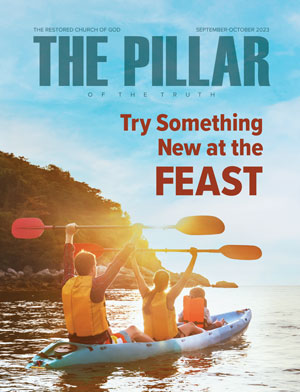
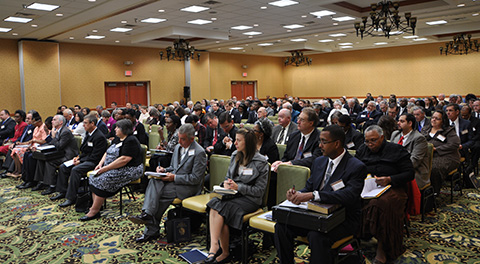
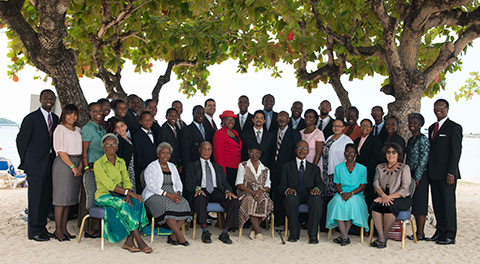
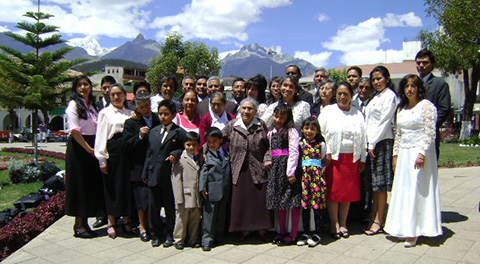
“And He that sat upon the throne said, Behold, I make all things new.” These words in Revelation 21:5 reveal a fascinating attribute of God: He is a Creator who will soon make “all things new.” This involves a new heaven, new Earth and new Jerusalem, but it does not stop there. The desire to make new is inherent in who God is.
God is the fastest-learning Being in the universe. He is all-powerful, omnipotent, omnipresent and absolutely perfect—yet He is also growing and learning more rapidly than anyone! The Bible is filled with examples of this.
What about each of us? True, we do not possess the limitless power God wields to build galaxies and conceive exquisite animal species. But we can apply this mindset to our lives. We can tap into God’s desire to make things new by stepping out of our comfort zones—taking advantage of new opportunities and life experiences. In doing so, we emulate our Creator.
While we can all want to be more like God by venturing out from what is familiar, it may be difficult. We can be creatures of habit doggedly sticking to the same old routines.
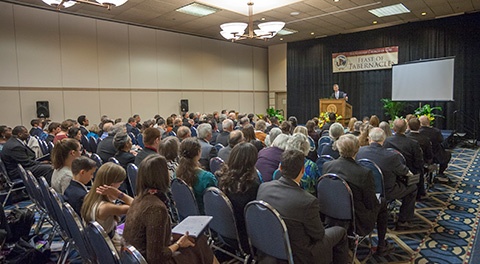
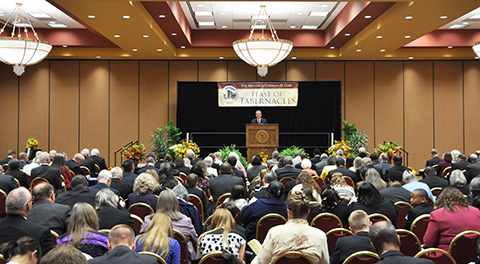
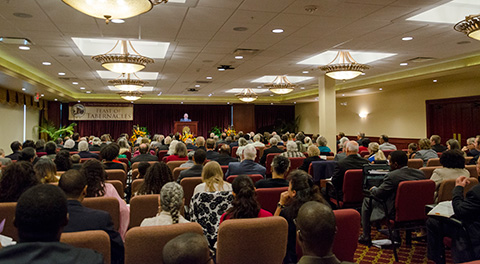
This is where the Feast of Tabernacles comes into play. It is a perfect place to try new things. Gathering at the sites where God has chosen to “put His name” (Deut. 12:21) automatically extricates us from daily routines, monotony and any ruts we may be in. During our stay, we have plenty of free time and extra money available through God’s second tithe command.
We should all be primed and ready to try new things at the Feast!
New People
If you are going to a Feast site you have not been to before—a new site—virtually everyone could be new to you. But even at your assigned site, there are new people who have come with us during the past year. Seek them out.
You can also develop new friendships with previous acquaintances. Make it a goal to go from being friendly with certain people to friends with them. Invite them out to share a cup of coffee or a flank steak. Find common interests. Ask how they were called into God’s truth. Add new depth to bonds even if you were already friends.
The key here is to avoid getting stuck in a fellowship rut. Do not settle for only greeting the same people every day or being joined at the hip with people from your local congregation. Spend time with those with whom you are less familiar. Invite a minister and his wife out to dinner—they need fellowship, too.
If you tend to gravitate toward those of your age group, challenge yourself to branch out. Seek out teens at your site and get to know them. When you encounter a family with small children, take time to learn their names and hear about how their Feast is going—do not just talk to Mom and Dad. Be sure not to forget the older members at the site as well.
Some enjoy writing down the names of people they meet in a journal to ensure they remember them. This could also include the location of their home congregation. You can also exchange phone numbers or other contact information—no need to wait until the last day!
New Activities
What is unique to your Feast site? Some have obvious landmarks that could top your list. If you are attending in Wadsworth, you likely want to take a fall color tour of the Headquarters Campus. If you attend Hastings Point, Australia, the beach beckons. Feastgoers in Torquay, England, may wish to explore a museum, castle or historical house.
Other locations may require a little more thought and research, especially if you have been attending there for several years. Rather than playing the “greatest hits” from last year, find something that can leave a lasting memory.
Do your own research before arriving at the Feast site. Travel apps like Yelp and TripAdvisor are handy for finding restaurants and attractions. As you come across places of interest, you could create a folder of bookmarks specifically for the Feast or capture them in an app like Trello. Share links with your friends and loved ones to get them excited for what is to come.
Some questions to ask: What is something you could do at the 2023 Feast that you have never done before? What is one activity that could allow you to appreciate the beauty of God’s Creation more deeply? What could you share with someone else to help make their Feast the best ever? Is there a particular activity you have wanted to do for many years but never actually done?
This could include going on a bike ride, taking a hike, canoeing, visiting an art museum, touring a winery, going antique shopping, bowling, taking a helicopter ride, bouncing around a trampoline park with your kids and many other edifying activities.
Often, a failure to try new things comes from simply not thinking of it. We may think we are too busy, have a fear of the unknown, or fail to plan or budget for it. These can all be overcome by taking on a can-do attitude. Instead of looking for reasons why something would not fit into your schedule, be resourceful in finding ways to make it work.
Of course, there are legitimate reasons not to try something. Use wisdom and good judgment. For example, it is not a good idea to break the bank on a fancy activity or dinner that will leave you destitute the rest of the Feast. Be careful of any activity that could result in injury, especially if you are getting older. Remember God’s admonition to be moderate in Philippians 4:5.
It also should be said that you will not like every new thing you try. Some activities may turn out to be so wonderful that you want to do them again. Other new experiences you may be glad you did them once, but once may be enough. Some others may have sounded good at the time but did not ultimately turn out as you hoped. All three categories are healthy parts of the process of trying new things. These successes and failures will help build your tastes and interests—and help round out your personality.
But do not leave success to mere chance. Discuss ideas with your family or others in your congregation attending the same site. If you have children, talk about the fun you will have and help them build anticipation. Even still, be sure to leave room for spontaneity.
Try not to just go with the flow with no specific goals in mind, waiting in the hotel lobby to see who shows up with an idea. Instead, take an active approach to trying new activities and getting the most out of this precious, rewarding time. If you have tended to be someone who just goes along with plans others are making, try planning an event yourself—you might be surprised at the results.
Remember the Basics
As we try new things at the Feast, we also must remember the basic, foundational elements of this special time. Take a moment to look up these verses prior to the Feast. You can also review this list throughout the festival during your prayer and meditation.
- The command to keep the Feast is found in Leviticus 23: “The fifteenth day of this seventh month shall be the feast of tabernacles for seven days unto the Lord” (vs. 34).
- The first day is a Holy Day and requires an offering (vs. 35-36).
- The Feast has two primary purposes: to “rejoice” (Deut. 16:11) and to “learn to fear the Lord your God always” (14:23).
- This seven-day period represents the time of God’s Kingdom on Earth.
- God allows us to use the second tithe we saved throughout the year at this festival: “You shall bestow that money for whatsoever your soul lusts after, for oxen, or for sheep, or for wine, or for strong drink, or for whatsoever your soul desires” (Deut. 14:26). Of course, how we use these funds must be within the confines of God’s commands.
- We are to dwell in “booths” (Lev. 23:42-43)—temporary dwellings. They point back to what ancient Israel went through and represent our temporary physical bodies, which will be replaced by new spiritual likenesses at Christ’s Coming.
- The Last Great Day, a separate holy convocation, is commanded in Leviticus 23:36.
New Serving Opportunities
During festival registration, members were asked to indicate areas where they could serve. If you signed up for one or more service roles, that is wonderful. This is another area with enormous potential for trying something new.
If you have been diligently serving within the realm of services—set-up, stage, information table, flowers, etc.—look for ways to serve a little more outside of services.
Apply the tool of observation. Look for those who are not being included and invite them to join you for lunch. If you see someone struggling with their luggage or who does not know how to get to the Family Day venue, jump in. If it rains after services, seize the opportunity to keep others dry with your umbrella. Small acts of kindness can have a huge impact. Read Matthew 10:42.
You do not need to be specifically asked or told to make a difference through serving. Review the Pillar article “Observation 101 & 202 – Teach Yourself to Be a Leader” for additional practical instruction.
On the flip side, if it has been several years since you have signed up for a formal serving role and you are able-bodied, ask yourself why. Could you be stuck in a rut or comfort zone and need to branch out? Realize that your not signing up to help could be forcing others to carry more of the burden than they need to. Read Matthew 25:31-46 for a shot of inspiration on the importance of serving.
When you arrive at your Feast site, you can always ask your festival coordinator or assistant coordinator if they need help with anything.
New Routine
Even at the Feast, we can settle into a less-than-optimal routine if we are not careful. We could find ourselves staying up too late enjoying fellowship, which jeopardizes our ability to pay attention during services the next day. Perhaps we have struggled to find time for prayer and Bible study because of all the exciting social events unfolding around us.
If you have had difficulty keeping an effective routine at the Feast—and we all occasionally do—make this year the time to break the mold and try a new-and-improved routine that will enable you to get the most out of the eight days of the Feast and Last Great Day.
Think about what has tended to work well for you in past years and what could use improvement. One simple change could be arriving at services 15 minutes earlier than usual to get in more fellowship. If the morning is not working for Bible study because of duties or commitments, try the evening instead, even if the morning is your go-to during the rest of the year. If you got busy and forgot to sign the cards for shut-ins last year, determine to sign them right away once the announcement is made.
Some of us have a tendency to get sick while at the Feast. Take action to prevent that this year. While there is always the possibility of being in the wrong place at the wrong time and becoming infected, our choices play a significant role in whether we are ill or healthy. Plan to better protect your health over eight days of exotic foods and experiences.
A few ideas: Protect your sleep time—set a personal “Feast bedtime” and stick to it. Take a short nap in the afternoon if needed. Use the hotel gym. This could even turn into a fellowship opportunity with others. Get outside for a walk or run. Be strategic as to when and how often you indulge in decadent desserts. With some planning and a willingness to try a new routine, your experience this year can be even better than any previous Feast.
“Walk in Newness of Life”
Romans 6:4 tells us that “like as Christ was raised up from the dead by the glory of the Father, even so we also should walk in newness of life.”
As you prepare for, travel to, and enjoy the Feast of Tabernacles, focus on the spiritual. Ice cream, escape rooms, shopping malls and mini-golf courses are great things to enjoy, and God wants us to do so, but we should not place too much emphasis on the physical aspects of this time. We are keeping the Feast to worship God (Zech. 14:17-19). Remember why you are keeping the Feast. Take time to think about your incredible potential—ruling the nations as God, with God.
Remember to cast aside any burdens that could be weighing on you from your daily life, such as challenges at work, family issues—whatever it could be, big or small. Hebrews 12:1 commands us to “lay aside every weight, and the sin which does so easily beset us.” Do not even bring these to the Feast!
Determine to commune with God and really deepen your relationship with Him. As it says in II Corinthians 5:17, “If any man be in Christ, he is a new creature: old things are passed away; behold, all things are become new.” Remember that as you try new things, you are assisting God in His process of making you into a new creation, possessing His holy, righteous character.