Virtually all modern Western nations have come to possess more wealth during the past several decades than ever in history. Yet these nations are plagued with staggering public debt and other fiscal problems, partly because of the cost of military defense and combating crime. Why this dilemma? Are there principles that would keep people and nations in a sound financial state, if observed and carefully followed?
God created all human beings and holds prior claim over us and all we possess. Psalm 89 makes this plain: “The heavens are Yours, the earth also is Yours: as for the world and the fullness thereof, You have founded them” (vs. 11).
As our Creator, God has set spiritual laws in motion for our good. Obeying them brings peace and stability in all areas of life—including our finances.
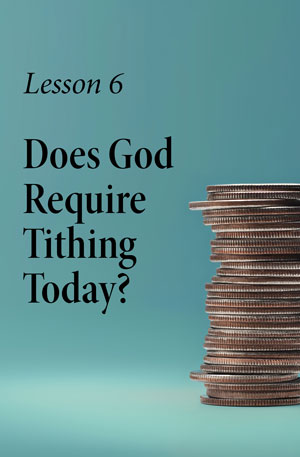
God allows us to be in partnership with Him through tithing. Leviticus 27 commands, “All the tithe of the land, whether of the seed of the land, or of the fruit of the tree, is the Lord’s: it is holy unto the Lord...concerning the tithe of the herd, or of the flock, even of whatsoever passes under the rod, the tenth shall be holy unto the Lord” (vs. 30, 32).
A tithe is 10 percent of our income. Although He is our Creator and the sustainer of all that exists, God turns over to us not just 10 percent or even 50 percent, but rather 90 percent of what is entirely His. Even the 10 percent God reserves for Himself comes back to us, as He uses it for the benefit of humanity—teaching mankind His truth, which will make it free (John 8:32). His truth frees us from financial worries and gives peace of mind, fulfillment and eventually eternal life.
When people live contrary to any of God’s laws, they bring curses upon themselves instead of blessings. Notice what God says about obeying His financial laws: “Will a man rob God? Yet you have robbed Me. But you say, Wherein have we robbed you? In tithes and offerings. You are cursed with a curse: for you have robbed Me, even this whole nation” (Mal. 3:8-9).
Most people today, knowingly or not, fall into this category. Few have sought to obey God’s laws, including those regarding tithes and offerings.
God tells us to prove Him, as to whether He will fulfill the following promise: “Bring you all the tithes into the storehouse, that there may be meat in My house, and prove Me now herewith, says the Lord of hosts, if I will not open you the windows of heaven, and pour you out a blessing, that there shall not be room enough to receive it” (vs. 10).
If this were not enough, God extends His promise further. Notice what else He promises: “And I will rebuke the devourer for your sakes, and he shall not destroy the fruits of your ground; neither shall your vine cast her fruit before the time in the field, says the Lord of hosts. And all nations shall call you blessed: for you shall be a delightful land, says the Lord of hosts” (vs. 11-12).
The promises in these verses were not limited to ancient Israel. They are living promises, still in effect today, for those who will take God at His word and prove Him!
Doing the Work
(1) Who created all that exists? Genesis 1:1; Hebrews 1:2; John 1:3; Ephesians 3:9.
The Scriptures show that Jesus Christ, the Son of God, was the One by whom God the Father created all things.
(2) Are God the Father and Christ still working? John 5:17.
(3) Was Jesus, during His physical lifetime, working under the constraints of time with a sense of urgency? John 9:4.
(4) Were the original apostles commanded by the resurrected Christ to take His gospel message to the world? Acts 1:8.
(5) Did Jesus command His faithful servants, even in our day, to do the work of carrying His gospel—the good news of the soon-coming Kingdom of God—to modern Israel and all the world? Mark 13:10; Matthew 10:23.
(6) Are people given the news about future events and the true gospel expected to pay for this precious truth? Matthew 10:7-8.
Doing the Work of God is indeed real work! And God has provided tithing as a means to support what He is doing on Earth today.
Tithes Paid to Melchizedek
(1) What great office does Jesus Christ hold today? Hebrews 4:14.
(2) What is the order of the high priesthood that Christ holds? Hebrews 5:6, 10.
The Hebrew spelling for this order is “Melchizedek,” while the Greek spelling is “Melchisedec.” Both refer to the same personage.
(3) To whom did Abram pay tithes after God gave him victory over his enemies? Genesis 14:18-20.
(4) Exactly how much is a tithe according to Scripture? Leviticus 27:32; Hebrews 7:1-2.
Whether counting cattle or determining a portion of income, a tithe means one-tenth.
(5) How do we know Melchizedek was of the God Family? Hebrews 7:3.
(6) When Abram paid his tithes to Melchizedek, what did God do as a result of his faithfulness? Genesis 14:19-20.
God knew of Abram’s intent to honor Him with his tithes even before he delivered them, and blessed him accordingly. God delivered the enemy into Abram’s hands due to his obedience and faithfulness.
(7) Did Abraham faithfully keep all of God’s laws, including tithing? Genesis 18:19; 22:17-18; 26:5.
(8) Did Jacob also pay tithes to God? Genesis 28:22.
As Abraham’s grandson and Isaac’s son, Jacob was well acquainted with God’s laws, which were in effect since Creation. Well before the time of Moses and the giving of the Ten Commandments, God’s servants were faithfully observing God’s laws, which included tithing.
Tithing to the Levitical Priesthood
(1) Why does God hold claim to the first tenth of whatever is earned or produced? Deuteronomy 10:14; I Corinthians 10:26; Job 41:11.
(2) Does everything we achieve or hope to achieve come from God, who gives us life, breath and the means to attain those things? James 1:17.
Whatever resources we command, God has given them to us, and we owe Him, as it were, a token “rent” of the first tenth. When people comply, God gives them back—many times over—blessings that far outweigh this “rent” for the resources He has given us. This happens because of being in harmony with God’s laws, which are living forces that apply to all people of all times. Blessings flow from obedience.
(3) What change did God command during the time of Moses regarding to whom tithes were paid? Numbers 18:21.
During the time of the patriarchs, tithes were paid to Melchizedek. During the time of Moses, God had His tithes directed to the Levites for their service in the tabernacle. The Levitical priesthood began then, and their work benefited all of Israel. The Levites dedicated themselves to the duties God gave them.
(4) Did God set aside an entire tribe of the 12 tribes of Israel to be devoted to the priesthood? Numbers 3:6-8.
Of the entire tribe of Levi, only the sons of Aaron were to serve as priests (Ex. 28:1). The other duties were divided among the sons of Gershon, Kohath and Merari. They served by transporting, setting up, taking down and maintaining various parts of the tabernacle, as explained in Numbers 3.
(5) What were the Levites, who received the tithes, commanded to do with them? Numbers 18:26.
(6) To whom did the Levites pay their tithes? Numbers 18:28.
After the Levites received their tithes, they paid a tenth of that tithe to Aaron, the high priest. In this way, the lineage of Aaron was supported for the hard work they rendered in the tasks of daily sacrificial rituals.
(7) Exactly who in Israel was required to pay tithes? Numbers 18:21.
Everyone in Israel paid tithes. Remember that in the time of the patriarchs, tithes went directly to Melchizedek. God then changed the priesthood to the Levites, who were now His representatives. Thus, the tithes went to the Levites who performed ritualistic sacrifices, which served as a schoolmaster to Israel, teaching them obedience (Gal. 3:24).
We see that God first worked with individuals whom He called. Then, through the Levitical priesthood, He worked with a nation—Israel. In this end-time ministry, God’s message is being presented to the whole world through the power of technology. God’s Work, which will continue until the end of this age (Matt. 24:14), is supported by tithes, which God has always used to support His ministry.
(8) What is the result of negligence in paying God’s tithes? Malachi 3:8-9.
God says that anyone who withholds His tithes is guilty of robbing Him and will be cursed with a curse. God is the owner of all that exists, and He requires those who serve Him to obey His laws so that they may develop character and reap blessings instead of curses.
Offerings
(1) Does God require more than tithes alone? Malachi 3:8.
God expects His servants to go beyond the minimum 10 percent with occasional freewill offerings to express appreciation to Him.
(2) Did Israel give freewill offerings on various occasions? II Chronicles 31:14.
(3) During the Kingdom of God, will offerings be expected and even required of everyone? Ezekiel 20:40.
Require means to authoritatively order or enjoin someone to do something; to demand; to impose need or make necessary; to place under an obligation or necessity.
(4) On what special occasions is it mandatory to bring an offering? Deuteronomy 16:16.
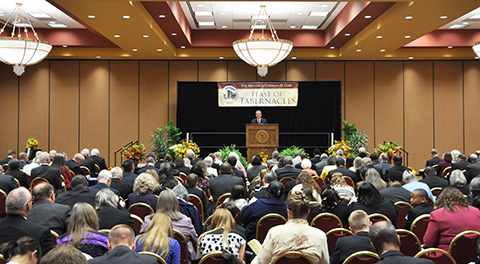
This verse discusses the three times that God’s people are to come before Him on the Holy Days. First, we keep the Passover and Days of Unleavened Bread in the spring. Then, Pentecost. Finally, the Feast of Trumpets, the Day of Atonement, the Feast of Tabernacles, and the Last Great Day in the fall. On every Holy Day, God’s people are to appear before Him and present an offering.
Other Tithes
Many are confused about the issue of tithing partly because of misunderstandings about two other tithes that God required ancient Israel to pay. The tithe that we have discussed thus far is the “first” tithe. This is the 10 percent that belongs to God, which we are to turn over to His Work and His representatives. People who practice tithing do not “give” the first tithe to God. They merely present to God what already belongs to Him.
(1) In addition to the first tithe, what was the second tithe that God commanded Israel to set aside? Deuteronomy 14:22-26.
This tithe was not paid to the Levites or priests, but was put back for use by the person saving this “second” tithe. God instructed His people to save this tithe for use during His Feasts and Holy Days. He was essentially commanding His people to budget their resources so that they could appear before Him—especially at the Feast of Tabernacles—and rejoice in a way that is more rewarding and fulfilling than those unfamiliar with this experience could ever realize. (Note: “Whatsoever your soul lusts after” [vs. 26] is better translated as “whatsoever your heart desires.”)
(2) Where are the Feast of Tabernacles and the other Holy Days commanded to be observed? Deuteronomy 14:23; Leviticus 23:34-37.
(3) Did the command to observe these feast days apply only to ancient Israel while under the Levitical priesthood—or was it forever? Exodus 12:13, 17; Leviticus 23:16, 21, 24, 31, 39, 41.
The feast days and Holy Days stand or fall together. The scriptures above point to Passover, the Feast of Unleavened Bread, the Feast of Pentecost, the Feast of Trumpets, Atonement, the Feast of Tabernacles, and the Last Great Day. They are to be kept forever! That extends well beyond the time of the Levitical priesthood. Thus, the second tithe associated with keeping these Feast days is very much applicable today and even during God’s Kingdom (Zech. 14:16).
(4) In addition to the first and second tithes, what else was Israel commanded to set aside? Deuteronomy 14:28-29.
This tithe was not paid annually, but only every three years. The purpose of this tithe is thoroughly covered in the scriptures cited. It is a far superior “social security” plan than that provided by any modern nation. Yet the amount people pay is far less than what the average worker must remit to his government. God’s ways are more equitable than anything devised by man. This will be practiced on a global basis in the Kingdom.
The Melchizedek Ministry Returns
After having qualified to replace Satan to rule the Earth, and preparing His Church to proclaim the gospel, Christ serves as High Priest to intercede on behalf of those He has called to qualify to rule with Him.
(1) Did Christ command His servants to deliver the message of the soon-coming Kingdom of God to all the world? Matthew 24:14; Mark 13:10.
Delivering the gospel of the Kingdom of God to all the world is the first commission of God’s Church.
(2) Was another commission given to God’s Church? I Peter 5:2.
The second commission is to provide spiritual nourishment for those God would call into His Church.
(3) As High Priest, does Christ empower the Church of God? Romans 15:19; Acts 1:8, 2:4.
(4) How can one identify the true Church of God, as opposed to others merely claiming this title? Isaiah 8:20; Galatians 1:6-9; I Timothy 3:15; II Timothy 3:14.
God’s true Church is grounded in the truth and continues in that truth, having proven the foundational understandings and remembering from whom they learned them.
(5) Since Christ directs His Church, would He direct tithes to support the first and second commissions, just as tithes were directed to the Levites? Hebrews 7:5, 12, 17.
Hebrews 7 begins by showing that tithes were originally presented to the Melchizedek priesthood. It shows the temporary change as Christ worked with Israel under the Levitical priesthood—for about 1,500 years. This chapter also explains that the Melchizedek priesthood reappeared with Christ as High Priest, greatly superseding the Levitical priesthood of ancient Israel. Jesus, as the Melchizedek High Priest, is using His Church for a crucial commission of announcing God’s Kingdom on Earth.
Our booklet End All Your Financial Worries explains Hebrews 7 and other interesting aspects of the Melchizedek priesthood in greater detail. It also shows more about the scriptural basis for God requiring His servants to tithe.