What was life like just before the Flood? The answer comes from an unlikely source: Jesus Christ.
He stated: “But of that day and hour knows no man, no, not the angels of heaven, but My Father only. But as the days of Noah were, so shall also the coming of the Son of man be” (Matt. 24:36-37).
In other words, the days just before Christ’s Return will be a lot like the days of Noah.
Jesus continued: “For as in the days that were before the flood they were eating and drinking, marrying and giving in marriage, until the day that Noah entered into the ark, and knew not until the flood came, and took them all away; so shall also the coming of the Son of man be” (vs. 38-39).
Of course, things were bad in Noah’s day. That is why God had to send the Flood. Genesis 6:5 says that “God saw that the wickedness of man was great in the earth, and that every imagination of the thoughts of his heart was only evil continually.” But Christ’s point was that life still looked normal back then, right before everything changed. The same would be true before His Coming.
People were eating, drinking and marrying right up until the rain began. Yet Noah still took God’s command to build the ark seriously.
Life looks normal today as well. People you know are enjoying life, finishing school, getting jobs, planning for college, pursuing hobbies, and doing other ordinary things.
You hear about God’s Kingdom at Sabbath services, but throughout the week, grades, friends, notifications and upcoming activities may feel more immediate. Prayer may get postponed. Bible study becomes something to do when there is extra time. If we are not careful, preparing for God’s Kingdom can become something to take seriously “when I am older.”
In Noah’s time, no one felt raindrops until it was too late. But Noah had been walking with God long before the first drop fell. His example shows how you can do the same.
Specific Instructions
God gave Noah various instructions: what kind of materials to use in building the ark, its dimensions, compartments, other features and how many animals to bring on. Read Genesis 6:14-21.
God was in control, guiding events. Yet Noah was still making his own decisions. It was up to him whether to follow instructions or do whatever he wanted.
Do not miss the larger point here. Noah was not just checking off a long to-do list. He put real time and effort into preparing for something God said would happen before he saw it happen. That is what you are to do, too.
Thankfully, you do not have to herd animals or hunt down construction materials. But you have plenty of instructions within God’s Word, the Bible. Ask yourself: Does what God says carry enough weight to shape my choices now, even when the consequences seem far away?
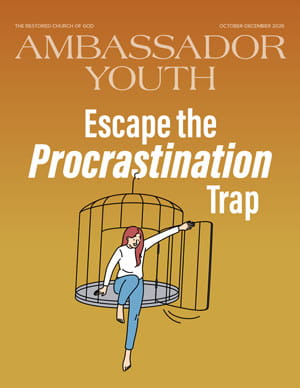
To find these instructions, study your Bible. Matthew 4:4 says, “Man shall not live by bread alone, but by every word that proceeds out of the mouth of God.” You can also find them in the various materials the Church provides, such as the monthly livestreamed Youth Bible Study and magazines like Ambassador Youth and The Pillar.
Once you know what God says, you need to do it. James 1:22 says, “Be you doers of the word, and not hearers only, deceiving your own selves.”
That means telling the truth when lying would keep you out of trouble. Honoring your parents even when they make a decision that messes up your plans. Keeping the Sabbath even when it means missing an activity you really want to do. And many other things in everyday life.
This also includes decisions that are less clear. Not everything is black or white. Joining another sport or club after school does not break any of God’s laws. But you may find you are spreading yourself too thin to have time for a quality relationship with your Creator.
How can you tell when good things are crowding out God, and what can you do about it? A few habits can help.
First, give God a set time. “When I have time” rarely comes. Choose a specific time for prayer and Bible study—perhaps first thing in the morning or before bed—and treat it like any other commitment.
Second, look back at your week. The Sabbath is a good time to ask: Where did my time go? Did anything, even something good, crowd out God? Before adding a new commitment, ask what it will replace.
Third, start small. Choose one goal such as reading through one book of the Bible or being more patient with your family. Focus on that one thing, and take it one step at a time.
God is all-powerful. He could have built the ark Himself and let Noah simply find it one day. He also could have protected Noah without needing an ark at all. Yet that is not what He chose. He wanted Noah to carefully follow His commands. Each step demonstrated Noah’s obedience and made it stronger.
Genesis 6:22 states: “Thus did Noah; according to all that God commanded him, so did he.” The same must be true of us.
Faith and Fear
Noah is one of the Bible greats listed in Hebrews 11, which is often called the “faith chapter.” It reveals what motivated him: “By faith Noah, being warned of God of things not seen as yet, moved with fear, prepared an ark to the saving of his house; by the which he condemned the world, and became heir of the righteousness which is by faith” (vs. 7).
Faith can seem hard to define. But verse 1 of the same chapter explains it: “Now faith is the substance of things hoped for, the evidence of things not seen.” In other words, faith is being sure that what God has promised is real, even before you can see it.
Noah’s faith gave him evidence that what God said would come to pass, even though at the time these things were “not seen.” He also “moved with fear.” He feared what would happen if he disobeyed, including dying in the Flood. And he feared God in a deeper way by deeply respecting Him and doing what He said.
Think about what that required. Noah had no rising water or darkening sky to convince him. He only had what God told him. Yet he acted on it, beginning a project that likely took years while everyone around him went on with life as usual.
Sometimes doing all that God commands us can feel overwhelming, especially when you do not see results right away. Faith is what keeps you going.
Noah was sure the Flood was coming. That is what kept him working slowly but surely on the ark, one board at a time. Faith can do the same for you.
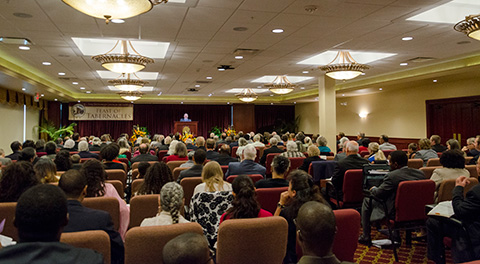
The “fear of the Lord” is something you hear about at the Feast of Tabernacles, but it is not limited to that time of year. It is a key part of every Christian’s life. Psalm 111 shows how fearing God goes hand in hand with obeying Him: “The fear of the Lord is the beginning of wisdom: a good understanding have all they that do His commandments” (vs. 10).
Faith and fear worked together. Noah trusted what God said and took it seriously enough to act.
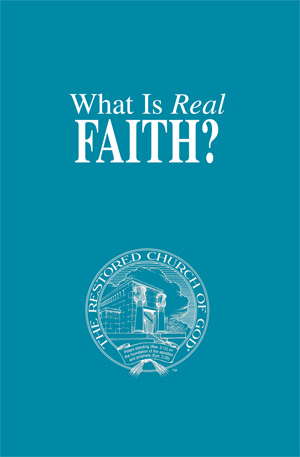
These are big subjects in Scripture. Take time to study more about faith and the fear of God on your own. Our booklet What Is Real Faith? is a great resource.
Focusing on God
II Peter 3 describes people who lack the faith and fear that Noah had. It says: “There shall come in the last days scoffers, walking after their own lusts, and saying, Where is the promise of His coming? For since the fathers fell asleep, all things continue as they were from the beginning of the creation. For this they willingly are ignorant of, that by the word of God the heavens were of old, and the earth standing out of the water and in the water: whereby the world that then was, being overflowed with water, perished” (vs. 3-6).
These scoffers, or mockers, believed things would always stay the same. Peter goes on to tie this attitude to willingly forgetting what happened in Noah’s day (vs. 5-6).
What could this mindset look like for us? It can start small. We may have thoughts like: “I will get serious about prayer later,” “I can change this habit when I am closer to baptism,” or “There is plenty of time before Christ returns.”
It is OK to admit that life feels normal today. Christ Himself said it would. But we should be on guard against “nothing ever happens” thinking.
Again, you do not need to build a huge ship alongside obeying all of God’s other commands. You can use your time for other things. You can enjoy life and prepare for the future. You can, as Matthew 24 described, eat and drink and someday get married. There is nothing wrong with any of that.
Yet we should keep our focus on God’s way of life and the opportunity to be a part of His coming Kingdom.
Keep planning for college and work, learning skills, getting better at a sport, building friendships, and everything else. But let Noah’s example motivate you. Faithfully follow God and put His Way first, even when everything around you looks perfectly normal.
Noah’s obedience was not limited to building the ark. Genesis 6 shows that before Noah ever started building, God was already pleased with him. Noah had “found grace in the eyes of the Lord” (vs. 8). The next verse sums up how he lived: “Noah walked with God” (vs. 9). This was Noah’s way of life.
The same can be true of you. Your daily choices allow you to build character, self-control, patience and good judgment. Walking with God also makes your faith your own, not just something you do because your family does. It does not make life easy, but it will prepare you for whatever comes.
When the Flood arrived, Noah was saved: “Every living substance was destroyed which was upon the face of the ground, both man, and cattle, and the creeping things, and the fowl of the heaven; and they were destroyed from the earth: and Noah only remained alive, and they that were with him in the ark” (Gen. 7:23). Noah and his family were glad they did not put off following God until later.
In Matthew 24, after speaking of Noah’s day, Jesus told us: “Therefore be you also ready: for in such an hour as you think not the Son of man comes” (vs. 44).
Noah could not see the Flood when he began obeying. We cannot yet see the coming Kingdom, but we must take God seriously and prepare for it each day.