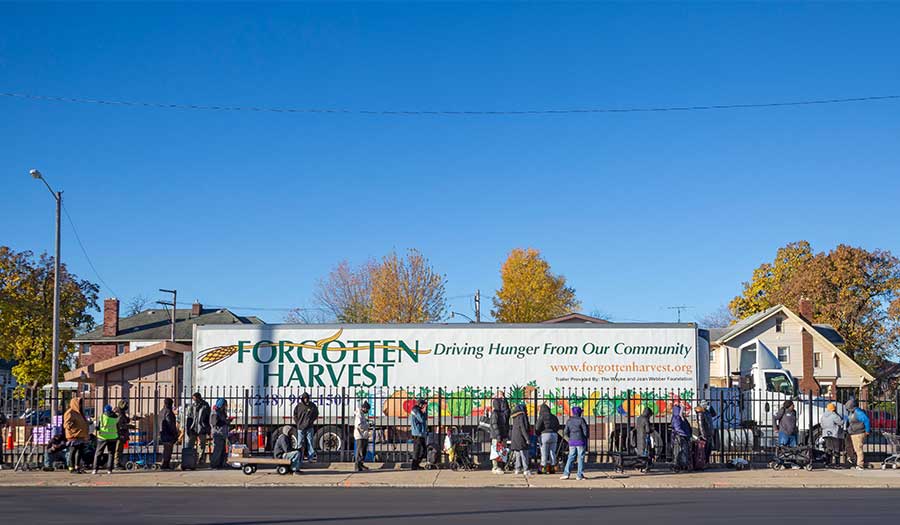
 JIM WEST/UCG/UNIVERSAL IMAGES GROUP VIA GETTY IMAGES
Article
As lawmakers debate how to care for the vulnerable, the Bible reveals the ultimate answer, one that human-led governments will never reach on their own.
Learn the why behind the headlines.
Subscribe to the Real Truth for FREE news and analysis.
Subscribe NowWhat kind of nation lets food assistance and healthcare for millions hang in the balance over politics?
That is the question many asked during the longest government shutdown in American history—a 43-day stalemate that brought federal operations to a crawl.
On center stage were two programs most Americans either rely on or have strong opinions about: SNAP (Supplemental Nutrition Assistance Program) and the Affordable Care Act (often called Obamacare). These are policies that impact how people obtain food, access medical care and navigate difficult economic circumstances.
Depending on who you ask, these programs are either compassionate safety nets or expensive government overreach. Some argue these options protect the vulnerable and stabilize the economy. Others point to fraud, inefficiency and long-term dependency—seeing entitlement programs as a system that discourages work.
The debate is clear: How far should a society go to care for its people? And what happens when doing so becomes unaffordable?
At its core, there is a larger concern. Human government, even with the best intentions, keeps hitting a wall. And there is a reason for that. It is not just a political problem. It is a spiritual one.
The Bible explains: “The way of man is not in himself: it is not in man that walks to direct his steps” (Jer. 10:23). This stark limitation of human governance helps explain why even well-intended systems repeatedly fall short.
SNAP and the ACA
These two programs, SNAP and ACA, despite their complexity, boil down to addressing two very basic human needs: Food and healthcare.
SNAP benefits have helped low-income individuals and families afford groceries since the 1960s, initially through paper food stamps and now via electronic benefits transfer (EBT). As of 2024, approximately 42 million Americans, including families with children, the elderly, people with disabilities, and many working poor, rely on SNAP—making it one of the country’s largest safety net programs.
The ACA was passed in 2010 under President Barack Obama with the aim of making health insurance more accessible and affordable. According to the Center on Budget and Policy Priorities, more than 21 million Americans receive coverage through the program’s insurance exchanges, and the number of uninsured has dropped significantly over the past decade, from 45.2 million in 2013 to 26.4 million in 2022.
To supporters, programs like these represent basic decency in a wealthy nation. They are seen as a way to protect the vulnerable and ensure that access to food or medical care does not depend entirely on income or circumstance.
Critics, however, view these same programs as government overreach. They argue that federally managed assistance is costly, inefficient and readily abused—and that it places an increased burden on taxpayers while discouraging personal responsibility.
These are more than disagreements over budgets or bureaucracy. They raise deeper moral questions about how a society should function, and what it owes to its people.
The Case for These Programs
Supporters of entitlement programs argue that these efforts are not only moral but practical. They maintain that such programs save lives, stabilize families and prevent the kind of deep poverty that leads to generational despair.
In other words, citizens are entitled to these basic human needs. From this perspective, access to food and basic healthcare is viewed not as a privilege, but as a societal responsibility—particularly in a wealthy nation.
The scope of need is significant. Millions of Americans rely on SNAP for basic nutrition, and research indicates the program has helped reduce poverty, particularly among families with children. Supporters argue that ensuring consistent access to food contributes to better health, improved educational outcomes and greater long-term stability.
Every extra dollar spent on benefits generates $1.54 in economic activity, as households shop at over 250,000 local stores, boosting local economies across the country.
Advocates make similar claims about healthcare. Beyond reducing the number of uninsured, the Affordable Care Act has expanded access to preventive care, which supporters say can lower long-term medical costs and improve overall public health.
Beyond dramatically reducing the number of uninsured Americans, the ACA has made affordable health coverage more accessible, thanks to federal subsidies.
Taken together, these programs are often presented as investments meant to protect the vulnerable and strengthen communities, as well as reflect values such as compassion, fairness and shared responsibility.
Supporters argue that how a society treats its most vulnerable members is a measure of its character.
The Case Against These Programs
Critics of entitlement programs like SNAP and the ACA do not necessarily deny the needs they address. Instead, they question whether these programs are sustainable—or effective—over the long term.
A primary concern is cost. SNAP spent $99.8 billion in 2024, and ACA subsidies have continued to grow with expanded enrollment and rising healthcare costs. Opponents argue that these expenses contribute to long-term fiscal strain on taxpayers and government budgets.
Reports of improper payments in SNAP have increased in recent years, with overpayment rates rising from approximately 2 percent in 2012 to nearly 12 percent in 2023—an estimated annual cost of about $10 billion to taxpayers, according to the Mercatus Center at George Mason University.
Critics argue that large, federally managed programs are difficult to monitor and vulnerable to abuse—reducing public trust and diverting resources from those in legitimate need. In addition, SNAP allows the purchase of sodas, candy, processed snacks and fast food—which many argue undermines its health mission to provide access to nutritious meals. There are also “benefit cliffs,” which can unintentionally discourage recipients from increasing their income for fear of losing assistance.
At a deeper level, opponents raise concerns about dependency and the role of government itself. They argue that long-term reliance on entitlement programs can undermine personal responsibility—and that compulsory redistribution through taxation should not be a substitute for voluntary charity.
From this perspective, the issue is not whether people should be helped, but how—and whether government programs can do so without creating new problems in the process.
Why the Debate Remains Stuck
If both sides of the entitlement debate raise legitimate concerns, why does nothing ever seem to get resolved?
The answer lies in a familiar pattern: Supporters and critics alike tend to emphasize their strongest arguments while minimizing their weaknesses. Those who prioritize compassion point to lives helped and poverty reduced, but often downplay issues of cost, inefficiency and long-term dependency. Those who stress fiscal responsibility highlight waste and abuse, yet often underestimate the real human consequences of reducing support.
The result is a cycle of stalemate—budget battles, shutdown threats and temporary fixes. Each side advances a partial solution while resisting the concessions needed to address the full problem.
At its core, this impasse is not merely political. It is moral. One side emphasizes care and protection for the vulnerable; the other emphasizes fairness, accountability and personal responsibility. All these values matter—but they cannot be fully implemented through human ability alone.
This is why the same questions persist, decade after decade:
- How do you ensure compassion without enabling abuse?
- How do you promote responsibility without abandoning those in genuine need?
- How do you fund assistance without creating resentment, dependence or unsustainable debt?
These are not simply technical questions. They expose a deeper limitation.
Jeremiah 10:23 bears repeating: “The way of man is not in himself: it is not in man that walks to direct his steps.” Even well-intended systems are shaped by imperfect judgment and competing priorities.
God’s Way
What is missing from both sides of the debate is not just better policy. It is a different kind of government—one that embodies both compassion and accountability, and mercy and responsibility, in equal balance.
The Bible reveals that God deeply cares for the poor, the vulnerable and the sick. He commanded ancient Israel to build systems that addressed these needs structurally, not just through occasional charity. A special tithe—10 percent of income—was set aside every third year specifically to support the Levites, the stranger, the fatherless and the widow (Deut. 14:28-29). Gleaning laws ensured the poor could access food (Lev. 19:9-10). Debts were canceled every seven years, and inheritance was protected by law—measures designed to prevent generational poverty.
God also addressed the attitude behind such care: “You shall open your hand wide unto your brother, to your poor, and to your needy, in your land” (Deut. 15:11).
At the same time, God does not tolerate fraud, laziness or abuse. He required honest weights and measures (Prov. 11:1), and the apostle Paul wrote plainly, “If any would not work, neither should he eat” (II Thes. 3:10).
Jesus Christ Himself perfectly embodied this balance. He condemned hypocrisy and selfishness while also healing the sick, feeding the hungry and preaching the gospel to the poor (Luke 4:18). God’s system neither ignores need nor excuses irresponsibility.
Most importantly, God’s plan is not confined to one nation, budget or election cycle. Scripture describes a coming Kingdom—ruled by God—that will administer justice across the entire Earth (Isa. 9:6-7). That government will not merely manage poverty, but eliminate its root causes, including corruption, greed, broken families and failed leadership.
Until then, those striving to live God’s Way must rise above the debate. They should obey the laws of the land, including paying taxes (Luke 20:25) for entitlement programs like Social Security, SNAP or the ACA, which many rely on. Receiving lawful assistance is not unbiblical. Yet a Christian’s hope should not rest in human systems, which—even at their best—fall woefully short.
Long-Term Solution
Human efforts can ease suffering for a time, but they cannot resolve it completely. Entitlement programs may address immediate needs, yet they do not—and cannot—eliminate the deeper causes of poverty, inequality and social breakdown.
The Bible reveals the only lasting solution. God’s coming Kingdom will address these problems at their root, establishing justice, truth and accountability through righteous law. It will restructure society around divine principles—restoring families, ending corruption and replacing human misrule with lasting peace.
Until then, those striving to follow God’s Way are called to reflect His compassion in this present world. As Scripture instructs, “As we have therefore opportunity, let us do good unto all men” (Gal. 6:10). That includes showing care, obeying the law, and keeping present systems in proper perspective.
This does not require rejecting existing government programs outright. Many provide real, temporary help. But neither should they be mistaken for permanent solutions.
The debate over entitlement programs ultimately reveals something larger than policy disagreement. It highlights the limits of human governance—and the need for a better one. Only God’s government can bring the balance of compassion and justice that human efforts continue to seek, but never fully achieve.

More on Related Topics:
- Building Character in a Crooked World
- Global Trade in Cocaine, Methamphetamine Is Booming, UN Drug Report Shows
- Deadlier Than Fentanyl: Weapons-Grade Carfentanil Surges
- What to Know About Psychedelic Retreats, a Booming Business with Few Safety Guardrails
- Weapons-Grade Chemical Carfentanil Surges as Dangerous Substitute for Fentanyl
Latest News
-
October 20, 2026
- Japan Launches Spacecraft to Mysterious Moons of Mars in Bold Mission to Bring Home Soil Samples
- France Announces Nightly Curfews ‘For as Long as Necessary’ in Paris and Other Big Cities October 16, 2026
- Fundraising to Protect Oceans, Forests and Other Key Nature Sites Falling Short Ahead of UN Summit
- Drone Strikes in the Black Sea Raise Fears of Russian Escalation to Test NATO’s Response
- Nepal’s Devastating Flood Exposes the Risks of Resettling Disaster Survivors October 15, 2026
- Sudan’s Famine Risk Worsened by Conflict, Drought and Funding Shortages
- How the Houthis Are Helping Iran Turn Saudi Arabia into a Pressure Point October 9, 2026
- What Will the Next Leader of the UN Need to Get the Job Done in an Increasingly Complex World? October 8, 2026
- UN Health Agency Wants More Details from Russia on Suspected Pneumonic Plague Case
- Ukraine Claims to Have Taken Out More Than Half of Russia’s Oil Refining Capacity
- Violence Has Displaced Members of More Than Half a Million Mexican Households in Past 5 Years
- As Iran War Smolders, Shunned Eritrea Looks to Come in from the Cold September 15, 2026
- U.S. Acknowledges for the First Time that It Has Deployed Weapons in Space
- Some Russians Are Fleeing Abroad, Citing Draft Fears and a Loss of Freedom September 11, 2026
- Americans Mark 25 Years Since September 11 Attacks amid Enduring Grief, Reflection
- Yemen’s Iranian-Backed Houthis Seize an Island in a Key Strait, Opening a New Front in the Iran War September 10, 2026
- The Push to Remove Lead Pipes Is On. Thousands of Water Systems Still Don’t Know Where Theirs Are September 9, 2026
- Family Interest in Education Falls as Test Scores Drop
- The Poorest in the U.S. Can’t Find Housing Even as Low-Income Units Sit Empty September 1, 2026
- In U.S. West, Drought Pits Farms Against Industry