“Good afternoon, brethren. Please take up your hymnals and stand. Let’s turn to page number 1 and sing Blessed and Happy Is the Man…”
If you have attended Church services for a few years, you have heard the song leader say these or similar words many times. Many, many times. We sing during every Sabbath service. And as with anything we do repeatedly, singing hymns can become rote, to the point where we are not really focusing on what we are singing or why we are singing. When we do something frequently enough, it begins to lose its shine and excitement.
On a basic level, we probably can name some of the reasons we sing hymns. It brings the congregation together as we sing in unison to God. Singing whets the appetite for the spiritual messages we will hear that day and gets the blood flowing.
Even so, it is easy to let our minds wander while singing hymns. Have you ever found yourself drifting off or thinking, I wonder what the sermon will be about today? Who is speaking? Did I leave the stove on at home? I wonder what my cat is doing right now...
Psalm 47:7 helps us remedy this problem. The verse states: “For God is the King of all the earth: sing you praises with understanding.”
To ensure the hymn portion of services does not become routine, we need to sing “with understanding.” The Hebrew word for this phrase can mean with intelligence, circumspection and attention.
So what do we need to do to ensure we do not go on autopilot and get the most out of singing hymns? We need to more deeply understand why we sing in the first place.
Bible Pattern
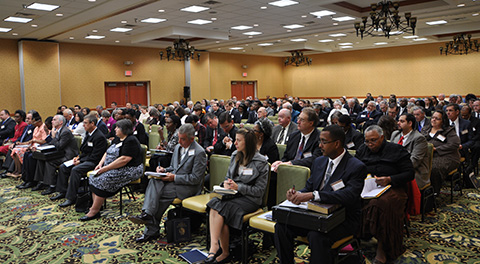
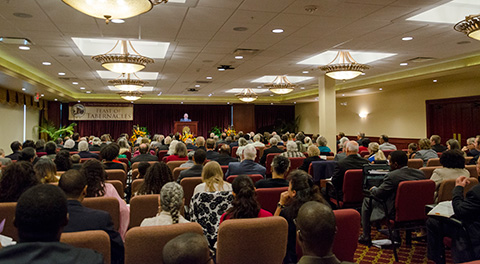
Our weekly pattern of singing hymns during Sabbath services is a long-held Church tradition. Every week for many decades, a song leader has stood up to begin services with three hymns before an opening prayer and a sermonette. Two more hymns are sung as services continue—one before the announcements and one more before the sermon. After we have been fed spiritually through the main message, we stand one final time for a closing song and prayer.
Church traditions are important, so we make sure we follow them closely. II Thessalonians 2:15 says we must “stand fast, and hold the traditions which you have been taught, whether by word, or our epistle.”
Yet this musical tradition is not just there for tradition’s sake. It carries deeper purposes and has rich biblical roots.
In addition to being a mighty servant of God, King David was also a musician—one who wrote many psalms, which are songs or hymns that teach and preserve truth. One reason these songs were written was to sing them before God.
Consider Psalm 100:2: “Serve the Lord with gladness: come before His presence with singing.” When we come together, we are to use these hymns to sing to God.
Psalm 149:1 adds to this: “Praise you the Lord. Sing unto the Lord a new song, and His praise in the congregation of saints.”
Music has been an integral part of Sabbath worship for millennia. But it does not stop at Sabbath services. We see singing at God’s Holy Days and other special times throughout the year as well.
Consider the New Testament Passover. On the night before Jesus Christ’s death, He established the annual custom of washing feet, eating the bread symbolizing His broken body, and drinking the wine symbolizing His shed blood. But just as we see with weekly Sabbath services, Jesus made sure the evening involved singing.
After they took the symbols of bread and wine, Matthew 26:30 says, “And when they had sung a hymn, they went out into the mount of Olives.” Christ did not want the evening to exclude this important element.
How Music Benefits Us
Music has a special power. It can stick with us, even if we do not always want it to. Want proof?
“My bologna has a first name, it’s…” Unless you are too young, you probably just finished the famous jingle in your head with five letters, “O-S-C-A-R.” The Oscar Mayer company created this catchy ditty for a commercial in 1974 and it has been stuck in the minds of millions ever since.
But why do we remember this? It is not useful to most on an everyday basis, yet somehow this tune has been etched into our long-term memory.
This silly example helps demonstrate the staying power music can have in our lives.
Songs have a unique way of transporting us back to specific places and times, evoking a flood of emotions. It is as though you are reliving the wonderful feelings and memories you made decades earlier.
When applied to biblical principles, the effects of music are even greater. Songs can help us internalize and remember all that God is doing in our lives.
Remembrance is the purpose of many of the songs preserved in the book of Psalms. In Psalm 103, that purpose is explicit: “Bless the Lord, O my soul, and forget not all His benefits” (vs. 2).
Asaph, who was one of David’s appointed musicians, also used songs to pass along doctrine, history and prophecy.
In Psalm 78, Asaph likens Israel’s history to a “parable” (vs. 2). One purpose of the composition was that “the generation to come might know” the mistakes of the past and learn from them (vs. 6). Take time to read the entire psalm.
The God who created music knows just how important it is to our memory. The human brain was not just designed to enjoy music; it was designed to retain what we hear.
This is a big reason why God has us sing at services. When we sing hymns each week, we begin to remember the Bible passages that form the lyrics. This is why some who have been in God’s Church for many years can sing a lot of the songs without even picking up the hymnal. The words have become ingrained in their minds and hearts.
Praise and Worship
The apostle Paul encouraged all saints who would read his epistles to use music to help them retain knowledge: “Let the word of Christ dwell in you richly in all wisdom; teaching and admonishing one another in psalms and hymns and spiritual songs, singing with grace in your hearts to the Lord” (Col. 3:16).
Again, this is not the kind of singing where we are daydreaming or thinking about other things. It is focused and meditative, reflecting on the message and biblical principles described in the song.
Ephesians 5:18-19 doubles down on this principle, saying to “be filled with the Spirit; speaking to yourselves in psalms and hymns and spiritual songs, singing and making melody in your heart to the Lord.” We have already seen the benefits this can bring each of us in retaining the truths of the Bible. But verse 20 adds another great purpose of music.
It says, “Giving thanks always for all things unto God and the Father in the name of our Lord Jesus Christ.” Singing in this way—whether it is during Sabbath services, at a Holy Day, or just in your kitchen at home—is a way in which we can praise or thank God. Ultimately, when we do this, we are learning to worship Him more effectively.
Many churches in the world emphasize “praise and worship” when they incorporate music into their services. What should praise and worship mean for us? These should not be some sort of shallow emotional show. Rather, they are vital to a Christian seeking to please God.
Praising God includes thanking Him, declaring His works and acknowledging His greatness. Nehemiah 12:46 shows that, in the days of David and Asaph, there were “songs of praise and thanksgiving” made to God.
When singing thankful hymns during Sabbath services, make them personal. When you turn to hymn 50, “How Good It Is to Thank the Lord,” remember some of the many things God has given you. Similarly, when singing hymn 18, “They Are Blest Who Are Forgiven,” call to mind the times God has forgiven you and the peace it gives your life. For hymn 38, “O God, Forsake Me Not,” remember the ways God has delivered you from trouble over the years.
Meditating on specifics helps make your praise more effective. It adds depth and meaning to the words you are singing.
What about worshipping God? Psalm 95:6 says, “O come, let us worship and bow down: let us kneel before the Lord our maker.”
True worship involves a humble attitude. We do not bow down or kneel during Sabbath services today, but we should recognize we are coming before the God of the universe. We should approach God with reverence and submission—recognizing Him as our Creator, Protector, Healer and Deliverer.
Heartfelt praise and worship through song helps us never forget our God and all He does for us.
The 150 songs in Psalms can teach us a lot about proper praise and worship. The word “praise” is used 160 times in the book and “worship” 15 times. A personal Bible study going through these instances can help you better understand how to praise and worship God more fully.
As we come before God with singing, also remember He is our Father. Any human father knows how good it feels to receive heartfelt thanks from his kids and to hear that they recognize how much he loves them and cares for them. The great God of the universe is the same. Consider how much He enjoys His children singing to Him each week.
A Way of Life
The hymns we sing at Sabbath services are not meant to stay there. They should continue shaping our thoughts long after the closing prayer. Hebrews 13:15 states, “Let us offer the sacrifice of praise to God continually, that is, the fruit of our lips giving thanks to His name.”
David expressed the same approach in Psalm 34:1: “I will bless the Lord at all times: His praise shall continually be in my mouth.”
This is why singing with understanding matters. When we think about the words while we sing, those words become easier to recall later. A line from hymn 17, “Mine Eyes Upon the Lord Continually Are Set,” can come to mind when you need comfort during trying times. A phrase from hymn 95, “Behold, the Day Will Come!” can help refocus you on pressing toward God’s Kingdom. And hymn 97, “Not Many Wise Men Now Are Called” can help you remain humble and remind you of the specialness of your calling. Hymns can become material for our meditation and prayers.
Yet to get to that point requires active participation. Look joyful as you sing. Pay attention, make eye contact with the song leader and do not just look down at your hymnal the whole time. Listen to the voices around you and blend with them. And most important, we should ask ourselves questions like: What truth am I singing? What does this hymn teach me about God? What am I thanking Him for? What attitude should these words produce in me?
Singing this way changes the hymn portion of services. It is no longer something you do out of routine. It becomes an opportunity to remember God’s Word, praise Him for His works and worship Him with a focused mind.
So the next time you open the hymnal, pause and think about what you are about to do. We are not merely filling time. We are lifting up our voices before God, the King of all the Earth. Sing with understanding—and let every hymn help you remember, praise and worship Him to the fullest!