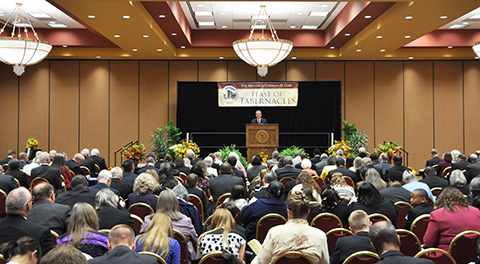
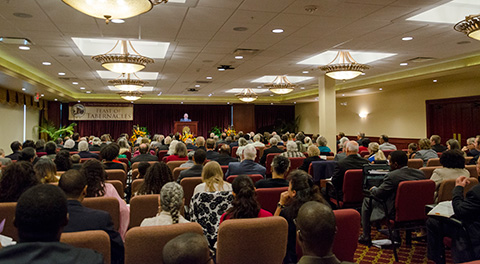
We all go before God in personal prayer. But every Sabbath, we take part in another type of addressing God—public prayer. Even if you have never given an opening or closing prayer during Sabbath services, you still participate in them. At the end, you say “amen.”
“Amen” means “so be it.” More than a formality, this concluding word is a way of telling God that you agree with what was prayed. In that moment, the prayer becomes shared. One man speaks aloud, but the whole congregation joins in agreement.
Opening and closing prayers are a vital part of Sabbath services. They ask for God’s presence and guidance at the beginning, and they thank Him for His help and instruction at the end. They help the congregation shift into a mindset of worship, and they place the entire service in God’s hands.
These kinds of public prayers have strong biblical precedent. Solomon prayed aloud at the dedication of the Temple (I Kgs. 8:22-54). Nehemiah prayed on behalf of the people of Israel (Neh. 9:4-38). Jesus Christ prayed in front of His disciples the night before He was crucified (John 17:1-26). Today, opening and closing prayers may seem like a small part of the service, but they serve a crucial purpose. When offered thoughtfully, they strengthen the whole congregation.
You may wonder why these prayers are only given by the ministry or baptized men within the congregation. In that moment, the man praying is acting as a representative of the congregation before God—serving in an appointed role under God’s government.
Giving an effective opening or closing prayer does not require eloquence or a large vocabulary. But it does require preparation and presence of mind. And because the whole congregation participates by listening and agreeing, it is valuable for everyone to understand what makes these prayers effective.
The Opening Prayer
The opening prayer follows the introductory hymns, and together they mark the beginning of Sabbath services. It is one of the first things the congregation hears before the first message, and it helps shift the focus from conversations and greetings to spiritual learning.
The goal of the opening prayer is to acknowledge God’s presence, ask for His guidance and show reverence for the time we are entering.
There is no single “right” way to give an opening prayer, but there are certain elements that should always be included. Use the following points as a model.
Begin by addressing God. Briefly honor God for who He is—our Father, Creator, Sustainer, etc.—without turning the opening into a long recitation of titles.
Thank Him for the Sabbath and the opportunity to gather. Express gratitude that we can assemble. You can mention the meeting hall God has provided as well as favor He has shown locally or to brethren around the world.
Ask for His guidance and blessing on the service. Ask Him to inspire the speakers’ words and the congregation’s hearing so we receive the instruction we need.
Keep it focused and positive. The prayer sets the tone for the service, so keep it upbeat, stick to the basics and be brief.
Delivery matters. Speak clearly and at a steady pace so the whole congregation can follow along and agree. Avoid rushing, mumbling or rambling. Thirty to 60 seconds is usually appropriate. Use a calm, natural and audible voice.
There is no need to use dramatic language or any gestures. Stand naturally. Hold your hands comfortably—whether at your sides, clasped or resting on the lectern—and bow your head slightly. The main point is to avoid doing anything that distracts brethren from focusing on the words of the prayer.
If no baptized man is available to give the opening prayer, the congregation should remain standing after the hymn and pray silently for about 30 seconds before proceeding. The host or the person managing the sound can regulate this brief pause. In many smaller congregations, the full recorded service from Headquarters—including both opening and closing prayers—is played, which often removes the need for a local opening prayer.
For congregations where the song leader is the only man available to give the prayer, it is appropriate for him to remain at the lectern after the hymn, indicate the opening prayer will be given and proceed.
The opening prayer does not need to be long or elaborate to be effective. It simply needs to be sincere, clear and respectful. With preparation, any capable baptized man can serve well in this responsibility.
“The opening prayer does not need to be long or elaborate to be effective. It simply needs to be sincere, clear and respectful.”
The Closing Prayer
The closing prayer marks the end of Sabbath services. It brings things to a proper conclusion by thanking God for what He provided and asking for continued help as the congregation carries the instruction into the rest of the day and the week ahead.
Here is a helpful structure for the closing prayer.
Thank God for services and the messages. Express gratitude for the opportunity to assemble and for the guidance given through the messages, including the sermonette and sermon.
Ask for help to remember and apply what was taught. Request understanding, retention and the will to put the instruction into practice.
Request God’s blessing on what follows. Ask for a fruitful remainder of the Sabbath, and as appropriate, for God’s protection as brethren travel home. If applicable, ask for a blessing on any meal or fellowship time.
The tone of the closing prayer should be calm and focused. You are helping the congregation shift from receiving instruction to living it out. Avoid unnecessary repetition or overly elaborate language. Aim for 30 to 60 seconds in length.
It is fine to mention a theme or general subject from services in a simple way—especially as part of giving thanks or asking for understanding. Often, a brief line such as, “Thank You for the instruction we received today,” is all that is needed. Avoid summarizing or interpreting the message in your own words.
If significant needs were mentioned in announcements—such as a serious illness or urgent circumstance—it is appropriate to include a brief request for God’s help.
The closing prayer is the final formal element of the service. Deliver it with purpose, as it is the last voice the congregation hears.
“Giving an opening or closing prayer is a small part of Sabbath services—but it carries weight. Delivering them is both a responsibility and a privilege.”
Common Pitfalls
Most opening and closing prayers will be brief and simple—but even short prayers can be weakened by a few common habits. Here are a few mistakes to be aware of and avoid.
Rushing or fading at the end. Nerves often show up in pace and volume. A prayer that begins clearly can taper into a quiet, hurried conclusion, making it hard for others to follow. Before you begin, take a breath, mentally set your pace and aim to speak as if you are addressing the whole room—not just the front row.
Default phrases and “autopilot” wording. Many prayers become repetitive because it is easy to rely on familiar phrasing when nervous. This can include starting every sentence the same way, using filler phrases, or repeating a few favorite lines week after week. A simple way to avoid this is to plan your prayer in three short thoughts—thanks, request and closing—and then speak naturally within that framework rather than memorizing. It is OK to mentally walk through your main points before stepping up. Also, be mindful of repeating words and phrases that others commonly use.
Turning the prayer into a string of titles. Honoring God is important, but long lists of titles distract from the prayer’s purpose and make it harder for others to follow along. For example, you do not need a long buildup such as “Almighty, Eternal, Sovereign, Omnipotent Creator, Ruler of the universe…” Quickly and sincerely acknowledge God at the start, then move into thanksgiving and requests.
Sounding formal instead of sincere. Some men try to sound “official” in public prayer and end up using language that feels stiff, flowery or unnatural. The congregation should not be thinking about phrasing at all—they should be thinking about God. Plain, respectful words usually carry more weight than lofty, poetic verbiage.
Commentary on the sermon instead of a response to it. In the closing prayer especially, it is easy to slip from thanking God for instruction into explaining or expanding on the message in your own words. A safe guideline is to keep any reference to the messages at a high level: Thank God for the instruction and ask for help to remember and apply it—without trying to summarize the speaker’s intent.
Not approaching the lectern with purpose. Sometimes the prayer itself is fine, but the moments leading up to it feel awkward: A long pause, uncertainty about where to stand or a hesitant start. Being ready helps the service flow smoothly and keeps the congregation focused on Sabbath services rather than logistics.
When you are scheduled to give the prayer, be attentive near the end of the hymn and move forward promptly near the end of the last verse. Approach the front calmly and with confidence, coming from whichever side makes sense for the room. Aim to minimize the delay between the hymn ending and the prayer beginning.
If the song leader forgets to mention your name when introducing the hymn, step forward at the appropriate time near the end of the final verse so you are in position as the hymn concludes. This prevents confusion and keeps the service moving smoothly.
Try to time your approach so you arrive neither too early (which can feel awkward) nor too late (which can feel rushed). The goal is not to draw attention to yourself, but to appear prepared, respectful and ready to serve.
Grow Over Time
Giving an opening or closing prayer is a small part of Sabbath services—but it carries weight. Delivering them is both a responsibility and a privilege.
The goal is not perfection. You do not need to try and sound like a preacher, speak at length or seek to impress God or the audience.
Like any form of service, leading prayers is something you grow in over time. Pay attention to how others pray. Take note of what helps the congregation focus. Learn from experience and be receptive to feedback. With preparation and practice, it will become more natural over time.
And remember: When you give a prayer that is clear, purposeful and well-timed, the congregation can respond with a sincere “amen”—not just out of habit, but because they truly agree.