The 1947 Cheval Blanc, a red wine made in France’s famous Bordeaux region, is often considered to be the “best Bordeaux ever made.” At one time, a single bottle of the highly sought-after beverage was sold at an auction to an anonymous buyer for $303,375!
Such rarity lies well beyond our purchasing power. Yet God wants us to appreciate this unique beverage and understand that wine is important to Him. Scripture reveals that during the Kingdom, God will “make unto all people a feast of fat things, a feast of wines on the lees, of fat things full of marrow, of wines on the lees well refined” (Isa. 25:6).
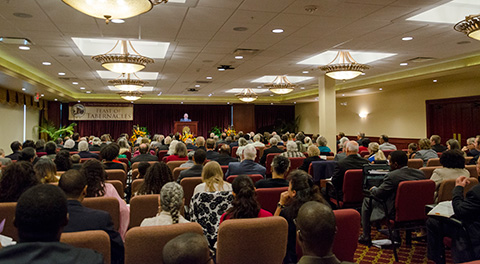
We get a taste of this abundance today. Think back to the recent Feast of Tabernacles. It is a time which pictures the Kingdom, when we can afford and enjoy quality like no other time of year. Often this includes fellowshipping with brethren in a nice restaurant. With uplifting conversations, delicious food and beautiful surroundings, it is a perfect time to enjoy a glass of fine wine.
We are allowed by God to “bestow that money [second tithe] for whatsoever your soul lusts after,” and that includes “wine” and “strong drink” (Deut. 14:26).
The ultimate winemaker, God, has created wine for our enjoyment and mentions it throughout His Word. We know that Jesus Christ refers to Himself as a vine to which we are to be firmly attached, and the Father compares Himself to a vinedresser (John 15:1). Jesus’ first recorded miracle is turning water into wine, and He drank wine with His disciples. Wine is also the symbol of His blood, of which we partake at every Passover ceremony. When enjoyed in moderation, wine benefits your health (I Tim. 5:23).
King Solomon, with God’s inspiration, encouraged readers: “Go your way, eat your bread with joy, and drink your wine with a merry heart; for God now accepts your works” (Ecc. 9:7).
Any time you enjoy a glass of fine wine with friends, pause to consider that the deep red of that glass is the culmination of a process that has taken a long time to plan, create and accomplish. That liquid has taken passion, foresight, art, science and patience to bring you enjoyment!
In my more than 25 years in the wine industry, I have worked through every part of the winemaking process—from grape growing to fermenting to bottling to shipping. Having produced tens of millions of liters on four continents over that time, I have been able to glean correlations between winemaking and living a successful Christian life.
Learning about the winemaking process can help us better understand how God’s plan of salvation works, as well as provide valuable lessons for us in our spiritual journey toward one day drinking wine in God’s Kingdom.
Planning and Planting of a Vineyard
Anyone who has had the chance to visit a winery and walk down straight rows of its vineyard can appreciate the incredible amount of work and labor involved in growing grapes and making wine.
Years before a single drop is made, several elements are reviewed and planned in advance: The location of the vineyard, its access to sunlight, the type of soil present, whether it needs irrigation, what grape varieties to use and which style of wine will be produced.
Just preparing soil for planting can take years. Even after a vine is planted, it can take five years before a crop can be harvested.
This process should help us appreciate the fact that God planned the universe and all its intricacies for countless millennia before the physical universe was even created. Also, God chose us well before the Earth was refashioned (Eph. 1:4), and we are the product of a long line of decisions and planning by God our Father for a very special purpose.
Recognizing God’s capacity to craft His Master Plan billions of years in advance of performing it should boost Christians’ faith. We can better be “confident of this very thing, that He which has begun a good work in you will perform it until the day of Jesus Christ” (Phil. 1:6).
Grape Growing
There is a saying in the wine industry that the best wines are made in the vineyard, not the winery. In other words, the grape-growing process is often the most important part of winemaking. The best wines can only come from the best grapes, which come from a vine put in properly drained, watered and fertilized soil.
We, as part of God’s vineyard, are the same. We cannot grow into quality Christians without direction from the Master Vinedresser actively working with us, and letting Him do His work in us (Phil. 2:13).
A vine must be placed in good soil—the Church—so that its roots can be firmly planted and have access to nutrients and water. God provides the soil we grow in with a great deal of fertilizer: His Word, the help of the ministry and other spiritual food. Without these, any Christian vine will not grow properly or produce useful fruit.
Vines also need proper tending and pruning. A vine left to its own will grow in ways the vinedresser did not have in mind. Once vines start growing, they need to be trained on a trellising system appropriate to the grape variety and wine style desired. This involves frequent correction, pruning and other methods to encourage proper growth. In some cases, a vine will have 80 to 90 percent of its growth removed to yield a bountiful harvest!
Any fruit that does not ripen properly, becomes damaged, or is affected by pests, is singled out and thrown away. This vital and often painful process is done for the good of the remaining grapes and prevents any infection from spreading in the vineyard.
If you have ever tasted an unripe grape, bruised grapes that may have started to rot, or even an overripe grape that has lost its flavor, they are simply not pleasant! Subpar grapes cannot produce good juice, let alone good wine.
Are we allowing ourselves to grow as God the vinedresser wants us to? For Christians, being pruned often hurts! No one enjoys being corrected by God or His ministry. However, yielding ourselves to these needed changes allows us to grow properly and develop quality fruit (John 15:2).
As the pruning process occurs throughout the growing season, Christians must endure purging as a lifelong process. Though our often-difficult life is a growing season, it is more than worth the harvest that comes at the end.
The Harvest
After a long growing season in good soil, with plenty of sun, water and direction from the vinedresser, the grapes become ripe. They reach a level of sweetness that will enable them to be turned into good wine.
As the day of harvest approaches, the winemaker walks up and down the rows of grapes, looking for ripe, plump clusters that have a full, intense color. He tastes the grapes, making sure they are sweet, not too acidic, full of flavor, complex and well-structured. He will squish some of the fruits in his hands and smell the juice to make sure it has reached its full character.
If everything seems right, he makes the decision to start harvesting the entire vineyard. If it does not, he holds off and waits until the produce is ready.
This point of anticipation is critical, and the decision of choosing when to harvest determines the overall quality of the wine.
We are all waiting for our harvest into God’s Kingdom. The wait can seem very long, but think about it from God’s perspective. He is looking for each of us to fully develop the attributes we need to become like Him.
The apostle James made this very comparison: “Be patient therefore, brethren, unto the coming of the Lord. Behold, the husbandman waits for the precious fruit of the earth, and has long patience for it, until he receive the early and latter rain. Be you also patient; establish your hearts: for the coming of the Lord draws near” (5:7-8).
We must pray for patience and do our part to grow so we are ready for the Kingdom’s arrival.
Back at the vineyard, once the harvest begins, a frenzy of activity starts. The grape clusters are gathered, crushed for juice, and—for most winemakers—the fun begins.
Fermentation
Fermentation is the moment a simple juice can be turned into something truly astonishing!
For this process, a special yeast is added to the juice to start the transformation into wine.
Christians’ transformation begins when God gives us His Holy Spirit at baptism. Our fermentation—the exercising and growth of the Holy Spirit in our lives—changes the way we think and act.
Grape juice is considered wine once all the sugar present converts into alcohol. This is the role of yeast. Yet a common problem occurs when yeast does not complete its job.
If at any point in the process the yeast dies, fermentation stops. This is called a stuck ferment, and is caused by several factors including a large fluctuation of temperature. To ensure that fermentation goes smoothly, winemakers monitor and adjust temperature when necessary.
God warns His people in Revelation 3:15-16 to be keenly aware of their spiritual temperature. Not monitoring and correcting it will weaken us to a point where we can become spiritually stuck.
Christians must never allow their yeast to stop its process—we must daily exercise God’s Spirit through prayer, study and practicing outward concern. Allowing our growth to stagnate will stop the conversion process to the point we may spoil and become unusable by God.
Another way we can ensure we do not fail to continue growing is applying the clarification and filtration processes. These involve removing impurities, potential off flavors and imbalances in fermenting grape juice.
A Christian must continue to overcome and systematically remove imperfections, sins, bad habits and everything contrary to God’s way of life.
Aging
Once a grape juice is finally a wine, it often still tastes harsh. Through aging, a wine will smooth out and develop interesting characteristics, complexities and finesse before being ready to bottle and drink.
This process is done in a wine cellar at a specific temperature and level of humidity. Aging a wine in an environment with exposure to too much cold, heat, dryness or light will reduce its potential. A proper aging process makes the difference between a good wine and a great wine.
Depending on the wine style, aging can take many years! Not all wines need many decades like the 1947 Cheval Blanc, but most all wines improve and become more valuable with the passing of time.
“A Christian must continue to overcome and systematically remove imperfections, sins, bad habits and everything contrary to God’s way of life.”
For Christians, developing godly character and spiritual maturity is a lifelong process. In the right environment, the true Church with God’s people, we grow more refined in wisdom and discernment. The conversion process becomes more complete the longer we age in God’s Church and fellowship with others. Are we making sure that we take full advantage of all “aging” opportunities in God’s Church to properly develop?
Using socials and fellowship to spend time with others will greatly refine us by smoothing some harshness we may initially have had (Prov. 27:17). It can also lead to an increase in our value or reward.
Judging and Bottling
Finally, after years—even decades—the wine is approved by the winemaker and ready to bottle.
Once the wine is bottled and labeled, it receives the brand and mark of the vineyard and winery so that consumers can identify who made it and where.
When God’s people are ready after a long period of growth, development and maturing, they can finally enter the Kingdom. They will be born into and bear the mark of His Family.
As wine bottles travel throughout the world to be enjoyed, those in God’s Family will be sent to all parts of the world and benefit all humanity (John 17:18).
Because there are hundreds of thousands of different wines, judging sessions by master tasters help determine which brands deserve the most acclaim. As a winemaker and sommelier myself, I have had my wines judged at the most prestigious wine competition in the world, the International Wine Challenge based in London. More than 10,000 of the best wines in the world are judged by top sommeliers and Masters of Wine (of which there are less than 400 globally) at this event.
Being awarded a medal or failing to do so at such an event can make or break a winery’s prestige, with the highest honors propelling wine brands to international fame.
For all of us, God is the ultimate judge (Psa. 75:7). We should all be vying wholeheartedly for the ultimate prize that He has in store for us (Phil. 3:14)—eternal life and a place in His Family and Kingdom (Matt. 6:33).
Best Wine Ever
In the World Tomorrow, we will surely enjoy a good wine, perhaps even better than the wine enjoyed at the wedding in Cana (John 2:9-10). It is sure to be the best wine ever made!
A Christian’s journey is to God’s Kingdom. Let us look to God and Christ, the master winemakers, to bring us to that perfect wine.
Using the lessons of winemaking as a template for growth will ensure you stay on God’s path toward becoming ready to benefit the whole world.
Whenever you sip a glass of a fine wine, meditate on God’s plan to work through us, and determine to remain an active part of it. Paul wrote, “Whether therefore you eat, or drink, or whatsoever you do, do all to the glory of God” (I Cor. 10:31).
The next time you hold the glass between your fingers, be sure to make a toast to God, the almighty winemaker.