Every four years, America holds presidential elections. Voters choose who they believe will best lead the nation. Many other countries follow a similar pattern of selecting their top official. Each vote is cast in hopes that their candidate will follow through on promises made during the campaign.
Yet we understand that God knows election results long before any votes are cast. He “rules in the kingdom of men, and gives it to whomsoever He will, and sets up over it the basest of men” (Dan. 4:17).
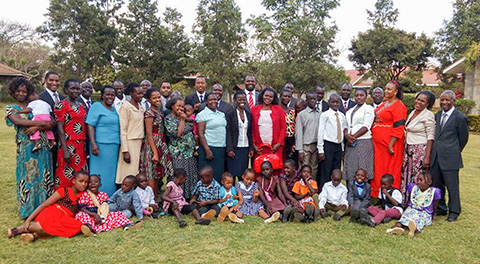
Meanwhile, God is in the background preparing spiritual leaders who will replace these worldly leaders in His Kingdom. No one can campaign their way into these leadership roles. They are God’s “elect”—individuals specially selected to qualify for this extraordinary honor.
I Peter 1:2 lays out the basis for God’s election: “Elect according to the foreknowledge of God the Father, through sanctification of the Spirit, unto obedience and sprinkling of the blood of Jesus Christ.”
The Greek word for “elect” is eklektos, which means select, favorite and chosen.
No one deserves this honor. It cannot be earned. Yet being called to this role carries great responsibility. God outlines in His Word qualities that must be evident in those He chooses.
Paul, assisted by Sylvanus and Timothy, noticed defining attributes in brethren. He wrote in I Thessalonians 1:4 of “knowing…your election of God.” The Greek word for “knowing” can mean to see, be aware, behold, consider, perceive, be sure and tell. “Knowing” implies an ongoing action. These qualities were obvious and dynamic in the brethren. They became palpable through Church members’ actions.
What qualities did they show? What active fruits did Paul notice that allowed him to confidently say that brethren were God’s elect? Read verse 3: “Remembering without ceasing your work of faith, and labor of love, and patience of hope…”
Faith, hope and love are exceptional, active qualities of God’s elect. While there is overlap among the three, each stands on its own. You need to understand what they are, their effects, how they become evident in you, and how to grow in them.
Faith
Faith is the starting point of every person chosen by God. Hebrews 11:6 plainly states that without it, it is “impossible to please Him.” A faithless person will not make the cut as one of His elect!
What exactly is faith? Hebrews 11:1 describes it as “what makes real the things we hope for” and “proof of what we cannot see” (Easy-to-Read Version).
Faith grants us spiritual vision. It helps someone being called to identify God’s true Church through study, sometimes even before stepping into a congregation. It emboldens our prayers to the invisible God, assuring us they are heard and will be answered.
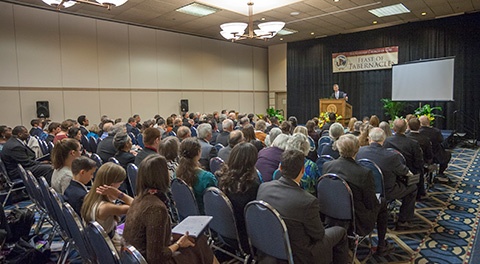
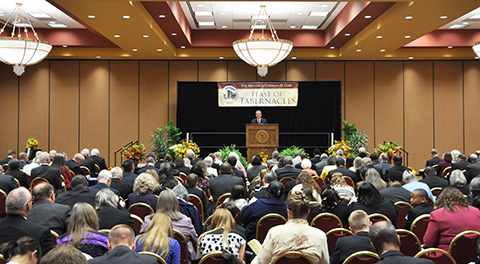
Faith propels our obedience even in the face of daunting odds. It is what keeps us tithing when money is tight and prompts us to attend the Feast of Tabernacles despite work hassles or opposition from combative family members.
“Inasmuch as you have done it unto one of the least of these My brethren, you have done it unto Me,” Jesus said in Matthew 25:40. Faith enables us to internalize this truth, seeing Christ in our fellow brethren. This characteristic broadens our perspective on God’s Plan, longing for all humanity to someday join the God Family. Faith helps us “see the city afar off” (Heb. 11:13-16)—God’s Kingdom.
There are different forms of faith. Initially, when God calls us, we operate with a level of human faith. But there is a shift, as laid out in Romans 1:17: “For therein is the righteousness of God revealed from faith to faith…” Human faith, which we could liken to human steam, lacks the oomph needed to tackle all we must overcome. At baptism, we make the leap from human to spiritual faith—the kind that powered Jesus Christ’s miracles during His time on Earth.
Understanding faith is one thing. Growing in it is another. How do we do that? I Thessalonians 1:3 highlighted the brethren’s “work of faith.” If faith is the proof of what we hope for, then good works are the evidence of faith.
Good works include anything we do to serve God or others. This includes obeying the commandments (Matt. 19:16-17). It also encompasses supporting God’s Work—carrying out the first and second commissions of preaching the gospel and feeding the flock. As we perform good works for God, He is actively working in us. Review these scriptures: John 5:17, Malachi 3:8-10, Mark 16:15-16 and Philippians 1:6; 2:13.
James 2:18 hammers this point home: “Show me your faith without your works, and I will show you my faith by my works.” Faith shines when we dive into good works without expecting immediate reward. If you ever start feeling burdened by God’s commandments or not as motivated about doing His Work, it might be a faith shortage.
To fuel faith, we need to actively “hear” God’s words (Rom. 10:17). Recommit yourself to regular Bible study, including Church materials, and prayer—listening and talking to God. And remember, faith is a fruit of the Spirit (Gal. 5:22). So soak in God’s Word daily and ask for more of His Spirit. Your faith will flourish as a result.
Hope
While faith gives us the spiritual vision to get started as Christians, hope helps us keep our eyes focused on our destination. If we are hopeless, we could wander off our Christian walk.
Hope, as with faith, pleases God: “The Lord takes pleasure in them that fear Him, in those that hope in His mercy” (Psa. 147:11).
Ephesians 2:12 reminds us of our condition before our calling. It says that back then, we “were without Christ, being aliens from the commonwealth of Israel, and strangers from the covenants of promise, having no hope, and without God in the world.” What a miserable existence that was! Spiritual hope is only available in the Body of Christ. The world cannot offer a hope it does not have.
What is hope? Hebrews 6:19 defines it as “an anchor of the soul, both sure and steadfast.” The previous verse says that we “fled for refuge to lay hold upon the hope set before us” (vs. 18).
How is hope exhibited? We read in I Thessalonians 1:3 about the patience of hope. Just as works are the evidence of faith, patience is the evidence of hope. Romans 8:25 supports this: “But if we hope for that we see not, then do we with patience wait for it.”
The word translated “patience” in these passages is hupomone. According to Strong’s Concordance, this means cheerful or hopeful endurance, constancy.
Hope is what allows someone to persevere as a Christian for decades upon decades, waiting for the Kingdom of God despite constantly deteriorating world conditions and severe trials. It helps us “lay aside every weight, and the sin which does so easily beset us, and…run with patience the race that is set before us” (Heb. 12:1).
If we ever find our patience wearing thin, we may just be running low on hope!
To grow in hope, use what we might dub the “Romans 5 method.” Paul wrote: “We glory in tribulations also: knowing that tribulation works patience; and patience, experience; and experience, hope…” (vs. 3-4).
Let’s break down the steps of this method to build hope when you are hit by a trial and life suddenly feels hopeless.
Step 1: Embrace the trial. It may seem counterintuitive, but the word translated as “glory” means to vaunt, boast, glory, joy and rejoice (Strong’s). Why do this? Because you already know from Romans 5 that tribulation is precisely what kicks off a process that results in more hope.
Step 2: Watch yourself grow more patient because of it. You might even surprise yourself by saying, “I never thought I had the kind of patience it takes to deal with this!” Hang in there. You are beginning to see the fruits of your endurance.
Step 3: Recognize the experience you are gaining from this trial. It is worth its weight in gold. Consider how many people you can uplift because you understand their pain when they undergo similar hardships. You have been there, and now you can assist someone facing that kind of trial for the first time.
Step 4: Treasure the new hope as you glimpse a possible resolution. That hope will sustain you until the trial is over. Moving forward, when you encounter similar challenges, you will own the kind of hope that anticipates God’s deliverance once again.
Verse 5 concludes, “And hope makes not ashamed; because the love of God is shed abroad in our hearts by the Holy Spirit which is given unto us.” This brings us to the next quality…
Love
If faith grants us spiritual vision and hope keeps our eyes fixed on our destination, then love acts as the vehicle to carry us there. Without love, we are like hamsters on a wheel—expending energy but going nowhere. A lack of love disqualifies a person from being among the elect.
When it comes to pleasing God, I Corinthians 13:2 spells it out plainly: “Though I have all faith, so that I could remove mountains, and have not charity [godly love], I am nothing.”
Think of the components of a “Christian car.” While we might consider the things opening I Corinthians 13 as crucial components of the car—prophecy, all mysteries, all faith, giving our goods to the poor, even martyrdom—love is the car itself. Everything else must fit within the frame of love. As I Corinthians 16:14 says, “Let all your things be done with charity [love].”
Similar to faith, the love of God is a fruit of the Holy Spirit within us. Without God’s Spirit, we cannot possess His love (Gal. 5:22; Rom. 5:5). I John 5:3 defines the love of God as obedience to His commandments.
Yet I Thessalonians 1:3 speaks specifically of a “labor of love.” Love is labor! “Labor” is more difficult than “work.” The Greek meaning of the word translated “labor” is a beating, intense labor united with trouble and toil.
Love is demonstrated through selfless acts that stem from the selfless love we have received from God. Unlike faith or hope, we cannot initiate God’s love within us. He initiates it. This truth is echoed in I John 4:19: “We love Him, because He first loved us.”
While there are forms of human love discussed in the Bible, such as brotherly love (phileo), they are not potent enough to make us “living sacrifices” (Rom. 12:1). Sacrificial love, exemplified by Christ’s sacrifice, moves us to lay down our lives for others.
Sacrificial animals physically died. I John 3:16 shows how that applies at the spiritual level: “Hereby perceive we the love of God, because He laid down His life for us: and we ought to lay down our lives for the brethren.”
Hebrews 6:10 adds, “For God is not unrighteous to forget your work and labor of love, which you have showed toward His name, in that you have ministered to the saints, and do minister.”
Thayer’s defines the word translated “minister” in this verse as “to attend to anything, that may serve another’s interests.” Love is what compels saints to go above and beyond in everything they do. If faith prompts us to perform good deeds, love motivates us to ask, “How else can I help?”
Faith might prompt us to offer someone a ride on our way to Church services, but it is love that compels us to do so even when it requires going out of our way. Faith can help us start tithing but love can drive someone to consistently put God first in their financial planning throughout their life. The principle applies to anything we do for fellow saints and others who may not be able to give anything in return.
If we struggle to serve others sacrificially, we may lack love. To remedy this, draw closer to God, for He is love. Ask for more of the Holy Spirit and the specific fruit of love. As you continue to abide by His Word, the love of God will be perfected in you (I John 2:5).
Give Diligence!
How God elects His future leaders is very different from how men elect theirs. Often with human leaders, character qualities are not as important after election night. Yet II Peter 1:10 tells us to “give diligence to make your calling and election sure.” We cannot sit idle thinking, “Once elect, always elect.” We must secure our election!
This list of virtues in II Peter 1 starts with faith and ends with love. Hope is not specifically on the list, but it is implied in verse 9: “But he that lacks these things is blind, and cannot see afar off…”
Work on these three qualities! They are what God looks for in His future leaders.
Look at how I Corinthians 13 ends: “And now abides faith, hope, charity [love], these three; but the greatest of these is charity.” Christians need all three in this life. These qualities abide—endure—now and help us endure to the end. Yet the verse emphasizes that “the greatest” is love.
Why? Because the ultimate quality that will endure forever when we become God-beings is love. Yet getting to that level of love requires all three in this physical existence. Faith drives hope, and both faith and hope drive love. Faith is evidence of what we hope for. Once what we hope for comes, we will not need faith and hope in the same way.
Yet love goes on forever.
When you see the work of faith, the patience of hope and the labor of love in yourself and other brethren, be like Paul—remember these three attributes, thank God and be inspired to continue growing as His elect!