The Holy Days detail God’s Plan of salvation for mankind. The sacred observances that occur in the spring represent the foundations or beginnings of His purpose. This process is dual, involving both the ancient physical nation of Israel and a much smaller spiritual group of Church members today.
The Spring Holy Days began with Passover, when the Hebrews were loosed from captivity in Egypt. Israel then began journeying on the First Day of Unleavened Bread and its freedom was sealed on the seventh or Last Day of Unleavened Bread, after Pharaoh and his army, who were pursuing the Israelites, were destroyed in the Red Sea.
Spiritual Israel—the Church of God—also has its roots in the Spring Holy Days. Jesus Christ, on the night before His crucifixion, instituted the New Testament Passover for His disciples. He was later resurrected during the Days of Unleavened Bread. His death and resurrection allowed for the establishment of the Church, a group of people through whom He lives, called the Body of Christ (I Cor. 10:16; 12:27).
God provided symbols to help physical human beings understand the spiritual concepts behind these important events. These symbols were put in place to help the ancient nation of Israel and still benefit spiritual Israel today.
God instituted Passover to begin on the 15th day of the first month of the sacred calendar (in early spring), when ancient Israel was just about to depart from Egypt. They were commanded to kill a lamb and eat it in haste, and to put the lamb’s blood on their door posts to protect themselves from God’s punishment (Ex. 12:21-23).
In addition to serving as a memorial of God freeing national Israel from captivity, this observance also looked forward to a time when the Lamb of God, Christ, would be sacrificed in order to free spiritual Israel from sin (John 1:29; I Pet. 1:19; Isa. 53:7-8).
Today, the Church keeps the Passover as a memorial of Christ’s sacrifice. On the evening before His death, Christ gathered with the disciples to have one final meal, where He instituted new ordinances replacing what was done in the past. Following this, He was captured, put on trial and falsely accused, beaten, tortured and finally subjected to the excruciatingly slow death of Roman crucifixion.
Unlike the way ancient Israel kept the day by killing and eating a lamb in haste, we keep it as Christ instituted it before His death to help us grasp why He was brutally sacrificed. Partaking of the bread and wine during the Passover service proclaims Christ’s sacrifice until He returns to establish His Kingdom (I Cor. 11:26).
Passover Symbols
Footwashing: In the middle of the Passover supper, Jesus proceeded to wash His disciples’ feet (John 13:1-5). He also commanded us to do the same (vs. 12-17). Though He is God and has lived for eternity, He humbled Himself by living and dying in the flesh. He did this to serve and save mankind. Just as it requires humility to wash the lowliest part of someone’s body, we must lead our Christian lives realizing our duty is to lower ourselves and serve others.
Bread: During the Passover supper, Christ broke a piece of unleavened bread and said, “Take, eat; this is My body” (Matt. 26:26). He further said that His body “is given for you: this do in remembrance of Me” (Luke 22:19). His body, being without sin, was scourged for our sakes.
Wine: Christ told His disciples to drink wine from a single cup and explained, “Drink you all of it; for this is My blood of the new testament, which is shed for many for the remission of sins” (Matt. 26:27-28). It is by the blood poured from Christ’s body during His sacrifice that our sins and transgressions are pardoned (Isa. 53:12; Heb. 9:22).
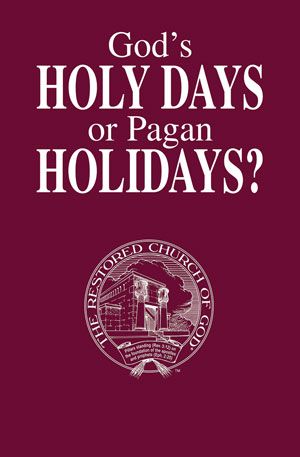
To learn more about Passover, as well as the other Holy Days, read God’s Holy Days or Pagan Holidays?