An extraordinary tree stands as a living relic in the White Mountains of Inyo County, eastern California. Known as “Methuselah,” this Great Basin bristlecone pine holds the record for Earth’s longest confirmed lifespan, at well over 4,000 years old! Its roots stretch through time, preceding the construction of the Egyptian Pyramids, the establishment of the Babylonian Empire, and Jesus Christ’s earthly ministry.
This tree certainly has a legacy. It stands as a testament to the passing of time. As Methuselah’s fame has grown, it has become a symbol of perseverance, endurance and adaptability.
Of course, legacy does not just concern ancient trees. Anyone who aspires to leave a lasting mark in this life inevitably asks questions like: What is my legacy? How did I get here? What do I want to leave behind for others? What do I want to be remembered for?
As the saying goes, “The true meaning of life is to plant trees, under whose shade you do not expect to sit.”
Legacy is defined as “the long-lasting impact of particular events, actions, etc. that took place in the past, or of a person’s life” (Oxford Languages). Typically, it involves enduring accomplishments and can also refer to a financial or material inheritance left for others in a will.
Yet a spiritual legacy exists for Christians. It is one that surpasses any tree or human accomplishment—and it involves you. In Matthew 16:18, Jesus declared, “I will build My Church; and the gates of hell shall not prevail against it.”
The phrase “My Church” means God’s called-out people. This is where you come in, along with everyone who has ever been called and anyone who will yet be called into the truth. We are part of a unique spiritual organization that has endured for a very long time. This legacy goes back much further than the establishment of the New Testament Church 2,000 years ago. We were “chosen…before the foundation of the world” (Eph. 1:4)—predating even Creation itself!
We are continuing God’s legacy. At the same time, we are each crafting our own personal legacies of God working through us. An account in Mark 14 powerfully illustrates this. In verse 3, a woman anointed Jesus’ head with precious ointment. As a result of this good work, Christ said, “Wheresoever this gospel shall be preached throughout the whole world, this also that she has done shall be spoken of for a memorial of her” (vs. 9).
God wants our actions, individually and collectively, to play a direct part in how His legacy continues. In Acts 2, the apostle Peter’s sermon described three groups through which God would further expand His legacy. He stated, “For the promise is unto you, and to your children, and to all that are afar off, even as many as the Lord our God shall call” (vs. 39).
Every member of Christ’s Body contributes to these groups. Now is the moment to grasp a profound understanding of how God intends to perpetuate His precious legacy through you.
You
God’s pattern has been that He initiates each phase of His Work through one individual. Through that person’s leadership, the legacy extends to others.
Consider some pivotal moments in the Bible. What if Moses had looked away from the burning bush? What if Deborah had chosen not to accompany Barak into battle? What if Paul had refused God’s call on the way to Damascus? These examples highlight the profound impact of just one God-fearing person.
Similar to these “Bible giants,” we must stand firm on the truth revealed to us. Just as God’s faithful servants have inspired others by their resolve to individually “work out [their] own salvation with fear and trembling” (Phil. 2:12), so will others eventually be encouraged by how we overcame. God is thinking big here!
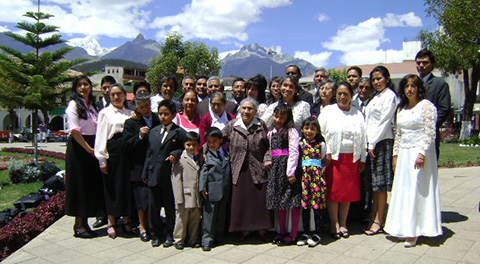
Yet it starts with you: one faithful person. This is why Peter pointedly ended his Acts 2 sermon with “save yourselves” (vs. 40). You may be the first in your family to be called into the truth. Or the only one in your job, or the only one in your school or class. This is not coincidental.
At baptism, irrespective of your past, you inherited a legacy reaching back before the dawn of time. However, we can sometimes underestimate the impact of our actions within God’s grand plan. We must fight this tendency!
Realize that working out your own salvation is an act of leadership. Your faithfulness will ultimately help others—just as you have benefited from the faithfulness of those who came before you.
People you have encountered throughout your life may be relying on your success, even though they do not realize it yet, as they have not been called to understand what you do. When the time comes for them to comprehend, however, they will remember and appreciate your choice to follow God’s way of life—to continue the legacy. This includes even those who may currently oppose your beliefs.
Taking a deeper look at the origin of the word legacy is instructive here. It comes from a Latin term meaning “ambassador, envoy, deputy…send with a commission, appoint as deputy, appoint by a last will” (Online Etymology Dictionary).
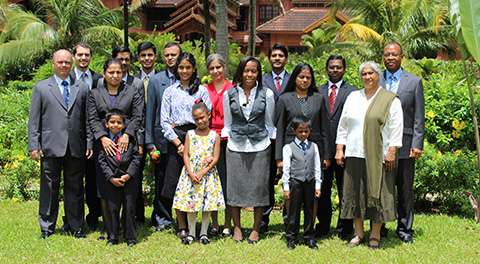
See yourself as an ambassador of God’s legacy (II Cor. 5:20). No one is on this journey solely for themselves. It goes well beyond personal salvation—we “save ourselves” so that we can, by our example, contribute to saving others. This is at the core of the legacy of God.
Your Children
Acts 2 also refers to a prophecy about how God would involve our children in His Kingdom. In verse 17, Peter declared, “Your sons and your daughters shall prophesy.” He was quoting Joel 2:28.
God often works through families, and it is unsurprising that the second group cited involves our children. The God Family currently consists of the Father and His Son, Jesus Christ, and will soon be expanded. God’s Family sets an example of how important family should be to us.
In Matthew 19:14, Jesus said, “Suffer little children, and forbid them not, to come unto Me: for of such is the Kingdom of heaven.” Our children are integral members of the leadership team God is assembling, representing the next generation of His Way.
We all must strive to see children as God sees them and treat them as He treats us. Every Church member shares the responsibility.
Parents, the quality of your relationship with your children should reflect the relationship they should seek with God. A loving God has given us the family unit as the perfect workshop for children to practice building a relationship with Him.
This aspect of our Christian legacy is evident in the emphasis of I John 2: “I write unto you, little children, because your sins are forgiven you for His name’s sake. I write unto you, fathers, because you have known Him that is from the beginning. I write unto you, young men, because you have overcome the wicked one. I write unto you, little children, because you have known the Father. I have written unto you, fathers, because you have known Him that is from the beginning. I have written unto you, young men, because you are strong, and the Word of God abides in you, and you have overcome the wicked one” (vs. 12-14).

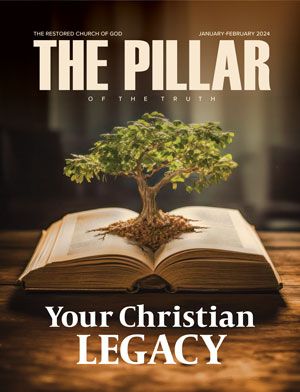
As with the annual rings on the Methuselah tree, your Christian legacy begins small, with just you and your family, before growing to include all mankind.
Photo: Adobe Stock
The conclusion of the Old Testament also underscores this responsibility. Elijah is commissioned to “turn the heart of the fathers to the children, and the heart of the children to their fathers” (Mal. 4:6) to avoid global destruction.
Regardless of your parental status, we all have a responsibility to support God’s youth, including programs such as Children’s Bible Lessons and Ambassador Youth Camp. All parents should apply the principles outlined in the Train Your Children God’s Way book and our various childrearing sermons. Beyond their personal salvation, our young people will play a crucial role in continuing God’s legacy by assisting others when the time comes.
All That Are Afar Off
Peter could have easily concluded with “the promise is unto you, and to your children,” but he did not stop there. Historically, without the existence of a third legacy group, you and I would not be here today! When you read “and to all that are afar off,” it is as though you are reading your own name.
On the night before His death, Jesus prayed, “Neither pray I for these alone, but for them also which shall believe on Me through their word; that they all may be one; as You, Father, are in Me, and I in You, that they also may be one in Us: that the world may believe that You have sent Me” (John 17:20-21).
The term “they all” encompasses those who are not here yet. In this age, God is still calling individuals until His desired number of saints is complete. This ongoing legacy is so powerful that it is connected to the world believing that God the Father sent Christ!
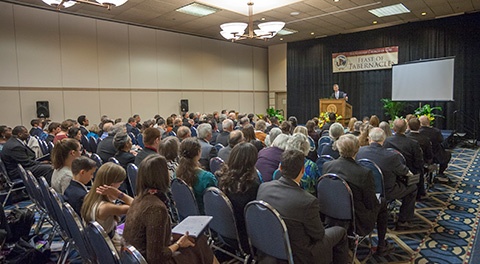
This is tied to preaching the gospel (Matt. 28:19-20). Supported by the faithful tithes, donations and prayers of Church members and co-workers, we actively fulfill this commission through our website, rcg.org, and our vast array of free literature and videos. Your efforts support Headquarters and the Church’s ministry as a whole.
Every day you get to live is a day in which you can do more to help others God may be calling. This is done through having your whole heart in the Work, obeying God, and drawing close to Him through the five tools of Christian growth—prayer, Bible study, meditation, fasting and exercising the Holy Spirit. These will all empower you to be a more effective servant.
God’s legacy is also furthered by living an honest life, being the only Bible others may ever read, and letting “your light [not necessarily your words] so shine before men, that they may see your good works, and glorify your Father which is in heaven” (Matt. 5:16).
Legacy Blueprint
The rest of the second chapter of Acts gives us a blueprint for the right environment where you, your children and all that are afar off can flourish. Verses 42-47 present an eight-step guide for expanding God’s legacy. Early Christians continued…
(1) Steadfastly in the apostles’ doctrine. The Church is “built upon the foundation of the apostles and prophets, Jesus Christ Himself being the chief corner stone” (Eph. 2:20). Drinking in the words of God’s prophets and apostles is crucial. Neglecting this undermines the very foundation of the Church.
(2) In fellowship. While understanding doctrine is vital, our Christian legacy is incomplete without true fellowship. I John 1:3 emphasizes the importance of this: “That you also may have fellowship with us: and truly our fellowship is with the Father, and with His Son Jesus Christ.”
(3) In breaking of bread. Sharing food is part of God’s legacy formula. Special bonds are built over meals. Consider how many instances there are in Scripture of Jesus eating with His disciples. Why even record that in the Bible if it were unimportant? Signing up for potluck items in your congregation, if yours offers the opportunity, should be a priority every week!
(4) In prayers. Communication with God is vital. He desires our input, cares about our needs and is deeply invested in our legacies. Every once in a while, read Hebrews 12:22-24 to renew your inspiration about the importance of prayer.
(5) In the fear of God. Fearing God is intertwined with preserving His legacy. Psalm 112:1-2 illustrates this connection: “Blessed is the man that fears the Lord, that delights greatly in His commandments. His seed shall be mighty upon earth: the generation of the upright shall be blessed.” You can see aspects of the three groups we looked at being inferred here.
(6) Having all things common. If everyone who has been blessed with extra gives what they do not need, God’s Work is provided for. It is a perfect opportunity to practice the cycle of giving (Luke 6:38).
(7) Praising God. Pride must yield to praising God for His faithful legacy: “Not to us, O Lord, not to us, but to Your name give glory, for the sake of Your steadfast love and Your faithfulness!” (Psa. 115:1, Revised Standard Version).
(8) Having favor with all the people. Favor is a hallmark of God’s legacy. God grants favor to His people as a sign that He is pleased with us. This was exemplified by Christ Himself. Even as a child, He “increased…in favor with God and man” (Luke 2:52, see also Proverbs 16:7).
The outcome of this blueprint? Acts 2:47 declares, “And the Lord added to the Church daily such as should be saved.” Given the right environment, lives will be transformed daily and perpetuate God’s eternal legacy.
Continue On
In II Corinthians 3:2, Paul wrote to the brethren, “You are our epistle written in our hearts, known and read of all men.” This insight urged them to recognize themselves as individual carriers of God’s legacy.
To take on this mindset, regularly ask yourself: Who do I represent? Who is affected by my actions? And where am I headed? The answers, drawn from what has been covered here, can inspire you about your responsibility to perpetuate God’s legacy. This is especially vital when you are hit with trials, adversity and doubt in a hostile world.
Recall Methuselah the tree. Our Christian legacy shares similarities with this bristlecone pine’s endurance in hostile conditions. Despite the challenging environment of the White Mountains of Inyo County, the tree has adapted remarkably to its surroundings, thriving in a semi-arid boreal climate and enduring fierce winds and sparse soil at high elevations.
Reflecting on this, also ask yourself: What am I doing now to assist God in preserving this greatest of legacies? While Christ assured us that His Church would never be destroyed (remember Matthew 16:18), this does not exempt us from actively contributing to this effort.
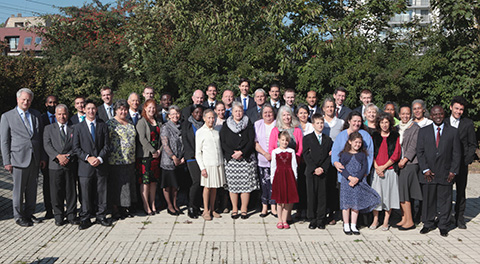
Consider the various activities we engage in regularly: Growing to be pillars in our congregations, serving the brethren with things like childcare and car rides, fervently praying for one another and the Work, participating in Spokesman Club or ladies’ gatherings, attending socials, keeping contact with those unable to attend, and, above all, staying close to God. These actions align with the legacy blueprint mentioned earlier and collectively contribute to the Church’s indestructibility.
Finally, it is interesting to note that the book of Acts does not end with an “Amen.” It is conceivable that God is recording our present actions, some awaiting inclusion in an expanded version of this book in the future.
Regardless of this possibility, your individual role today forms part of a greater heritage that dates back to before the foundation of this world. God’s legacy through us will ultimately benefit everyone who has ever lived.
Your Christian legacy will continue for all eternity.