A frog in boiling water. This oft-repeated phrase is shorthand for a longer allegory: If a living frog is thrown into a pot of boiling water, it will immediately jump out to save itself. If the amphibian is put in cooler water, however, and the heat is slowly cranked up, it will stay put and be cooked to death.
This is a great way to describe someone who lets seemingly unimportant problems in his life slip by until disastrous consequences take hold.
Yet there is a problem: Frogs are smart enough to jump out of water that is uncomfortably warm.
The irony here is that humans are different. Our carnal nature makes it easy to let small issues build over time—slowly climbing credit card debt, a gradually worsening drinking problem, unresolved marital issues. The end result? Bankruptcy, alcoholism and divorce.
There is a simple reason it seems mankind is like a slow-motion disaster zone: Satan’s nature. Notice how the devil spreads his way throughout the world: “Wherein in time past you walked according to the course of this world, according to the prince of the power of the air, the spirit that now works in the children of disobedience” (Eph. 2:2).
Satan, as “the prince of the power of the air,” broadcasts his wrong thoughts, desires and emotions throughout the Earth. Everyone is naturally tuned into his frequency.
Christians, however, are to be different. Note the verse says “in times past you walked according to the course of this world.” Living life by every whim of human nature should be behind us! We should no longer follow “the course of this world.”
Instead, those living God’s Way should strive to lead lives of godliness. They should shun the ways of this world, which can also be called worldliness.
But, as with the proverbial frog, the ways of this world can slowly seep into a Christian’s life until it is boiling over with sin.
To avoid sliding into worldliness, we must constantly be on guard for any hint that it is creeping into our lives.
Expanded Definition
“The course of this world” is a broad definition for worldliness. It is difficult to know exactly what it means. After all, not everything in society is inherently evil or wrong.
Vocabulary.com begins to narrow in on a better meaning: “concern with worldly affairs to the neglect of spiritual needs.”
Romans 8 puts it this way: “For to be carnally minded is death; but to be spiritually minded is life and peace” (vs. 6).
Being “carnally minded” does not bring instant death. It is something that happens over time. Similarly, being “spiritually minded” is not instantaneous either. We must avoid the wrong ways of this world while growing closer to God. Over time, you will become more in tune with His will—and in the end will receive eternal life.
A parable by Jesus Christ helps describe what can cause someone to slip back into worldliness. Describing a sower who sows seed (the word of the Kingdom of God), He explained that some seed fell near thorny ground.
Here is the account in Matthew 13: “He also that received seed among the thorns is he that hears the word; and the care of this world, and the deceitfulness of riches, choke the word, and he becomes unfruitful” (vs. 22).
While the ultimate fulfillment of this parable will occur in the future, there are lessons for us today. If we allow the “care of this world” and the “deceitfulness of riches” to cloud our lives, they will ultimately “choke the word” and we will become unfruitful. Luke 8:14 adds “pleasures of this life” to the list.
Being too tied to what the world has to offer will hinder God’s ability to work in us—and can ultimately lead to spiritual death!
Undoubtedly, shunning worldliness is of vital importance. And, for Christians today, avoiding such things is more difficult than ever.
21st-century Problems
Think of how life was for thousands of years: Most worked by themselves on farms. In order to enjoy an alcoholic beverage, they would probably have to brew it themselves. To buy anything premade, they would have to travel potentially long distances to a market. Physical vices or sins were typically more difficult to fall into.
Today is different. Most of us work with those who are not in the Church. This means we are surrounded by filthy language, wrong attitudes, and ungodly conduct for at least eight hours a day. In addition, grocery and convenience stores are generally within walking distance from a person’s home.
“We are to be vexed every day by the sins we see in society. The Greek words rendered ‘vexed’ in
verses 7 and
8 are two different terms that have similar definitions. Put together, they mean to be distressed, oppressed, harassed and afflicted.”
Imagine what it took to be an addict or glutton in the past. For example, if you wanted cigarettes, you would have to grow the tobacco yourself. Now you just pop down to the corner gas station to grab a pack of Pall Malls. Also, to be obese back then, you would have had to be wealthy and sedentary. By contrast, farmers worked hard to cultivate their food. It is highly unlikely they would have been grossly overweight.
All of this does not take into account the internet. Think of what this astounding invention of man has done for sin. It used to be that if a person wanted to fornicate they would have to do something such as hire a prostitute. If they wanted to “hook up” with someone, they would have to go to a bar and try to find someone who was also looking for sex.
Now, however, phone apps allow users to find others in their area who want sex. If a person does not want to leave their home, a quick web search reveals whatever pornography a person desires in a split second.
These are more extreme examples, but they show how different the world has become. The same sins have always been around, but they are so much easier to fall into today.
Other problems with the modern world are more deceptive. Take online shopping. It used to be that covetousness required a person to drive to the mall and buy possessions. Now it is all done in a few clicks and items arrive on a doorstep a few days later. This can virtually be done without thinking.
Just a few decades ago, the simple actions of driving to a store, shopping around, and comparing prices at different retailers all slowed down impulse buying—much different from today’s click culture.
In addition, the world shows off the cutting edge in real time. The latest immodest clothing trends are plastered high and low. Marijuana has been legalized throughout the United States and is glamorized at every turn. Rotten entertainment filled with violence, explicit language, and perversity is streaming—on demand—now.
Today, instead of the world being something we must more actively seek out, it now is at our fingertips! This means it is easier than ever before to unwittingly fall into worldly practices.
Virtual World
One of the greatest slippery slopes for Christians is social media applications. These services, while handy for keeping in touch with family and brethren, are mine fields of worldliness. How can you know? They were built to cater to human nature.
Scientific studies show that each “like” and “upvote” a person gets releases dopamine (a pleasure hormone) into the brain. This means that a user will post more regularly and freely in hopes of more positive feedback. The most popular service goads this on by asking, “What’s on your mind?” at the top of your account homepage.
The modern world feels everyone should have a voice and speak their minds. Every political event and big news story should garner a reaction. After a terror attack: put the country’s flag over your profile picture. A salacious scandal involving a public servant: post your thoughts for everyone to see.
The problem with posting too often is impaired judgment. A person who may have once carefully considered everything he shared will likely later find himself posting more impulsively.
This can show itself in sharing too much about your personal life or too many pictures of yourself, which are both signs of vanity. It can also lead to making political comments, even though we are not to be involved in politics in any way as Christians (Phil. 3:20).
In addition, social media can have you accidently proselytizing or preaching—something that should be left to God’s ministers (Eph. 4:11-16).
Political comments are so prevalent in the world that it can be easy to fall into. For Christians, it can be hard to watch what goes on in men’s governments. Because we know the truth, we can want to cry out and help the world see how they could fix its problems. Yet do not give into this urge! We should stay silent on such issues.
The subject of religion should be similar. For instance, you may share an article that relates to prophecy. This may be fine, but if you and other brethren begin to comment on this in more detail and bring up Bible verses and concepts, you have begun to have a Bible study.
Consider the danger here! Those who interpret Scripture incorrectly are heretics. Heresy is a work of the flesh that can keep us out of the Kingdom (Gal. 5:19-21).
Even if what you are saying about God’s Word is correct, you should not be quick to disseminate your knowledge to others. Group Bible studies should be left to the ministry, and God tells us that those who teach others will receive greater judgment (Jms. 3:1).
In a broader sense, there is no need to flash your religion in everyone’s face. Your conduct should be the way you demonstrate God’s Way—not how many scriptures you quote or your “righteous indignation” on what is going on in the world.
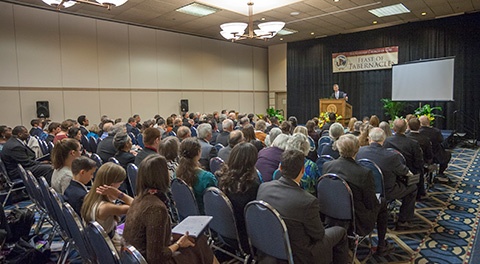
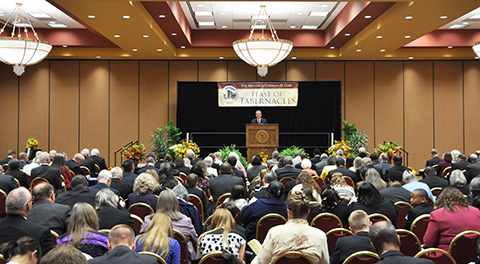
Consider: If you share something with all of the Church brethren with whom you are connected, it is similar to standing up at the Feast of Tabernacles after services with a megaphone and exclaiming: “That political candidate is crazy!” “I read an excellent news article with prophetic implications last night! I have copies printed off if you want to read it.” “Here is the Bible verse that has meant a lot to me lately!”
Think of showing off selfie photographs in such a setting: “Look at how cute I am in my new outfit!” “Check out my bulging biceps. I’ve been working out!”
When put in this perspective, it seems absurd. The equivalent behaviors on social media should be viewed in a similar way.
Online forums must be used wisely and minimally to avoid edging toward worldliness.
Simple Test
You may be wondering, “How can I know if there are areas of my life where I am worldly?”
The example of the Bible figure Lot—who lived in the sin-laden cities of Sodom and Gomorrah—begins to answer this question.
Notice II Peter 2:7 states that Lot was “vexed with the filthy conversation of the wicked.” Verse 8 states that the “unlawful deeds” of those in these twin cities “vexed his righteous soul from day to day.”
We are to be vexed every day by the sins we see in society. The Greek words rendered “vexed” in verses 7 and 8 are two different terms that have similar definitions. Put together, they mean to be distressed, oppressed, harassed and afflicted.
Ezekiel 9:4 adds to this by saying we should “sigh and…cry for all the abominations” seen in society.
An important qualifier: Being “vexed” and “sighing and crying” is not some sort of outward show. We should not go around in a glum harrumph or call out sins in people’s lives.
Instead, the unrighteous conduct of the world should bother you. The opioid epidemic in America should leave you distressed. Seeing children stubbornly disobey their parents should make you sigh. The anti-biblical social and religious agendas should make us cry.
You should be vexed by what you see around you!
If this is not the case, or if you have noticed the world does not distress you like it once did, ask yourself why.
Stop and take a cold, hard look at your life and see how you are spending your time. Have you allowed yourself to take on some of the crass or harsh language of your co-workers? Have you started to be more lax with what activities you do on the Sabbath? What movies and TV shows are you watching? How much time are you spending on social media—and what are you posting?
Be brutally honest with yourself. Are you letting your physical life butt out your spiritual one?
If you find you have delved back into the world in some ways, take action! Pray for forgiveness and repentance—then correct your course! Consider fasting so you can draw closer to God.
Worldly thoughts, attitudes and activities can be likened to noise. The more you have in your life, the louder the clamor gets. When you are not actively rooting worldliness out of your life, the cacophony will drown out the Holy Spirit’s “still small voice” (I Kgs. 19:12).
The Spirit works in us. It nudges us if we are off course. Yet if we ignore its quiet “voice” too often, we will begin to simply do our own thing rather than performing God’s will.
Listen for the “still small voice” to know when you have begun to move away from godliness and into worldliness. When this happens, learn from your mistake and move on.
Not of This World
Jesus said He was “not of this world” (John 8:23). We are to be the same. The more godly we become, the more we will stick out in society.
Notice what the apostle Peter said of us: “But you are a chosen generation, a royal priesthood, a holy nation, a peculiar people; that you should show forth the praises of Him who has called you out of darkness into His marvelous light” (I Pet. 2:9).
The more you shun worldliness, the more peculiar you will become and the brighter you will shine in this dark age.
Verse 11 continues: “Dearly beloved, I beseech you as strangers and pilgrims, abstain from fleshly lusts, which war against the soul.”
Take this for what it says. Lusts of the flesh—a major part of worldliness—war against us!
Yes, we are peculiar, we are strangers and pilgrims, we are not of this world! Yet this does not mean we should be purposely strange or odd. Peter continued by saying our conduct should be “honest among the Gentiles” (vs. 12) and that we should obey “every ordinance of man for the Lord’s sake” (vs. 13). He also stated that we should: “Honor all men. Love the brotherhood. Fear God. Honor the king” (vs. 17).
The apostle Paul adds to this: “If it be possible, as much as lies in you, live peaceably with all men” (Rom. 12:18).
Our Place
While we are strangers and pilgrims in this world, there is a place where we do fit in. Notice Ephesians 2: “Now therefore you are no more strangers and foreigners, but fellow citizens with the saints, and of the household of God” (vs. 19).
Any time we enjoy fellowship with brethren—who are also striving to be “not of this world”—we are no longer strangers and pilgrims. These are the saints who are part of the same household.
Continue reading verses 20-22: “And are built upon the foundation of the apostles and prophets, Jesus Christ Himself being the chief corner stone; in whom all the building fitly framed together grows unto a holy temple in the Lord; in whom you also are built together for a habitation of God through the Spirit.”
We are each living stones (I Pet. 2:5), and we should encourage and exhort each other to shun all forms of worldliness—and work together to grow “unto a holy temple in the Lord.”
The Father will soon and suddenly come to His Temple (Mal. 3:1). To ensure we are ready, we must all draw closer to one another as the household of God—and avoid worldliness!