“All scripture is given by inspiration of God…” (II Tim. 3:16). These eight words confirm God authored the entire Bible. He gave His instruction manual to teach us how to live His way of life. Inspired men sat down and meticulously wrote every one of the hundreds of thousands of words in the Bible.
What was God’s purpose for doing this? He wanted to reach His people on a personal level. Yes, the Bible was written for you!
Numerous personal letters and notes are sprinkled across its pages. The New Testament itself is largely a collection of letters. Paul wrote the Galatians, “You see how large a letter I have written unto you with my own hand” (6:11). God inspired Paul, but he still had to make time and write those words on paper “with his own hand.”
Think about the 150 psalms, which are either poems or hymns set to music. They also can be seen as short letters. Then there are the books of Proverbs and Ecclesiastes. Two books filled with short verses, or notes, full of wisdom and instruction to those who are willing to take heed. One such verse in Proverbs speaks directly to the importance of writing and how it relates to the give way of life. Notice, “Withhold not good from them to whom it is due, when it is in the power of your hand to do it” (3:27).
No matter how illegible you think your handwriting is, you have the “power” to write “good” words to others. Words of kindness, pleasantry, bounty and joy. All it takes is a decision and then a few moments to write the words that say you care.
God set the example for us. He personally wrote a special message to His people. The two tables of stone containing the Ten Commandments were “written with the finger of God” (Ex. 31:18). What a powerful picture! God wrote them in stone to reflect how He would write them in people’s hearts (Rom. 2:15).
Writing to fellow Christians helps strengthen bonds. Sending and responding to letters is not only a way to stay in touch, but you can have an ongoing conversation that can last months. God even says that our communications with each other are recorded: “Then they that feared the Lord spoke often one to another: and the Lord hearkened, and heard it, and a book of remembrance was written before Him” (Mal. 3:16). God’s people writing to each other is that important!
God created us with an intrinsic desire to connect with others. His people have much in common and much to share. We have the same purpose and future. We seek God’s Kingdom first (Matt. 6:33), but also share similar afflictions in this world. We live in this world but are not part of it. We do not participate in the traditions and customs of the society we live in.
Also, words have significant influence over others’ emotional state. They can make us laugh with joy or cry in despair. If we use heartfelt words at the right time, we have the power to inspire. When a fellow brother or sister in Christ is going through tests and trials, a few words can be tremendously comforting.
Whether you write often or rarely put a pen to paper, learning the basic principles of letter writing will ensure you can successfully use this timeless tool of communication.
Writer’s Block
One of the main reasons people are discouraged from writing is the infamous “writer’s block.” Even the most skilled authors can struggle to begin filling a blank page.
If you think you might have a hard time getting the ink to flow, do not let it stop you from trying.
Surprisingly, the most difficult part of writing a note or letter is not finding the right words, but simply to get started. Once you have done it a few times, other obstacles you think you might encounter become less intimidating and even disappear.
If daily responsibilities compete for your time, an email or a text is an acceptable medium to send a personal note to another. These modern writing methods are more convenient, but old-fashioned pen and paper remains a more elegant way to write. Remember that anything that is worthwhile and of quality takes extra thought and time to produce. Sacrifice a little more time and slow down to meditate for a few minutes. Then pen down a few thoughtful sentences. The extra time you took will make a difference.
But it is not only our busy schedules that can hinder us from writing.
You might think I am not a good writer, or English is not my first language. Thus, you doubt whether you are even capable of writing anything worthwhile. Or you feel that your life is too ordinary to share with others.
You do not have to be a Shakespearean writer, trained linguist, or have Hollywood talent for your words to be meaningful to others. Recall Proverbs 25:11, “A word fitly spoken [written] is like apples of gold in pictures of silver.” A few fitting words, written at the right time or moment to someone who is ill in a get well soon card, can be very uplifting. The fact it is handwritten usually makes up for any imperfections it may contain. A card or note is something a recipient can keep and look at again and again.
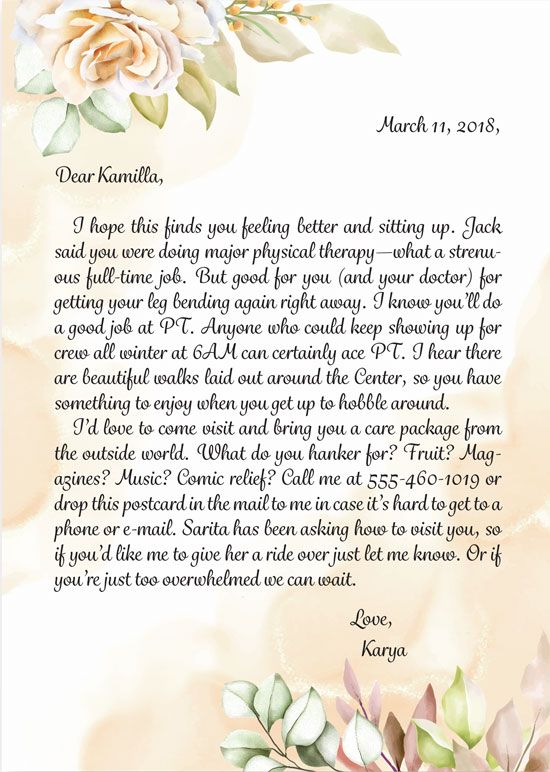
This example was adapted from the book The Art of the Personal Letter by Margaret Shepherd. A friend is writing to a patient undergoing long-term recovery from an accident, acknowledging the seriousness of the situation, focusing on the reader’s abilities, and offering specific help. She made it easier to reply by including a postcard.
Another aspect that can hamper you to get started is not knowing others well enough. You might be new to God’s Way or live in a remote area. A way to curb this is to reach out to your local minister and ask if there are others meeting alone, such as a widow. Writing notes to her regularly can alleviate her loneliness.
Men may think that writing letters is only something women do. Consider that some of the most influential letters in history have been written by men, either kings, presidents or even God’s apostles. Their letters greatly impacted their readers and, in many cases, changed the course of history.
Letters simply carry the feelings, emotions, thoughts and intents of the heart in words on paper. In turn, the paper, handwriting, words, and tone of the writer speak personally to the reader.
Types of Notes
Letters can be used for any occasion, but different types of notes serve different purposes. A letter tells a personal story and gives more information and insight of events over a longer period.
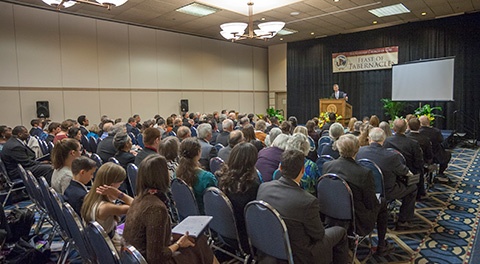
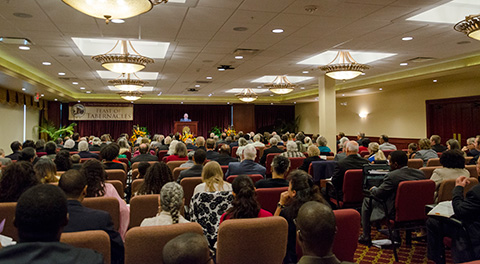
For example, let’s say you have met someone at the Feast of Tabernacles from a different pastorate or even from another country and became good friends. Writing a letter to your new friend will allow enough space to describe how you applied the messages during the Feast and what lessons you learned from them. You might also reflect on the fellowship you had and how much you miss your time together. Or you might choose to share the story of how God blessed you with a new job and how you found it.
Every handwritten note has a structure or outline. The date when you write the note usually goes in the upper right corner. The note should start with a salutation, mimicking the way you begin conversations by addressing the person directly. “Dear” is a universally accepted form of addressing a person of any status, and it is appropriate in both formal and informal letters. Less formal ways to start a letter are “Good Day” or “Hello.” Also “My dear” or “Dearest” are acceptable greetings for someone very close to you.
After the greeting comes the body. There is no set length for this part of the letter, but it should generally have three distinct sections.
The beginning should start with small talk such as asking, “How are you?” Immediately following this is the best place to state the general purpose of your letter. For instance, “I am writing specifically to let you know how much I appreciated you watering my garden yesterday.”
The middle of the body will contain items that concern you both. Repetition is an effective technique to use in this section. This could include phrases such as, “Again, we are sorry to hear about your health struggles.”
The last part of the body consists of a parting line such as, “Best regards,” “Regards,” “Take care,” “Until we meet,” “All the best” or simply “Sincerely.” This is followed by your signature.
These basic aspects will make each letter or note complete. They tell readers you care about the finer details, and thus about them.
Short and concise cards and notes can also be used for a specific purpose. Here are a few examples…
- Get well soon: Beside important, Church-wide announcements, the weekly announcement bulletin includes prayer requests for members across the globe seeking support for their health problems. Each congregation prepares a prayer card for attendees to write words of encouragement to the sick. We “weep with them that weep” (Rom. 12:15).
These cards generally have limited space. Do not just write your name or initials. Take a moment to read through the whole prayer request. Even though you might not know the specific disease or condition, the request provides enough information to allow you to understand what the person is going through. You will be surprised how much a few words of encouragement, comfort and support mean for those who are suffering.
But you are not bound to only fill out the weekly congregational card. There are occasions locally to write an individual get-well-soon card as well. Just a few words are enough to edify someone and defeat loneliness.
- Thank you: Saying “please” and “thank you” are two polite exchanges you rarely hear in public. God’s people should be different. Writing to say “thank you” for a favor, a gift or help received are only some of the instances to express gratitude. God’s Word teaches us, “In everything give thanks: for this is the will of God” (I Thes. 5:18). If you look closely, you will recognize God’s many daily blessings.
Be specific when pointing out the gift or act of kindness you appreciated. For instance, if someone gave you a basket of fruit, you can write, “Dear Ann, I wanted to let you know how much I appreciate your kind gesture by giving me this colorful fruit basket. It was a complete surprise! I will think of you with every single bite. Thank you!” Do not wait too long to articulate your gratitude. Your note of appreciation should follow soon after receiving the gift. If you procrastinate, your credit will be less effective. Also, do not expect to receive a thank-you card in response to your card.
“Do not wait too long to articulate your gratitude. Your note of appreciation should follow soon after receiving the gift.”
- Congratulations: Christians not only show compassion when someone is sick, but we also “rejoice with them that do rejoice…” (Rom. 12:15). A brief note to congratulate someone for an achievement says that you share their excitement and joy. It makes the recipient of the card feel special. This is a simple way to live God’s give way of life.
- Apology: If you have to say you are sorry for a mistake you made and feel ashamed for, own it by writing to the person you offended or caused harm. Be specific and sincere when writing your apology.
Get Started
A personal, handwritten letter says that someone specifically thought about you. Imagine collecting your mail from your mailbox and, between the stack of advertising fliers and utility bills, an envelope stands out. The color, texture and handwritten address on the front draw your attention. That alone is enough to make the recipient’s day! Then you can enjoy the special moments appreciating that someone thought it was worth their time to craft a handwritten note just for you!
But do not wait for it to come to you first.
The equipment needed to write a letter is basic and inexpensive. Start with your favorite pen or pencil and block of paper. Various types of greeting cards can be found at grocery stores, stationary outlets or even online. If you want to add an extra touch, you can obtain special types of paper, cards and writing utensils at stores for stationery enthusiasts.
When you start writing, find a special spot. Maybe you have a small writing desk with your stationery and postal needs. Perhaps you have a corner with a window overlooking a view so you can muse as you think of what to write. A dedicated space where you produce your written art is ideal to foster creativity—but it should also be relatively distraction-free.
Feel free to incorporate technology into your letter-writing. An online dictionary and thesaurus can help you find the right word. Also, there are online resources providing free writing tools, templates, hand lettering and calligraphy practice pages and books to improve your writing skills.
But it is up to you to decide to use “the power of your hand” and put pen to paper!