“And unto the angel of the church in Thyatira write: These things says the Son of God, who has His eyes like unto a flame of fire, and His feet are like fine brass” (Rev. 2:18).
As with each era before it, Jesus Christ, the Head of the Church (Eph. 5:23), introduced Himself to now the fourth era of His group of called-out ones.
By this point in history, those who held to the truth had endured over 1,000 years of persecution: From Ephesus—where the Church started strong in Jerusalem yet lost steam after the death of the apostles—to Smyrna—which endured some of the most brutal martyrdom at the hands of Romans—to Pergamos—which directly withstood the burgeoning Catholic Church at Constantinople.
Now at the fulcrum of New Testament history, true believers with origins in the Paulicians or Bogomils of the Pergamos era settled in Europe to escape persecution in the Eastern Roman Empire. They had acquired different names as they settled in various regions around the Italian Alps. About the same time, the Great Schism split the Catholic Church into eastern and western seats of power. This shifted much of its authority and power back over to Rome. In effect, this brought the persecution right back to God’s people.
As with the Pergamos era, which had to remain spiritually fortified against Satan’s seat of power in Constantinople, those in Thyatira faced the Holy Roman Empire through the first half of the second millennium following Christ’s martyrdom.
Scan through Revelation 2 and 3 and you will notice the message to Thyatira stands out as the longest passage among all the eras. Though a small group, it would be used by Christ to do the greatest series of works since the original apostles.
The Middle Era
Christians of this time period were characterized in Revelation 2:19: “I know your works, and charity, and service, and faith, and your patience, and your works; and the last to be more than the first.” Notice works is listed twice. This shows the work started and strengthened over time into a separate, more powerful effort.
Both the “last” and “first” works were committed to spreading God’s truth in a time dominated by the church in Rome.
The first phase began around AD 1160, when Jesus Christ started preparing an individual in southern France. In Lyons, Peter Waldo, a well-educated and wealthy merchant, was called to the truth. Fueled with conviction, he began to preach with great power and persuasion. Growing numbers of people believed and supported him. They were attracted to his ability to present the truth in a clear and understandable manner through the use of plain language.
Waldo and his co-workers divested themselves of their wealth to spread Christ’s gospel freely to others. This involved dedicating a portion of their riches to pay for the Bible to be translated into common languages.
While these men called themselves the Church of God, the world around them referred to this group as the “poor men of Lyon” or “those who made themselves poor.”
Those who supported Peter Waldo became known as Waldensians, even though many earlier Christians called “Waldenses, Vaudois” (meaning valley dwellers) or “Vallenses” had existed in southern France for several centuries before the Thyatiran era began.
Waldensians held onto God’s Word as the standard for their practices, which bore clear earmarks of the true Church. For one, they rejected the use of indulgences (centuries before Martin Luther started the Protestant Reformation).
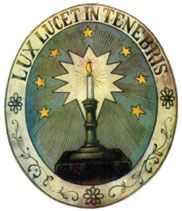
The Waldensian emblem contains symbols from Revelation 1:12-16 including the seven stars (representing the messengers to the seven Church eras) and a lit candlestick pointing to the fourth star, showing their understanding that they comprised the Thyatiran era. The Latin text states, “A light shines in the darkness.”
Photo: PD-US-Expired
 view full size
Piedmont, a region in northwestern Italy at the foot of the Alps, was the center of the Waldensian work beginning in the 12th century.
Photo: Getty Images
Furthermore, Encyclopaedia Britannica lists: “Baptism was to be by full immersion in water and was not administered to infants. Eventually, the elements of the Eucharist (bread and wine) were understood as symbols only, and the Waldenses denied the doctrine of transubstantiation [belief that the bread and wine were the actual body and blood of Jesus Christ]. They also rejected the notion of purgatory and of prayers offered for the dead. Their views were based on a simplified biblicism, moral rigor, and criticism of abuses in the contemporary church. They accepted the Bible as the sole, total authority of all doctrine. Additionally, a formal church building was not viewed as necessary to worship God, and thus many Waldenses held services in their homes, stables, or other locations.”
It is clear that followers of Waldo had, with God’s guidance, understood and practiced biblical truth. All of these are still practiced by the true Church today!
Persecution
The work of the Thyatiran era flourished unhindered for about 19 years, spreading into northern France, Holland, Germany, Spain, southern Italy, Poland and Hungary.
This did not go unnoticed by the now powerful Catholic Church. Around AD 1180, the Archbishop of Lyons forbade the Waldenses to preach in the area. After continued pressure for several more years, Waldo and his followers were driven out of Lyons.
The Waldenses had a clear awareness of their own identity as well as that of the Catholic Church. According to the historical book on the persecution of the Waldenses The Israel in the Alps: “It is not [the Waldenses] who separated from Catholicism, but Catholicism which separated from them, in modifying the primitive worship.”
This reflects an understanding of the first apostatizers that the apostle John spoke of: “…as you have heard that antichrist shall come, even now are there many antichrists…They went out from us, but they were not of us; for if they had been of us, they would no doubt have continued with us: but they went out, that they might be made manifest that they were not all of us” (I John 2:18-19).
Under Peter Waldo’s leadership, the Thyatiran era continued to thrive. Instead of slowing, the Work grew greater in the face of persecution!
A headquarters college was founded and ministers were trained and ordained according to biblical practices. Tithes and offerings from members allowed much literature to be copied by hand and distributed freely. The Sabbath, Passover and other yearly festivals were observed, while obedience, honesty, overcoming, modesty, education and holding to all biblical teachings were a way of life. Even though those around them did not support their doctrines, at the same time, they could not dispute their good conduct.
Preserving Scripture
Perhaps the most stunning and lasting piece of Thyatira’s legacy is that of preserving God’s Word. They were committed to printing a plain-language version of the Bible.
Historian B.G. Wilkinson wrote in his book Truth Triumphant: “When the fall of the Roman Empire came because of the inrush of the Teutonic peoples, the Romaunt, that beautiful speech which for centuries bridged the transition from Latin to modern Italian, had become the mother tongue of the Waldenses. They multiplied copies of the Holy Scriptures in that language for the people. In those days the Bible was, of course, copied by hand.”
Because the Waldenses operated in such close proximity to the Church in Rome, there was a constant danger of being apprehended for carrying a Bible—particularly non-Latin versions.
To circumvent this, ministers and lay members accomplished an incredible feat—memorizing entire books of the Bible!
Wilkinson continued: “The Bible formed the basis of their congregational worship, and the children were taught to commit large portions of it to memory.”
“Each member of these pious associations was entrusted with the duty of carefully preserving in his recollections a certain number of chapters; and when the assembly gathered round their minister, these young people could together recite all the chapters of the Book assigned by the pastor.”
It is believed that some were able to recite all of the gospels of Matthew and John, the letters of Paul, the Psalms and Proverbs. Some could repeat the entire New Testament.
In addition, “They were not only proficient in the knowledge of the Bible in Latin and in the vernacular, but they were also well schooled in the original Hebrew and Greek, and they taught the youth to be missionaries in the languages which then were being used by other European peoples.
“Thus through these people has been handed down to the present generation the Bible of the primitive church, which found a permanent influence in the translation of the Authorized Version.”
In other words, the efforts of the Waldenses laid the groundwork for the Bibles sitting on your shelf or on your computer desktop today. This is arguably the most important work they accomplished.
Protestant Reformation
For all its positive work, the Thyatiran era did not go without criticism. Christ’s message to the group includes a lengthy warning.
Read starting in Revelation 2:20: “Notwithstanding I have a few things against you, because you suffered that woman Jezebel, which calls herself a prophetess, to teach and to seduce My servants to commit fornication, and to eat things sacrificed unto idols.”
The great false church—the wicked “Jezebel” of this era—sought relentlessly to inject compromise, false doctrine, and heresy into the masses. In 1208, the Inquisition (also known as the Albigensian Crusade) was organized by the powerful Pope Innocent III. This began the systematic decimation of the Thyatiran era. Faced with not only the loss of their livelihoods, but also their lives, some “caved in.” They compromised and accepted “Jezebel’s” offer to commit spiritual fornication.
Often, Church eras tend toward apostasy and decline as they draw to a close. Thyatira was no different. A major reason for this was the rise of Protestantism. Interestingly, the revolutionaries including Martin Luther were influenced by the Waldensians, but never let go of the teachings of their mother church.
This more deceptive form of false Christianity led many true believers astray.
The lesson is simple: Do not mix truth with error! Even though it may make life “easier” for a moment, the end result is always more painful.
Verse 23 shows the tragic end for those who align themselves with Jezebel: “And I will kill her children with death; and all the churches shall know that I am He which searches the reins and hearts: and I will give unto every one of you according to your works.”
This passage provides a deeper look at how God examines our minds. He is watching His servants’ thoughts, and performs tests to see how they will act. This is affirmed in I Chronicles 28, which states “the Lord searches all hearts, and understands all the imaginations of the thoughts” (vs. 9). The subject is reiterated in Psalm 94: “He that planted the ear, shall He not hear? He that formed the eye, shall He not see?…The Lord knows the thoughts of man…” (vs. 9, 11).
Never lose sight of this! God peers into His servants’ thoughts. He decides whether a person needs to receive correction. Therefore, we must diligently examine ourselves to ensure we are fully in line with God’s truths. We must employ I Corinthians 11: “For if we would judge ourselves, we should not be judged” (vs. 31).
Timeless Example
Read Revelation 2:24-25, where God commends those of Thyatira who do well: “But unto you I say, and unto the rest in Thyatira, as many as have not this doctrine, and which have not known the depths of Satan, as they speak; I will put upon you none other burden. But that which you have already hold fast till I come.”
A key phrase here is the “depths of Satan.”
The Moffatt translation of this phrase can help explain its meaning. It renders these words as “the deep mysteries of Satan.”
False Christianity is truly a “mystery religion”! Holding Mass in Latin and disallowing lay members from possessing Scripture are telling examples. The mysterious trinity doctrine is another.
We conclude with Christ’s promise to the Christian who “keeps My works unto the end, to him will I give power over the nations: and he shall rule them with a rod of iron; as the vessels of a potter shall they be broken to shivers: even as I received of My Father. And I will give him the morning star” (Rev. 2:25-28).
For all those who strive to enter into this glory, the work of the Thyatiran era provides a powerful model.
- Internalize Scripture. It is the source by which you can judge yourself and avoid the depths (deceit) of Satan.
- Simplify your life to better focus on God’s Work.
- Endure, even in the face of persecution. Hold fast to what you have “unto the end.”
Through these principles and the inspiring example of our Thyatiran brethren, you can ensure a place in God’s glorious Kingdom to rule right alongside those Christians who did God’s Work in the Alps.