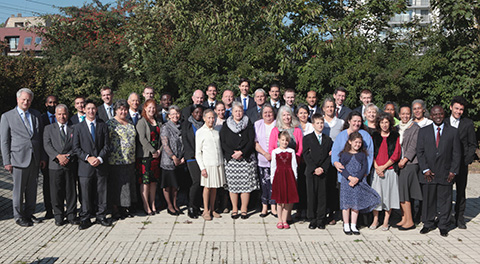
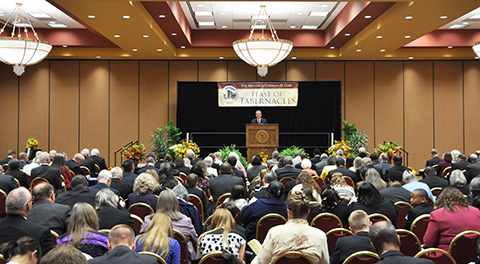
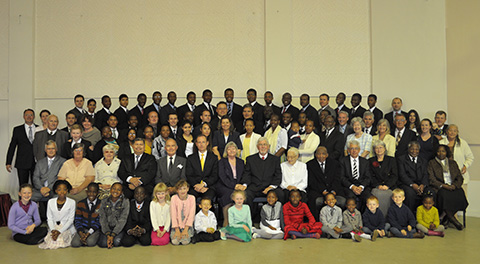
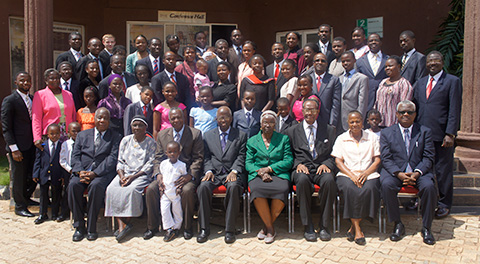
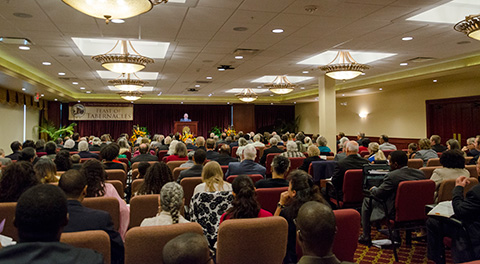
When a member of God’s Church steps out his front door and enters a public setting, he begins making impressions on other human beings. Our decisions define us—choice of occupation, job performance, hobbies, the words we use.
There is another set of choices we make that dramatically affects how we are viewed by others: the way we dress, and our appearance in general. We have been told in general terms what we should look like:
“You are the light of the world. A city that is set on a hill cannot be hid. Neither do men light a candle, and put it under a bushel, but on a candlestick; and it gives light unto all that are in the house. Let your light so shine before men, that they may see your good works, and glorify your Father which is in heaven” (Matt. 5:14-16).
Also, as God’s Church has stressed for decades, Christians are compared to ambassadors—diplomats or envoys—of another government: “Now then we are ambassadors for Christ” (II Cor. 5:20).
For ambassadors in this world’s governments, appearance is an important part of protocol. Here is an excerpt from a website produced for diplomats: “Through tradition and usage, diplomats have come to wear certain kinds of clothes for certain occasions. Your ‘uniform’ will depend on the function, be it casual or formal…Contrary to the common meaning within US culture, in the diplomatic community, ‘informal dress’ equates to business dress…In some parts of the world, other terms for informal dress for men include ‘lounge suit’, ‘national dress’, ‘tenue de ville’, ‘planters’, ‘shirt and tie’, ‘island casual’, and ‘bush shirt.’ ‘Planters’ refers to a long sleeved white shirt with a tie and dark trousers. ‘Bush shirt’ is a long or short sleeved shirt with a finished bottom edge worn outside rather than tucked into the slacks, or a long or short sleeved embroidered man’s shirt. ‘Island casual’ means a Hawaiian shirt and casual (usually khaki) slacks.
“Similarly, various terms apply to formal dress for men. ‘Tuxedo’ and ‘smoking jacket’ mean black tie, whereas a ‘Red Sea Rig’ or ‘Gulf Rig’ means a tuxedo minus the jacket. ‘Dinner jacket’ may refer to either a dark-colored or white jacket. If you are unsure of the terminology used, it is always appropriate to clarify before the event.
“For many posts, the overwhelming choice for day-to-day business is a suit and tie for men and a business suit or conservative dress for women. Men and women of all ranks of staff and spouses are expected to bring this type of clothing. Many posts stress that daily attire closely resembles that seen in Washington, DC” (eDiplomat).
Others who represent a nation’s government also pay careful attention to their appearance—think of presidents and prime ministers, or the impeccable uniforms worn by certain branches of the military, such as the United States Marine Corps.
Take a moment to think about your role as an ambassador for Christ. How well are you representing the government of God in the area of appearance? When those outside the Church see you, what comes to their mind? Do you make a good first impression? And can they tell that you are different?
Garments in Scripture
While some could view appearance as unimportant, there are many references to this subject in the Bible. This is particularly true in the area of clothing. John the Baptist’s garments are described in the book of Matthew: “And the same John had his raiment of camel’s hair, and a leather girdle about his loins” (3:4). The Church is represented by a woman who is “clothed with the sun, and the moon under her feet, and upon her head a crown of twelve stars” (Rev. 12:1). And part of the reward of those who are in the First Resurrection involves new clothing: “He that overcomes, the same shall be clothed in white raiment; and I will not blot out his name out of the book of life, but I will confess his name before My Father, and before His angels” (Rev. 3:5).
The most impressive descriptions of clothing are of those worn by Jesus Christ, as well as those of angelic beings:
- “His face did shine as the sun, and His raiment was white as the light” (Matt. 17:2).
- “And in the midst of the seven candlesticks One like unto the Son of man, clothed with a garment down to the foot, and girt about the paps with a golden girdle” (Rev. 1:13).
- “And He was clothed with a vesture dipped in blood: and His name is called The Word of God. And the armies which were in heaven followed Him upon white horses, clothed in fine linen, white and clean” (Rev. 19:13-14).
- “And round about the throne were four and twenty seats: and upon the seats I saw four and twenty elders sitting, clothed in white raiment; and they had on their heads crowns of gold” (Rev. 4:4).
Clothing is also used to illustrate a number of spiritual lessons. For example:
- The folly of mixing truth with error: “And He spoke also a parable unto them; No man puts a piece of a new garment upon an old; if otherwise, then both the new makes a rent, and the piece that was taken out of the new agrees not with the old” (Luke 5:36).
- Comparing sin to blemishes on clothing: “And others save with fear, pulling them out of the fire; hating even the garment spotted by the flesh” (Jude 23); “that He might present it to Himself a glorious church, not having spot, or wrinkle, or any such thing; but that it should be holy and without blemish” (Eph. 5:27).
- Our “wearing” a certain attitude: “Likewise, you younger, submit yourselves unto the elder. Yes, all of you be subject one to another, and be clothed with humility” (I Pet. 5:5).
Obviously, standards regarding clothing do change over centuries and millennia. When it comes to clothing and appearance, what are the standards that apply to God’s ambassadors today?
While the ministry cannot regulate every detail of a member’s wardrobe, the following guidelines will allow the Church to move forward in unity.
Sabbath Wear
Proper Sabbath attire for men (and teenage boys) is a suit, or dress slacks and a blazer or sport coat, with a tie and dress shoes. A man who has a responsibility during services (song leading, opening/closing prayer, etc.) should wear a suit if at all possible. Men should avoid dress shoes with combat boot-style “lugg” soles.
Proper attire at services for women is a dress, a skirt suit, or a skirt with a blouse or sweater. A dress that has spaghetti straps or a halter may be fitting for a formal occasion such as a dinner dance, but should not be worn to services. In the area of footwear, women should avoid extremely high heels. And while there are open-toes shoes that are elegant enough to be worn to services, ladies should avoid a sandal-type look. Also, women should wear stockings, hose or tights to services in order to achieve a dressier look.
Modesty and Moderation
It has become very difficult for women to find clothing that is not too tight, too revealing, or both. Clothing that is form-fitting, low-cut or plunging necklines, short skirts, skirts with high slits, and low-rise jeans fill the racks of the average store. So it is a challenge to be different, but it can be done with some effort and planning.
And this is a clear requirement for women and girls in the Church: “In like manner also, that women adorn themselves in modest apparel, with shamefacedness and sobriety; not with broided [plaited] hair, or gold, or pearls, or costly array” (I Tim. 2:9).
While clothing does not need to hang on a woman’s frame like a burlap sack, neither should it look “painted on.” Bare backs, bare midriffs or cleavage—either sitting or bending over—should not be seen. Skirts and dresses should reach to around the middle of the knee.
Modesty, aside from avoiding clothes that leave too little to the imagination, also means dressing in a way that does not attract attention or project a flashy image. The Church is not the place for trend-setters!
“Likewise, you wives, be in subjection to your own husbands; that, if any obey not the word, they also may without the word be won by the conversation of the wives; While they behold your chaste [conduct] coupled with fear. Whose adorning let it not be that outward adorning of plaiting the hair, and of wearing of gold, or of putting on of apparel; But let it be the hidden man of the heart, in that which is not corruptible, even the ornament of a meek and quiet spirit, which is in the sight of God of great price. For after this manner in the old time the holy women also, who trusted in God, adorned themselves, being in subjection unto their own husbands: Even as Sara obeyed Abraham, calling him lord: whose daughters you are, as long as you do well, and are not afraid with any amazement” (I Pet. 3:1-6).
Moderation, on the other hand, means not going to extremes in any behavior. “Let your moderation be known unto all men. The Lord is at hand” (Phil. 4:5). In the area of clothing, this translates to staying in the “middle-of-the-road”—avoiding unusual or radical styles, fits, color combinations and so forth. On the other hand, one should not go to the other extreme and wear dull and dreary clothing.
Also, as the verse above mentions, moderation is key in the area of jewelry. While many scriptures clearly show that God approves of jewelry (see Ezek. 16:1-14; Luke 15:22), it should not be ostentatious, showy and gaudy. Rather, it should complement one’s appearance, not overpower it. In addition, modern trends such as ankle bracelets, toe rings and piercings (other than one in each earlobe for women) do not belong in the Church.
Casual Wear
We not only represent Christ while at services, but must also be wise in what we wear throughout the week. While there is quite a bit of latitude involved, we still must strive to look dignified and respectable, even when we are in our own backyard.
God’s people should avoid clothing that is trendy or associated with a celebrity or a certain style of music. And in clothing and grooming, we should avoid a sloppy, messy look—including baggy clothing—which is the opposite of the decency and order God expects (I Cor. 14:40).
Contrary to the dogma of certain Protestant sects, pants on women are not a sin. While they are not appropriate for Sabbath services or formal events, ladies can wear pants in casual or office settings. But these should not fit tightly, as is the trend in the world. When in doubt, err on the side of loose-fitting.
Consider some additional points regarding appropriate dress:
- Shorts cut too high on women and too low (i.e., well below the knees) on men should be avoided.
- When visiting Headquarters a shirt and tie should be worn by men, and a nice dress or slacks for women.
- Torn or ripped clothes should never be worn in the public. However, these could be appropriate doing various chores around the home or yard.
- T-shirts with inappropriate messages or labels (i.e., alcohol) portraying the appearance of evil should not be worn.
Ultimately, the latitude you have in this area will reveal your attitude toward it.
Other Details
Since God gives each of us our natural hair color, and calls the gray hair of older age a crown (Prov. 16:31), hair coloring should not be used. (There may be occasional exceptions in the case of discoloration of one’s hair by a chemical reaction, as can happen on a rare occasion in a swimming pool.)
By the same token, wigs, hair extensions and toupees should not be worn (except in the case of female hair loss caused by a medical condition).
Men’s hair should be short (off the collar, and not covering the ears), but should not be shaved bald, reflecting a “skinhead” look. Males should not cut or shave their hair to be even with the tops of their ears—in other words, men (and boys!) should have some sideburns growing in front of the top half of the ear. Facial hair should be neatly trimmed, and moderate. Teenagers should not wear beards.
Some details of appearance are matters of etiquette—for example, hats should not be worn indoors. This was common knowledge a couple generations ago. And baseball caps should not be worn sideways or backwards, “gangster”-style.
The Big Picture
As in all areas of Christianity, balance is key in the area of appearance. It takes effort, planning and judgment to look like an ambassador. Pray for wisdom and strive to use common sense. Again, stay in the “middle of the road”; if something in your closet is questionable, it is best to err on the side of caution and leave it there.
And remember—all of these guidelines apply all the time, not just when other brethren are present!
When you elevate your daily dress standards, you will feel different—and you will be treated differently by others. A high-quality appearance commands respect. While we all must live within our means, in some ways it has become easier to dress well on a budget, with the arrival of websites such as eBay and certain discount clothing stores.
So strive to maintain your ambassador credentials, or to make the changes necessary to regain them, in the area of appearance. This will set us apart as we wait for our ultimate change of clothing: “For in this we groan, earnestly desiring to be clothed upon with our house which is from heaven” (II Cor. 5:2).