“They’ve got a green thumb.” It’s a phrase we often hear. The British call it having “green fingers.” Nonetheless, the definition is the same: a person gifted at growing and caring for plants. Everything that is green and grows seems to flourish when such an individual touches it. The American Heritage Dictionary describes it as the “extraordinary ability to make plants grow well.”
But is growing plants really out of the ordinary? Are some of us naturally green-thumbed, while the rest should stay away from plants for fear of killing them?
No, not true. As with any skill, some people will naturally be better at gardening, yet anyone can learn to grow plants. Besides, it can be relaxing, rewarding, healthy—and delicious!
Why Garden?
Most people spend a lot of times indoors. A study published in the Journal of Allergy and Clinical Immunology reported that the average American spends most of his time—90 percent!—indoors.
Having an outdoor garden can help remedy this, as well as bring beauty to your home. Additionally, plants brighten your indoor environment in numerous ways.
Plants remove pollutants from the air. Many of the synthetic materials in your home—carpet, pressed-wood furniture, wallpaper—release “off-gas,” which can harm your health. According to researchers at the United States space program, NASA, having about 15 to 18 indoor plants in the average 1,800 square foot house will help remove trace pollutants from the air. The plants will filter the air for you and make your home more livable.
Outdoor gardens can also be beneficial. By working out in the sun, you get vitamin D and fresh air. You are productive. When harvest comes, you will enjoy the satisfaction of the fruits of your labor. And you will taste those fruits (and vegetables) as well!
Start Simple
Most people lead busy lives. Even if they live in the countryside, it is difficult to find time to garden. City life makes it even harder with small or nonexistent yards, or merely a concrete balcony. In all the hustle and bustle, can one nurture a garden?
As with any new skill or hobby, it is best to start simple. Even at the beginning level, you have options.
Have you ever tasted a meal cooked with freshly cut herbs? You can easily begin an herb garden in the kitchen windowsill.
For those whose thumbs are a little less “green,” you can grow hardier plants that will not die quickly from neglect: a jade plant, spider plant, or a cactus for a sunny spot. Aloe vera is another useful plant, perfect for soothing burns or sores.
If you live in the city, a container garden (vegetables and flowers grown in pots outdoors) on the patio or balcony may suit you best.
Using the resources available—the library, internet, and fellow gardeners—you can expand your knowledge, and your garden, quickly.
But do not stop there! Continue to add to your garden indoors and out. Perhaps you already have a patch of land in mind perfect for your own plot garden (with your parents’ permission, of course). The varieties of plants and combinations you can grow are endless!
Recall those who are green-thumbed. While the exact reason this term came about has been lost, a common explanation is that while working with their plants, a gardener will snap off unwanted leaves and stems, with the plant juices staining the area between the thumbnail and tip. Green thumbs come from spending time in the garden. You are not born with a green thumb—it takes work! It takes time and effort! You have to make it happen.
With minimal time, effort and money, you can have a beautiful and beneficial garden.
Potting Basics
Note: The directions below show how to plant an already sprouted plant. If you would like to grow a plant from a seed, use the directions on the seed packet and use the Internet and library.
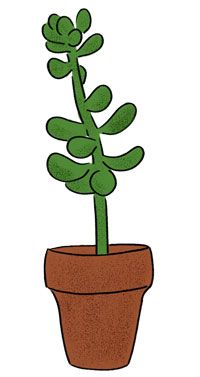
Choose a plant that will survive where you plan to put it. For example, will it be indoors or outdoors, or in the sun or shade?
Illustration
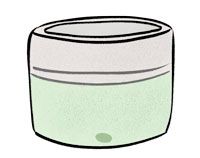
Choose a pot. Be sure the pot has at least one hole for drainage. The container’s diameter should equal 1/3 or 1/2 the height of your plant.
Illustration
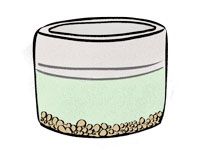
Cover drainage holes with porous material such as a coffee filter or an inch of pebbles. This will prevent soil from falling out while allowing water to pass through.
Illustration
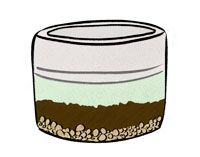
Fill the new pot about 1/3 full with potting soil. You may need to add water to the soil before planting. Follow the instructions on the soil packaging.
Illustration
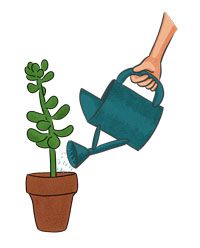
Water the plant in its original container before potting. This will reduce transplant shock and make it easier to remove it.
Illustration
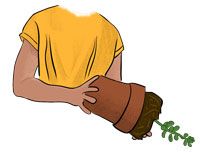
Turn the plant upside down while placing your hand over the top of the pot. Rotate the plant a few inches in both directions to loosen it up and let it fall out.
Illustration
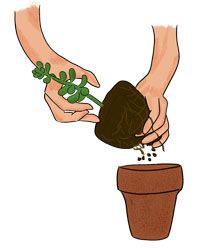
If the rootball is compacted, loosen by untangling so the roots grow outward instead of internally. This will help the plant flourish in its new pot.
Illustration
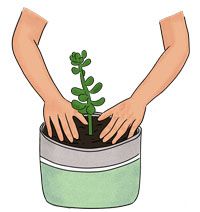
Make sure the plant is centered then press it firmly into its new pot. Add soil to about one inch of the container’s rim and pat down. Water it to help settle the soil.
Illustration