
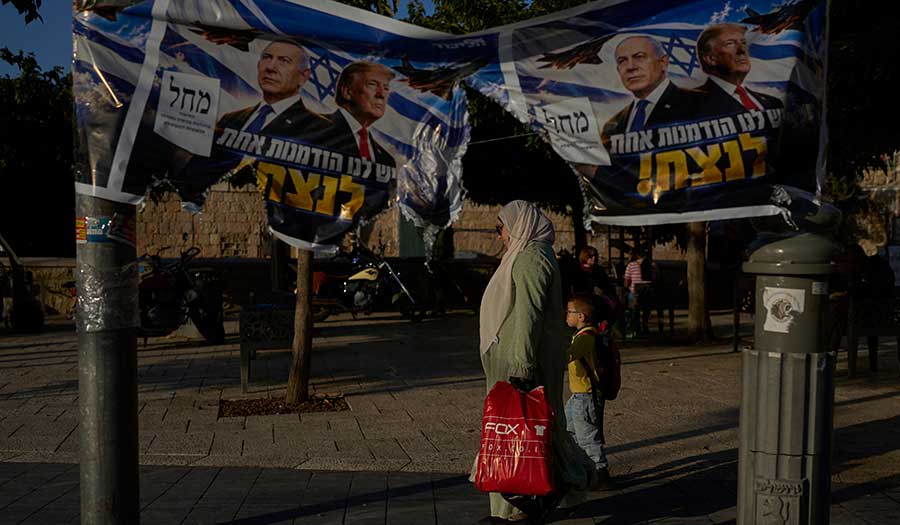
 AP/Ohad Zwigenberg
World News Desk
Learn the why behind the headlines.
Subscribe to the Real Truth for FREE news and analysis.
Subscribe NowJERUSALEM (AP) – Israelis braced for perhaps weeks of political uncertainty Wednesday after an election that has challenged Prime Minister Benjamin Netanyahu’s grip on power and raised the almost unthinkable possibility of some Jewish and Arab parties teaming up in an effort to unseat him.
Final election results could come as early as Thursday evening, though no clear winner is expected to emerge.
Arab-led parties made a historic showing, but it is not clear if the other opponents of Mr. Netanyahu’s far-right government would form a coalition with them to reach a majority of seats in parliament. Issues around the Palestinians and their descendants remain incredibly sensitive, and Israelis are already renewing a debate about the identity of the nation founded as a state for the Jewish people.
On Wednesday, Mr. Netanyahu warned against a “dangerous government” that might include Arab parties, whose constituents make up 20 percent of Israel’s population.
And even as it leads in the vote count, Mr. Netanyahu’s Likud party claimed that Tuesday’s election was “stolen” by Arab parties and asked Israeli authorities to investigate. It did not provide specific evidence to support its claims. The elections committee has said that reports about irregularities were much lower than in previous elections.
Mr. Netanyahu seeks to remain the country’s longest-serving prime minister. His top challenger, centrist former military chief Gadi Eisenkot, has left the door open to partnering with Arab parties under certain conditions, including their recognition of Israel as a Jewish state and of Hamas as an extremist group.
Some of Mr. Eisenkot’s likely partners have ruled out such an alliance but could change their minds to force Mr. Netanyahu from office. Another much-debated option among Israelis is a unity government with Mr. Netanyahu and Mr. Eisenkot.
Israeli voters choose parties, not individuals. With 88 percent of votes counted, Mr. Netanyahu’s Likud party has 20.7 percent and Mr. Eisenkot’s Yashar party has 16.2 percent. Arab-led parties had 15 percent.
Results indicate that neither Mr. Netanyahu’s nor Mr. Eisenkot’s coalition blocs would reach the 61 seats needed for a majority in parliament, the 120-seat Knesset. Local media projected 53 seats for Likud and allied parties, 48 for Yashar and allied parties and 19 for Arab-led parties.
Netanyahu Faces a Setback But Not Outright Defeat
Counting absentee ballots will last until Thursday evening, said Elad Naveh, control manager at the Central Elections Committee. There are an estimated half-million of them from military personnel and diplomats. They are not expected to significantly change the results.
Nearly 78 percent of eligible voters turned out, the highest since 1999.
Voting reflected unease over Mr. Netanyahu’s alliance with the far-right and anger in a war-weary nation over military draft exemptions for the significant ultra-Orthodox Jewish population. The Likud party’s share of the vote declined from 23.4 percent in 2022. But results suggest opponents were unable to capitalize on the grief caused by the Hamas-led October 7, 2023, attack to decisively push him from office.
One far-right partner losing support was national security minister Itamar Ben-Gvir. For many Israelis, he represented the worst strain of Netanyahu’s government, openly taunting Palestinian detainees and asserting that many in Gaza are “not even people.”
Vote-counting suggested Likud would remain the largest party and most likely to be tapped to form a government by Israel’s president, Isaac Herzog. The president, however, is not required to task the leader of the party holding the most seats.
“We must do everything we can, certainly after yesterday, to avoid another round of elections,” Mr. Herzog said Wednesday.
The most obvious path to a parliamentary majority could involve Mr. Eisenkot partnering with Arab-led parties—which have 14.9 percent of the votes counted—but that is politically challenging.
If no one can put together a majority coalition, new elections could be held early next year. Israel held five elections between April 2019 and November 2022 because of a similar stalemate. It is unclear whether thousands of Israelis living abroad would again fly back home to vote, and whether Arab voters would again surge to the polls.
“After an election with such high voter turnout, it would be a mistake to hold another election,” Mr. Eisenkot told supporters early Wednesday. “It is our duty, and my personal duty, to do everything possible to respect the will of the people.”
Minority governments also are possible, but they must rely on cooperation from parties outside the government to pass legislation.
Arab-led Parties Could Hold the Key
Arab parties’ strong election showing forced Israelis to consider the implications.
“We have no future here if we do not stop being afraid,” said Yair Golan, whose Democrats party supports bringing Arab-led parties into a coalition. “We must no longer accept Netanyahu’s racist division between Jewish votes and Arab votes.”
Israel’s Arab citizens are descendants of Palestinians who remained in the state after its creation in 1948. They often face discrimination and are viewed with wariness because of their solidarity with the Palestinian cause. That suspicion intensified after October 7, even though Arab citizens were also among those killed and abducted.
The mood was joyful overnight at the headquarters of the United Arab List, the lone Arab party to ever join a governing coalition, briefly, in 2021.
“We are here, we are not on the sidelines,” party leader Mansour Abbas declared.
Some Israelis found that an unusual, if not uncomfortable, prospect.
“We are little by little coming to a situation where we have to face reality,” said Hanna Doukhan, a voter in Tel Aviv. “I don’t see a possibility to form a government without the Arabs.”
Others were hopeful. “This would open the door to repairing our society” while preserving Israel as the national home of the Jewish people, said Eti Wissotzky-Cohen in Tel Aviv.
And in Nazareth, one of Israel’s largest Arab cities, Awni Zoabi thanked God for a possible return to rationality in a country where extreme rhetoric has increased. “The Arabic language has become as if it were a crime,” Mr. Zoabi said.
- World News Desk
- POLITICS
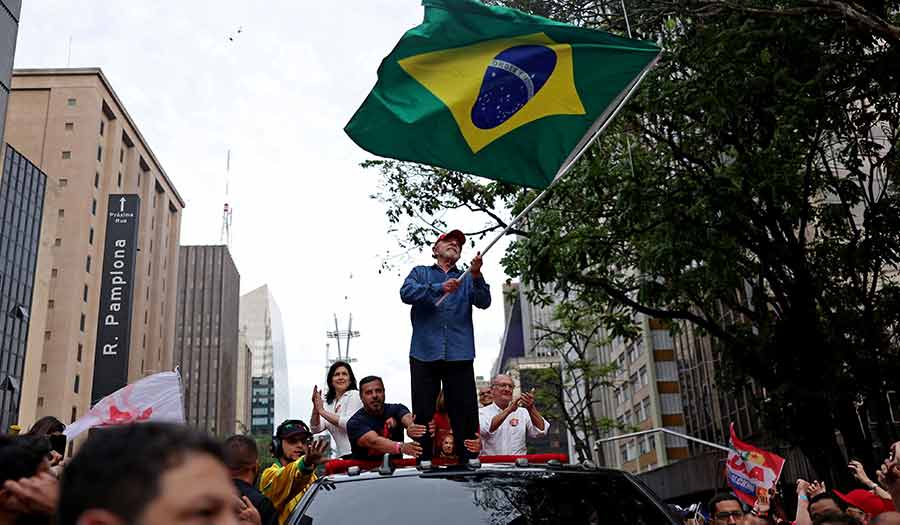 Brazil’s Lula Wins Historic Fourth Term
SAO PAULO (Reuters) - Brazilian President Luiz Inacio Lula da Silva won a historic fourth term on Sunday, the country’s electoral court said, in a shock result that defied polls, precedent and global anti-incumbent sentiment to put the brakes on a wave of right-wing election victories across Latin America.
More on Related Topics:
- Brazil’s Lula Wins Historic Fourth Term
- How Brexit Broke British Politics
- Abortion Pill Rulings Bring the Issue Back to the Forefront in a Midterm Election Year
- Era of Political Violence Means Higher Costs for Candidate Security, a New Report Says
- What Is the Filibuster and Why Does the President Want to Get Rid of It During the Shutdown?
Latest News
-
October 28, 2026
- Netanyahu and Top Rival Face Postelection Choices That Could Redefine Israeli Politics
- The Antichrist: Could You Be Deceived? October 27, 2026
- Brazil’s Lula Wins Historic Fourth Term
- After Vucic Defeat, Serbia Waits to Learn How Student-Backed Leaders Will Govern
- From France to Albania, Social Unrest Is Setting Europe’s Streets Ablaze
- Socialism: What Does God Think? October 26, 2026
- America & Canada’s Trade War
- True Thanksgiving Begins with God
- Is Humanity Losing Control of AI? October 20, 2026
- Japan Launches Spacecraft to Mysterious Moons of Mars in Bold Mission to Bring Home Soil Samples
- France Announces Nightly Curfews ‘For as Long as Necessary’ in Paris and Other Big Cities October 16, 2026
- Fundraising to Protect Oceans, Forests and Other Key Nature Sites Falling Short Ahead of UN Summit
- Drone Strikes in the Black Sea Raise Fears of Russian Escalation to Test NATO’s Response
- Nepal’s Devastating Flood Exposes the Risks of Resettling Disaster Survivors October 15, 2026
- Sudan’s Famine Risk Worsened by Conflict, Drought and Funding Shortages
- How the Houthis Are Helping Iran Turn Saudi Arabia into a Pressure Point October 9, 2026
- What Will the Next Leader of the UN Need to Get the Job Done in an Increasingly Complex World? October 8, 2026
- UN Health Agency Wants More Details from Russia on Suspected Pneumonic Plague Case
- Ukraine Claims to Have Taken Out More Than Half of Russia’s Oil Refining Capacity
- Violence Has Displaced Members of More Than Half a Million Mexican Households in Past 5 Years