
 The Real Truth
Article
Jesus Christ warned that end-time deception would be strong enough that “if it were possible, they shall deceive the very elect” (Matt. 24:24). Here is how to protect yourself.
Learn the why behind the headlines.
Subscribe to the Real Truth for FREE news and analysis.
Subscribe NowWhat do Donald Trump, Ronald Reagan and John F. Kennedy all have in common?
In addition to facing assassination attempts—Kennedy’s proved fatal—these three presidents have all been linked to the biblical Antichrist.
Kennedy, the first Catholic president, drew suspicion from some Protestants. There was a rumor that he received 666 votes at the 1956 Democratic convention. The recorded tallies show no such number. The three names of Ronald Wilson Reagan each happen to have six letters—6-6-6. And some connected his survival of the 1981 assassination attempt to Revelation 13:3, which describes a prophesied Beast figure recovering from a deadly wound.
Some made a similar claim about Mr. Trump after a bullet grazed his ear in 2024. And in April 2026, Wired published an article titled “Staunch Trump Supporters Are Now Asking If He’s the Antichrist.” In the same month, one popular conservative commentator compared the president’s behavior to passages in II Thessalonians 2 and Daniel 11, which describe a ruler who exalts himself above God. He asked: “Could this be the Antichrist? Well, who knows?”
Today’s Antichrist talk is not limited to presidents. Tech billionaire Peter Thiel has been delivering a four-part lecture series on the Antichrist, most recently in fall 2026. His theory is that fears of nuclear war, artificial intelligence or other catastrophic threats could allow a powerful figure to establish global control by promising to protect the masses.
Vice President JD Vance has also weighed in. In a September 2026 interview with a Christian podcaster, he said he would be “not shocked if the Antichrist was walking among us.”
Being on the lookout for the Antichrist is understandable. The Bible tells its readers to keep an eye on world trends and conditions. Jesus Christ told His disciples, “What I say unto you I say unto all, Watch” (Mark 13:37). And prophecy gives many things to watch for, including a coming Antichrist figure. The apostle John wrote, “You have heard that Antichrist shall come” (I John 2:18).
But the desire to see prophecy fulfilled can lead to false positives.
In the 1970s, prophecy writers reported that a three-story supercomputer called “the Beast” had been installed in Brussels, Belgium. Supposedly, it would assign everyone on Earth a number and eventually control who could buy and sell—echoing Revelation 13:16-18. To those spreading the story, Revelation’s Beast was the Antichrist, and this computer would help him enforce his mark.
Yet the story was fiction, created for the 1972 film The Rapture and a mock newspaper promoting it. Even so, evangelical outlets were passing it along as fact, and it soon spread worldwide.
While the word antichrist appears in only four verses in the Bible—I John 2:18, 22; 4:3 and II John 7—theorizing about this figure has occupied believers for centuries.
With so much speculation about the Antichrist and so many wrong accusations, what are people missing?
“Apocalyptic Name-Calling”
For nearly 2,000 years, people have leveled Antichrist accusations at prominent figures.
It is a practice author Robert C. Fuller examined in his book Naming the Antichrist: The History of an American Obsession, describing it as “the sport of apocalyptic name-calling.”
One of the earliest candidates was Roman Emperor Nero, who persecuted Christians in the first century.
Some have connected him to 666. Revelation 13:18 calls that “the number of the beast” and says “it is the number of a man,” leading many to look for a name that adds up to it. The name Neron Caesar, when written in Hebrew letters, has a numerical value of 666. This calculation has led many modern scholars to associate Nero with the Beast described in Revelation 13, although the particular calculation was not proposed until the 19th century.
Antichrist accusations flew both ways during the Protestant Reformation. In 1520, Catholic theologian Ambrosius Catharinus essentially called Martin Luther the Antichrist. Luther later wrote in his 1537 Smalcald Articles that “the Pope is the very Antichrist.”
As the centuries passed, the list of candidates grew. In 1809, an anonymous pamphlet appeared titled The Identity of Napoleon and Antichrist Completely Demonstrated. And in 1988, American prophecy writer Robert W. Faid argued Soviet leader Mikhail Gorbachev was the Antichrist. Faid interpreted Gorbachev’s distinctive forehead birthmark as the red dragon described in Revelation 12.
Mr. Fuller surveyed this long-running trend and noted that Antichrist identifications throughout the centuries have frequently reflected the conflicts and concerns of different societies.
“Their attempts to ‘name the Antichrist’ consequently reveal much about their culture’s latent hopes and fears,” he wrote.
Mr. Fuller described how some American colonists associated Native Americans and French Catholics with the forces of the Antichrist. But as tensions with Britain increased and American independence became the central issue, the Church of England and the British monarchy became targets of similar accusations.
Calling someone the Antichrist has been a handy tool to demonize political and religious enemies. And one proposed identity has followed another without settling the question. It also often involves contorting what the Bible says to fit the bogeyman of the day.
Yet not all interest in the Antichrist stems from rivalries and cultural fears. Many people are on the lookout for the Antichrist because they understandably do not want to be deceived. Bible readers see warnings about coming deception and do not want to be caught off guard. Many also want to warn others.
This is often paired with a desire to see God’s hand in world events and understand how those events fit into what He has foretold.
So what does the Bible actually say about the identity of the Antichrist?
What Did John Say?
Here is the verse where John first uses the word: “Little children, it is the last time: and as you have heard that Antichrist shall come, even now are there many antichrists; whereby we know that it is the last time” (I John 2:18).
Notice that John refers to an expected coming Antichrist. But he also states that many antichrists already existed in the first century.
The Greek word for antichrist is antichristos. Break that apart: “anti” means against, opposed to, or in place of—and “Christos” means Christ, the Anointed One and Messiah.
So an antichrist is one who opposes Jesus Christ or puts something else in His place.
I John 2:19 provides more context about the first-century antichrists. John says they “went out from us, but they were not of us.” In other words, these antichrists were not outside enemies. They had come from within the Church.
But what made these men antichrists?
We find the definition in verse 22: “Who is a liar but he that denies that Jesus is the Christ? He is antichrist, that denies the Father and the Son.”
Verse 23 continues by stating that whoever denies the Son does not have the Father.
These individuals denied fundamental truths about Jesus Christ and His relationship with the Father.
Later, John introduces another important concept: the “spirit of antichrist” (I John 4:3), saying that this spirit was “even now already…in the world.”
John reinforces the point in his second epistle. He warned that many were saying that Jesus Christ did not come in the flesh, adding, “This is a deceiver and an antichrist” (II John 7).
Christ coming in the flesh is a great hinge point of God’s Plan. Because He became human, He could die for the forgiveness of sins. He was “in all points tempted like as we are, yet without sin” (Heb. 4:15), so He can serve as an intermediary for us with the Father. And He “suffered for us, leaving us an example, that you should follow His steps” (I Pet. 2:21-22).
Taken together, these passages establish that John was concerned with people denying Christ’s identity, teaching falsehoods about Him and leading others away from the truth.
Similarly, the apostle Paul warned about “another Jesus” (II Cor. 11:4) and deceivers who transform themselves “into the apostles of Christ” and “as the ministers of righteousness” (vs. 13-15).
The spirit of antichrist was already operating through multiple individuals. John did not limit the term to one future figure, nor did he use it simply as another word for someone who commits sin.
Deception about Christ can come from people who appear to promote Christianity.
Yet notice one last thing in I John 2:18. John wrote, “as you have heard that Antichrist shall come.”
Where had they heard this before?
What Prophecy Reveals
While John never said specifically where his readers had heard about the coming Antichrist, a few passages are likely sources. These verses describe powerful deceivers still to come. While they may not settle every figure’s identity, they do reveal something crucial: how deception works.
In the Olivet Prophecy, Jesus Himself warned about religious deception that would include miraculous signs. Note His first words, before He described any future event: “Take heed that no man deceive you” (Matt. 24:4).
In verse 24, Christ described a confusing time to come: “For there shall arise false Christs, and false prophets, and shall show great signs and wonders; insomuch that, if it were possible, they shall deceive the very elect.”
The other place John’s readers may have “heard that Antichrist shall come” is Paul’s second letter to the Thessalonians, where he describes a “man of sin.”
It contains another warning of deception: “Let no man deceive you by any means: for that day shall not come, except there come a falling away first, and that man of sin be revealed, the son of perdition” (II Thes. 2:3).
“That day” mentioned here is the day of Christ’s return in power and glory (Matt. 24:30).
Paul describes the man of sin—also translated the man of lawlessness—as one who “exalts himself above all that is called God” (II Thes. 2:4), whose coming is “after the working of Satan with all power and signs and lying wonders” (vs. 9).
Even while describing a future deceiver, Paul reminded readers that the same deception was already occurring: “For the mystery of iniquity does already work” (vs. 7).
Revelation also speaks of deceivers, namely the Beast and False Prophet, who bear political and religious authority.
The book describes “another beast” with “two horns like a lamb” that speaks “as a dragon” (Rev. 13:11). Revelation 19:20 identifies this deceiver as the False Prophet. He performs miracles to deceive people and directs their worship toward the Beast, enforcing it with threats of death and a mark required to buy or sell (13:12-17).
In Revelation 16, the dragon, the Beast and the False Prophet send out miracle-working spirits to gather the nations to war (vs. 13-14). Then Christ breaks into the vision with a direct warning: “Behold, I come as a thief. Blessed is he that watches, and keeps his garments, lest he walk naked, and they see his shame” (vs. 15).
None of these passages identifies these figures by John’s term Antichrist, yet each fits its meaning: opposing Christ or taking His place. They will each work to pull people away from God’s truth—with impressive miraculous signs, claims of divine authority and convincing arguments.
But notice the pattern. Again and again, Scripture pairs its warnings about future deceivers with a warning about deception already at work, and a call for each reader to watch and take heed now.
While the warning of the coming Antichrist is compelling—and God recorded it for a reason—something else is even more pressing.
Could You Be Deceived?
Remember Christ’s first words in the Olivet Prophecy: “Take heed that no man deceive you.” These words apply now as much as they will in the future.
Paul’s discussion of the man of sin also shows why people can be deceived. In II Thessalonians 2:10-11, Paul describes people who “received not the love of the truth” and adds, “for this cause God shall send them strong delusion, that they should believe a lie.”
The man of sin is tied to a great test: Will you love God’s truth or not?
But what is the truth? Jesus defines it clearly in John 17:17, where He prayed to the Father, “Your word is truth.” God’s Word is the truth we should hold to no matter what.
Knowing prophetic details is an important pursuit—prophecy occupies a substantial portion of Scripture—yet it is not a substitute for doing what God says.
John emphasized this just before his discussion of antichrists in his first epistle: “And hereby we do know that we know Him, if we keep His commandments. He that says, I know Him, and keeps not His commandments, is a liar, and the truth is not in him” (I John 2:3-4).
For centuries, people have searched for the Antichrist. While being watchful is crucial, it is even more important to look inward.
In II Corinthians 13:5, Paul writes: “Examine yourselves, whether you be in the faith; prove your own selves. Know you not your own selves, how that Jesus Christ is in you, except you be reprobates?”
Can we name the coming Antichrist? The best we can do now is speculate. God wants us to watch world events through the lens of Bible prophecy, but we should also remember what Paul says about the man of sin: He will be revealed “in his time” (II Thes. 2:6).
For now, you can learn to recognize the spirit of antichrist and test the religious teachings and deception that come with it.
Recall Paul’s warning about “another Jesus” (II Cor. 11:4). The same danger exists today.
The true Jesus Christ says this: “I am the way, the truth, and the life” (John 14:6). And this: “If you love Me, keep My commandments” (vs. 15).
What could better fit the meaning of antichrist—one who opposes Christ or takes His place—than another Jesus? A counterfeit can look genuine and still be a wolf in sheep’s clothing.
This is why John warned: “Believe not every spirit, but try the spirits whether they are of God” (I John 4:1).
Your job is to test and scrutinize what you believe and have been taught. Christ showed why when He told the religious leaders of His day: “Howbeit in vain do they worship Me, teaching for doctrines the commandments of men…Full well you reject the commandment of God, that you may keep your own tradition” (Mark 7:7, 9).
These first-century leaders looked devout, but their worship rested on human tradition rather than God’s commands. The same can happen today. A belief practiced for generations can still trace back to men rather than to Christ. Take a look at your beliefs and ask: Why do I believe this? Did Jesus or His apostles actually teach it?
This magazine is published by The Restored Church of God, which produces a rich library of free literature explaining God’s truth. Even so, we urge you not to simply take our word for it. Paul instructed, “Prove all things; hold fast that which is good” (I Thes. 5:21). As you read The Real Truth or any of our books, booklets and articles, also look in your Bible and ask God to help you understand.
A good place to start is David C. Pack’s book The True Jesus Christ – Unknown to Christianity, which includes a chapter titled “Vain Worship—and Another Jesus.” Read it with an open Bible and prove it for yourself.
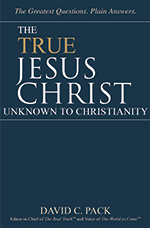
Suggested Reading
More on Related Topics
Latest News
-
October 28, 2026
- Netanyahu and Top Rival Face Postelection Choices That Could Redefine Israeli Politics
- The Antichrist: Could You Be Deceived? October 27, 2026
- Brazil’s Lula Wins Historic Fourth Term
- After Vucic Defeat, Serbia Waits to Learn How Student-Backed Leaders Will Govern
- From France to Albania, Social Unrest Is Setting Europe’s Streets Ablaze
- Socialism: What Does God Think? October 26, 2026
- America & Canada’s Trade War
- True Thanksgiving Begins with God
- Is Humanity Losing Control of AI? October 20, 2026
- Japan Launches Spacecraft to Mysterious Moons of Mars in Bold Mission to Bring Home Soil Samples
- France Announces Nightly Curfews ‘For as Long as Necessary’ in Paris and Other Big Cities October 16, 2026
- Fundraising to Protect Oceans, Forests and Other Key Nature Sites Falling Short Ahead of UN Summit
- Drone Strikes in the Black Sea Raise Fears of Russian Escalation to Test NATO’s Response
- Nepal’s Devastating Flood Exposes the Risks of Resettling Disaster Survivors October 15, 2026
- Sudan’s Famine Risk Worsened by Conflict, Drought and Funding Shortages
- How the Houthis Are Helping Iran Turn Saudi Arabia into a Pressure Point October 9, 2026
- What Will the Next Leader of the UN Need to Get the Job Done in an Increasingly Complex World? October 8, 2026
- UN Health Agency Wants More Details from Russia on Suspected Pneumonic Plague Case
- Ukraine Claims to Have Taken Out More Than Half of Russia’s Oil Refining Capacity
- Violence Has Displaced Members of More Than Half a Million Mexican Households in Past 5 Years