
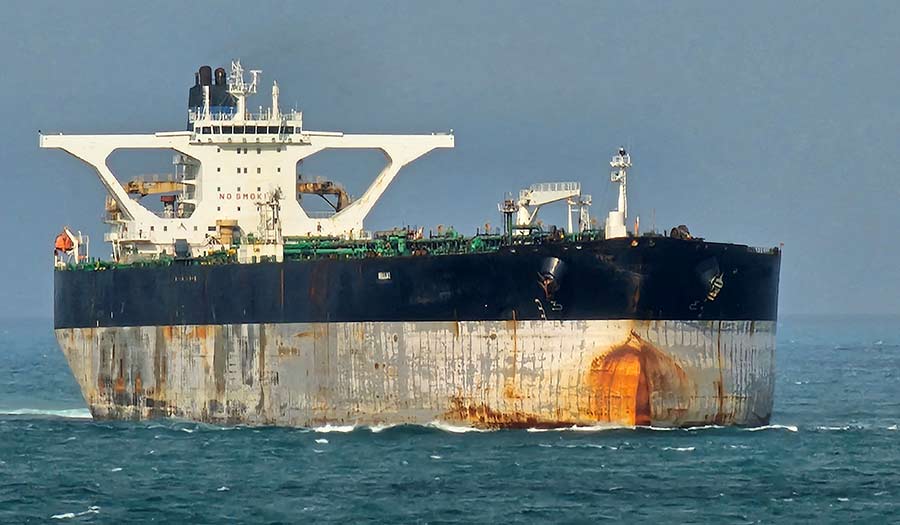
 Hakon Rimmereid via REUTERS/File Photo
World News Desk
Learn the why behind the headlines.
Subscribe to the Real Truth for FREE news and analysis.
Subscribe NowWASHINGTON (Reuters) – The U.S. seized two Venezuela-linked oil tankers in the Atlantic Ocean on Wednesday, one sailing under Russia’s flag, as part of President Donald Trump’s aggressive push to dictate oil flows in the Americas and force Venezuela’s socialist government to become an ally.
After capturing Venezuelan President Nicolas Maduro in a Saturday military raid on Caracas, the U.S. is escalating its blockade of vessels that are under sanctions and going to and from the South American country, a member of the OPEC oil group. The White House also said it plans to roll back some of the sanctions Mr. Trump placed on Venezuelan oil in 2019 during his first term.
A weeks-long chase across the Atlantic ended on Wednesday morning when the U.S. Coast Guard and U.S. military special forces, bearing a judicial seizure warrant, apprehended the Marinera crude oil tanker, which had refused to be boarded last month before switching to Russia’s flag, officials said.
The U.S. operation was supported by Britain’s Royal Air Force and one of its military vessels, which British Defense Secretary John Healey said was part of “global efforts to crack down on sanctions busting.”
With a Russian submarine and vessels nearby, the seizure risked more confrontation with Russia, which has condemned U.S. actions over Venezuela and is already at odds with the West due to the war in Ukraine. The Kremlin did not respond to a request for comment on what is a public holiday in Russia.
Earlier on Wednesday, the U.S. Coast Guard also intercepted a tanker carrying Venezuelan oil, the Panama-flagged M Sophia, near the northeast coast of South America, the U.S. officials said, in the fourth seizure in recent weeks. The tanker was fully loaded, according to records of Venezuela’s state oil company PDVSA.
U.S. Targets ‘Shadow Fleet’
The Marinera, formerly known as the Bella-1, was empty of oil, but the U.S. says it and the M Sophia belong to a “shadow fleet” of tankers used to transport sanctioned oil from Venezuela and Iran.
“The only maritime energy transport allowed will be that consistent with American law and national security,” Stephen Miller, deputy White House chief of staff, said in a statement. “There is unlimited economic potential for the Venezuelan energy sector through legitimate and authorized commercial avenues established by the United States.”
Attorney General Pam Bondi said in a statement that the Marinera crew had made “frantic efforts to avoid apprehension” and “failed to obey” Coast Guard orders, and so faces criminal charges.
China Denounces ‘Bullying’
The Trump administration was also pressing a deal with Venezuela to divert supplies intended for China, Venezuela’s top buyer, and gain access to $2 billion worth of crude oil.
“The United States’ brazen use of force against Venezuela and its demand for ‘America First’ when Venezuela disposes of its own oil resources are typical acts of bullying,” Chinese Foreign Ministry spokesperson Mao Ning told reporters.
Mr. Trump has openly spoken of controlling Venezuela’s vast oil reserves, in conjunction with U.S. oil companies, after arresting and jailing Mr. Maduro, whom he has cast as a drug-trafficking dictator in league with Washington’s foes. Mr. Maduro, 63, pleaded not guilty this week to drug crimes when he appeared in shackles in a federal court in New York.
Mr. Maduro’s Socialist Party allies remain in power in Venezuela, where Acting President Delcy Rodriguez is treading a fine line between denouncing Maduro’s “kidnapping” and kick-starting cooperation with the U.S. under explicit threats of further military violence from Mr. Trump.
Ms. Rodriguez herself is under U.S. sanctions, with her foreign financial assets identified as potential leverage, one person briefed on U.S. administration thinking said.
Top Trump administration officials, including Secretary of State Marco Rubio and Secretary of Defense Pete Hegseth, held classified briefings on Venezuela on Wednesday for the U.S. Senate and House of Representatives. Democrats said they wanted more information.
“They are proposing to steal Venezuela’s oil, at gunpoint, and use that leverage, forever, to run the country,” Democratic Senator Chris Murphy of Connecticut told reporters.
U.S. Plans to Sell Venezuelan Oil
Mr. Trump said on Tuesday that the U.S. would refine and sell up to 50 million barrels of crude oil stuck in Venezuela under U.S. sanctions, a first step in his plan to revive a sector long in decline despite sitting on the world’s largest reserves.
To enable the deal Mr. Trump described, the U.S. is “selectively rolling back sanctions” on Venezuelan oil, White House Press Secretary Karoline Leavitt told reporters on Wednesday.
“We are going to take between 30 and 50 million barrels of oil,” Mr. Rubio said. “We’re going to sell it in the marketplace, at market rates, not at the discounts Venezuela was getting.”
PDVSA confirmed it was in negotiations with the U.S. on Wednesday and said terms on the table are based on “strictly commercial transactions under terms that are legal, transparent and beneficial for both parties.”
Crude oil prices fell on world markets due to anticipated increased supplies released by Mr. Trump’s plan.
China, Russia and leftist allies of Venezuela have all denounced the U.S. attack to capture Maduro, in which dozens of Venezuelans were killed. It was Washington’s biggest such intervention in Latin America since the 1989 invasion of Panama to topple Manuel Noriega.
Washington’s allies are also deeply uneasy at the extraordinary precedent of seizing a foreign head of state, with Mr. Trump threatening more action, from Mexico to Greenland, to further U.S. interests.
- Real Truth Magazine Articles
- AMERICAS
 America in the Mirror – A Superpower in Search of Itself
We talk about greatness. We remember what we have been. But do we know what we are supposed to become?
More on Related Topics:
- Yemen’s Iranian-Backed Houthis Seize an Island in a Key Strait, Opening a New Front in the Iran War
- The U.S. and Iran Trade Missile Barrages as Hopes Dim for a Quick Resolution
- NATO Member Romania Shoots Down Stray Drones from Ukraine War After Years of Incursions
- U.S. Begins New Iran Strikes After President Says Ships Will Be Charged to Use the Strait of Hormuz
- The Strait of Hormuz’s Future Is Unsettled in Wake of Latest Strikes
Suggested Reading
More on Related Topics
Latest News
-
October 8, 2026
- UN Health Agency Wants More Details from Russia on Suspected Pneumonic Plague Case
- Ukraine Claims to Have Taken Out More Than Half of Russia’s Oil Refining Capacity
- Violence Has Displaced Members of More Than Half a Million Mexican Households in Past 5 Years
- As Iran War Smolders, Shunned Eritrea Looks to Come in from the Cold September 15, 2026
- U.S. Acknowledges for the First Time that It Has Deployed Weapons in Space
- Some Russians Are Fleeing Abroad, Citing Draft Fears and a Loss of Freedom September 11, 2026
- Americans Mark 25 Years Since September 11 Attacks amid Enduring Grief, Reflection
- Yemen’s Iranian-Backed Houthis Seize an Island in a Key Strait, Opening a New Front in the Iran War September 10, 2026
- The Push to Remove Lead Pipes Is On. Thousands of Water Systems Still Don’t Know Where Theirs Are September 9, 2026
- Family Interest in Education Falls as Test Scores Drop
- The Poorest in the U.S. Can’t Find Housing Even as Low-Income Units Sit Empty September 1, 2026
- In U.S. West, Drought Pits Farms Against Industry
- Why Christians Must Watch the News
- Teach Your Children to Be Active
- What Comes After America 250? August 31, 2026
- How Brexit Broke British Politics
- How to Keep the Sabbath
- Aliens and the Bible?
- Building Character in a Crooked World August 28, 2026
- U.S. Declares Drought Disaster for Parts of Puerto Rico as Dry Conditions Persist