
 Getty Images
Article
He appears suddenly in Genesis, blesses Abraham, receives tithes—and then vanishes from the story. What does the Bible reveal about this mysterious figure?
Learn the why behind the headlines.
Subscribe to the Real Truth for FREE news and analysis.
Subscribe NowSome 4,000 years ago, the patriarch Abraham mounted a daring rescue.
His nephew Lot had been captured by Chedorlaomer the king of Elam, and a band of allied forces. These armies had plundered the cities of Sodom and Gomorrah, taking their possessions and people captive (Gen. 14:11-12).
Hearing the news, Abraham acted immediately. He armed 318 trained men of his household and pursued the invading forces. Dividing his men, he struck the enemy by night and recovered his nephew, the other captives and all the goods (vs. 14-16).
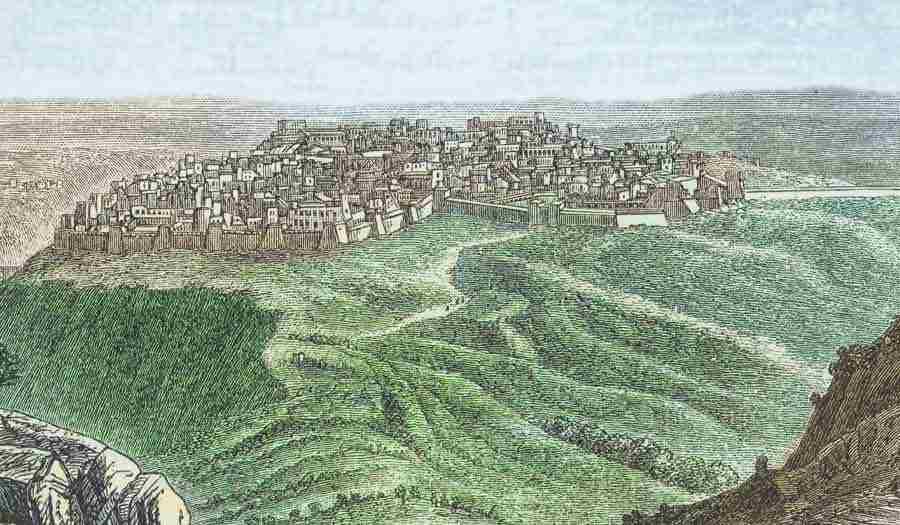
After this successful mission, Abraham was met by a mysterious figure: “Melchizedek king of Salem,” who “brought forth bread and wine” (vs. 18).
Who was this man who received Abraham at such a pivotal moment? The rest of the verse explains that “he was the priest of the most high God.” But is there evidence of his specific identity?
For centuries, readers have offered different answers. Some Jewish traditions identify Melchizedek as Shem, the son of Noah. Many Catholic and Protestant commentators view him as a historical king-priest who foreshadowed Jesus Christ. Others have seen him as an appearance of the One who later became Christ.
But tradition and religious opinion cannot settle the question. Only Scripture can.
At this point in the Genesis account, Abraham was still known as Abram. Melchizedek blessed him, saying, “Blessed be Abram of the most high God, possessor of heaven and earth: and blessed be the most high God, which has delivered your enemies into your hand” (vs. 19-20).
Abraham then “gave him tithes of all” (vs. 20), a significant clue in determining his identity. The Bible says “the earth is the Lord’s, and the fullness thereof” (Psa. 24:1). Since Abraham tithed directly to Melchizedek, “the priest of the most high God” (Gen. 14:18), that means Melchizedek had real spiritual authority.
Clearly, this was no ordinary priest.
David Adds a Clue
Centuries later, King David recorded, “The Lord said unto my Lord, Sit you at My right hand, until I make your enemies your footstool. The Lord shall send the rod of your strength out of Zion: rule you in the midst of your enemies” (Psa. 110:1-2).
Notice that this ruler sits at the right hand of God Himself. His rule extends from Zion.
Then the psalm ties this same being to Melchizedek: “The Lord has sworn, and will not repent, you are a priest forever after the order of Melchizedek” (vs. 4).
Do not miss this. This “Lord” who sits at God’s right hand is connected to the order of Melchizedek, and His priesthood lasts “forever.”
While Psalm 110 does not explain every detail of Melchizedek’s identity, it does establish he is someone who David called “my Lord.”
Only Candidate
More than 2,000 years ago, Jesus Christ was born into a world that immediately sought His death. While He was still an infant, King Herod—who was “exceeding wroth” and determined to eliminate any threat to his power—“sent forth, and slew all the children that were in Bethlehem, and in all the coasts thereof, from two years old and under” (Matt. 2:16).
Great numbers of children were murdered, fulfilling Jeremiah’s prophecy of “lamentation, and weeping, and great mourning” (Matt. 2:18; Jer. 31:15). Jesus and His parents narrowly escaped (Matt. 2:13-15), but this was only the beginning of the opposition He would face.
Throughout His life, Christ was ridiculed, rejected and opposed by both the religious elite and the world around Him. Ultimately, He was arrested, illegally tried, beaten beyond recognition and murdered, becoming the Savior of mankind.
The apostle Paul in Hebrews explains how all-encompassing the trials were that Jesus endured, and introduces a central role He holds: “We have not an high priest which cannot be touched with the feeling of our infirmities; but was in all points tempted like as we are, yet without sin” (4:15).
Christ overcame perfectly and is therefore uniquely positioned to relate to the sufferings human beings experience.
Many assume Jesus became High Priest only after ascending to heaven. While His time on Earth equipped Him to more powerfully fulfill this office, few understand He held it as Melchizedek long before that time.
Paul then connects Christ directly to the priesthood David described in Psalm 110: “So also Christ glorified not Himself to be made a high priest…” (Heb. 5:5). Paul then quoted Psalm 110:4: “You are a priest for ever after the order of Melchizedek” (Heb. 5:6).
At this point, an unmistakable connection has been made: Jesus Christ is the High Priest of Psalm 110.
Hebrews 5:7-9 further reveals Christ’s qualifications. He suffered “in the days of his flesh,” “learned…obedience by the things which He suffered,” and became “the author of eternal salvation unto all them that obey Him.” Verse 10 again plainly states He was “called of God a high priest after the order of Melchizedek.”
King of Peace
Back in Genesis 14, Melchizedek is also called the “King of Salem” (vs. 18). Hebrews explains the meaning of this title in full: “This Melchizedek, king of Salem, priest of the most high God, who met Abraham returning from the slaughter of the kings, and blessed him; to whom also Abraham gave a tenth part of all; first being by interpretation King of righteousness, and after that also King of Salem, which is, King of peace” (7:1-2).
Only a member of the Godhead could command these names. No human ruler has ever perfectly embodied righteousness and peace.
Hebrews then gives the clearest statement of Melchizedek’s origin and therefore identity. He is “without father, without mother, without descent, having neither beginning of days, nor end of life; but made like unto the Son of God; abides a priest continually” (vs. 3).
Put this all together: Melchizedek is an eternal being. The Being Paul is discussing is Jesus Christ, meaning Melchizedek was the One who later became Jesus Christ.
Verse 4 then underscores Melchizedek’s authority, telling the Hebrews to “consider how great this man was, unto whom even the patriarch Abraham gave the tenth of the spoils.”
Priesthood That Lasts Forever
While technical and beyond the scope of this article, Paul clarified the transfer of authority from the physical Levitical priesthood to Christ as High Priest. He asked, “If therefore perfection were by the Levitical priesthood, (for under it the people received the law,) what further need was there that another priest should rise after the order of Melchizedek, and not be called after the order of Aaron?” (Heb. 7:11).
In other words, the physical Levitical priesthood was temporary—a stopgap awaiting the ultimate High Priest, Jesus Christ.
When Christ was sacrificed for mankind, there came certain changes to the Levitical laws concerning such elements as purification and sacrifice: “For the priesthood being changed, there is made of necessity a change also of the law” (vs. 12).
This does not mean, as many assume, that Christ abolished God’s Law. Jesus warned, “Think not that I am come to destroy the law, or the prophets: I am not come to destroy, but to fulfill” (Matt. 5:17). Rather, He upheld, taught and magnified the Law!
This High Priest is an eternal One: “And it is yet far more evident: for that after the similitude of Melchizedek there arises another priest, who is made, not after the law of a carnal commandment, but after the power of an endless life” (Heb. 7:15-16).
His position is irrevocable, “with an oath by Him that said unto Him, The Lord swore and will not repent, You are a priest forever after the order of Melchizedek” (vs. 21).
Think of it this way: God has doubly sworn, and will not go back on His word.
Earlier in Hebrews, Paul called Christ the “captain” of salvation, whose goal is to bring “many sons unto glory” (2:10)—every human being who will ultimately accept God’s way of life. The One who appeared to Abraham as Melchizedek is now High Priest, and through that eternal office, He is working to fulfill God’s purpose for mankind.
What exactly is that purpose? And what does salvation actually involve? To learn the Bible’s answers, read our free booklet Just What Is Salvation?
Other Related Items:
More on Related Topics:
Suggested Reading
More on Related Topics
Latest News
-
October 20, 2026
- Japan Launches Spacecraft to Mysterious Moons of Mars in Bold Mission to Bring Home Soil Samples
- France Announces Nightly Curfews ‘For as Long as Necessary’ in Paris and Other Big Cities October 16, 2026
- Fundraising to Protect Oceans, Forests and Other Key Nature Sites Falling Short Ahead of UN Summit
- Drone Strikes in the Black Sea Raise Fears of Russian Escalation to Test NATO’s Response
- Nepal’s Devastating Flood Exposes the Risks of Resettling Disaster Survivors October 15, 2026
- Sudan’s Famine Risk Worsened by Conflict, Drought and Funding Shortages
- How the Houthis Are Helping Iran Turn Saudi Arabia into a Pressure Point October 9, 2026
- What Will the Next Leader of the UN Need to Get the Job Done in an Increasingly Complex World? October 8, 2026
- UN Health Agency Wants More Details from Russia on Suspected Pneumonic Plague Case
- Ukraine Claims to Have Taken Out More Than Half of Russia’s Oil Refining Capacity
- Violence Has Displaced Members of More Than Half a Million Mexican Households in Past 5 Years
- As Iran War Smolders, Shunned Eritrea Looks to Come in from the Cold September 15, 2026
- U.S. Acknowledges for the First Time that It Has Deployed Weapons in Space
- Some Russians Are Fleeing Abroad, Citing Draft Fears and a Loss of Freedom September 11, 2026
- Americans Mark 25 Years Since September 11 Attacks amid Enduring Grief, Reflection
- Yemen’s Iranian-Backed Houthis Seize an Island in a Key Strait, Opening a New Front in the Iran War September 10, 2026
- The Push to Remove Lead Pipes Is On. Thousands of Water Systems Still Don’t Know Where Theirs Are September 9, 2026
- Family Interest in Education Falls as Test Scores Drop
- The Poorest in the U.S. Can’t Find Housing Even as Low-Income Units Sit Empty September 1, 2026
- In U.S. West, Drought Pits Farms Against Industry