Entering a closet or private room, dropping to your knees, bowing your head and talking to a Being you cannot see or hear. These are all steps involved in praying to our great Creator God.
At first, praying may feel unusual. Different. Even a little weird.
You may see your father and mother routinely study their Bibles and set aside time to talk with God in prayer. You know you should be following their examples.
Yet, as a young person, you could ask, “Why would God listen to someone who does not yet have His Holy Spirit?”
Understand: As a Church teen, you do have access to Almighty God!
This privilege is based largely on the belief of your parents. Children of adult members in the Body of Christ are considered holy (I Cor. 7:14), which means set apart. This signifies that you are in a special category different from your peers in the world.
Because of your relationship with your parents, God uniquely offers you protection and the rare opportunity to bond with Him—well before you reach the age of baptism.
From an early age, you have been following God’s Way. This includes comprehending God’s Kingdom, the true meaning and purpose of the Sabbath and annual Holy Days, God’s Master Plan of salvation—and so much more.
Among these truths is the meaning and importance of prayer. To build a relationship with anyone, you must spend time and communicate with them. God is no different.
There is no need to wait to be baptized to pray. God has given you an open invitation to pursue His way of life and a personal relationship with Him. All you need to do is respond.
Faith Starts It All
Something vital is required to make prayer effective: You must have faith.
The world, particularly Hollywood, defines faith as something vague and undefinable, or a personal feeling.
Yet true faith is different. To better understand it, take God at His word. Notice: “Now faith is the substance of things hoped for, the evidence of things not seen” (Heb. 11:1).
Faith is not an abstract, imperceptible concept. According to Vine’s Expository Dictionary of the New Testament, the Greek word translated “substance” is related to a “title deed.” The way your parents prove ownership of their home or car is by its title. The word for “evidence” is related and can mean proof or conviction. By putting these together, faith, as the substance and evidence of your belief in what God says, becomes the proof you can rely on—not some mysterious feeling you work up.
A person does not need to be baptized or have the Holy Spirit dwelling in him to exercise faith. The Bible is filled with examples of people exercising extraordinary human faith before being converted.
Take the example of the apostle Peter. He displayed impressive faith in Jesus Christ when the 12 disciples were in a boat on the Sea of Galilee and saw a figure walking on the water.
Initially unsure if it was Jesus, Peter said, “Lord, if it be You, bid me come unto You on the water” (Matt. 14:28).
Jesus simply replied, “Come” (vs. 29), and Peter, believing God, climbed out of the ship and proceeded to walk on the water’s surface! He believed Jesus was the Messiah and, as such, Christ had the power and authority to defy the laws of physics. As long as Peter kept His focus on God, he was able to do what no other human being could.
This miracle occurred before Peter had the power of God’s Holy Spirit at work in his mind, converting his thinking from carnal thoughts. Yet he was deeply motivated by his conviction in Christ’s divine authority. This same unshakeable conviction enabled him to do the physically impossible. His conviction or strong belief was proof that Jesus Christ would keep His word (Heb. 6:18).
Hebrews 11:6 says: “Without faith it is impossible to please Him: for he that comes to God must believe that He is, and that He is a rewarder of them that diligently seek Him.” This verse lists two vital components for effective prayer: We must believe God, and we must carefully seek Him.
How to Pray
If you have ever wondered how you should pray, you are not alone. Christ knew His followers would raise this question. And He answered it.
In Matthew 6:5-8, Jesus warned His disciples against praying to be seen or to impress men. He also said to avoid vain repetition—repeating the same words in a monotonous, chant-like drone, as millions of professing Christians do today. Imagine how strange it would be for someone to approach you and repeat the same thing over and over. You probably would not like it. God does not want people talking to Him like this either.
In verse 9, Jesus stated, “After this manner therefore pray…” The Greek word for “manner” is houtos, meaning “in this way.” Christ was not teaching His disciples to follow this prayer word-for-word. Remember, He just commanded them not to do that in verse 7.
What Jesus was about to teach them was a prayer outline—a model prayer. It was intended to be a sort of bullet list of topics Jesus wanted His followers to cover in their daily prayers.
Christ gave an outline because He wanted to leave room for the person praying to make the prayer unique to his or her own circumstances. God does not want to hear the same canned, repeated prayer from His people. Instead, He wants to hear how you apply the model He has given, which can be found in Matthew 6:9-13 and Luke 11:2-4.
Let’s briefly explain each part of the outline around which you can build your prayers.
“Our Father which is in heaven”
We should always begin our prayers by addressing God the Father. He is the most powerful Being in the universe and deserves utmost respect and appreciation.
God created us. He is the Master Potter, and we are His clay (Isa. 64:8). He is our Father since He created us through Jesus Christ. He is the Head of a Family and is expanding it through human beings.
Not only have your parents been given the opportunity to be a part of this Family, but so have you. You can become one of His spiritually begotten children by accepting God’s invitation to practice His way of life—which includes being baptized and having the Holy Spirit dwelling in you (Rom. 8:14).
Understand that Christ wants us to recognize that God the Father is in heaven. This sets Him high above those of us on Earth. It is an added reminder that God is supreme and deserves to be honored and worshipped.
Mentioning His residence also helps us appreciate the quality, beauty and perfection surrounding Him. Read Revelation 4 for a description of His throne.
And notice we are to pray to God the Father—not to Jesus Christ, and never to angels or other spirit beings (Col. 2:18).
Be Creative When Finding Opportunities for Prayer
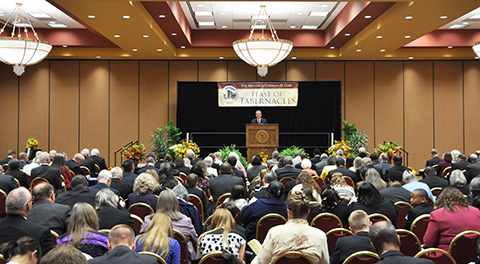
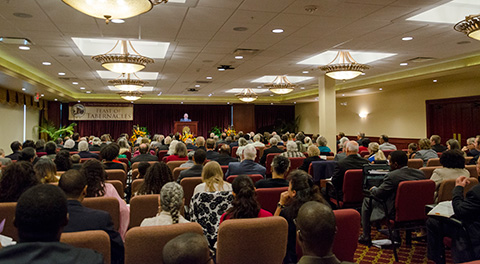
Finding a private place to pray when you are away from home for long periods, such as attending Ambassador Youth Camp or the Feast of Tabernacles, can seem daunting.
Maintaining a proper prayer life involves setting aside time to speak with God each day. But keep in mind that your prayers during these times do not need to be long. Instead, focus on the quality of each prayer more than the time actually spent praying. God is more concerned with your thoughts—what is on your mind, what motivates you, and what is shaping you into the unique individual He sees you can become—than how long you kneel before Him.
Hotel rooms you and your family stay in during the Feast typically have bathrooms or closets you can use to talk to God in prayer. Yet finding a private place or the right moment to pray at AYC will require you to be creative.
Seek your counselors’ advice. They can offer guidance in finding appropriate places for you to pray. Also, some campers wait until night, when they can lie in their bunks, pull the covers over their heads so no one can see them, and pray silently.
“Hallowed be Your name”
God’s name is special. Christ reminds us by saying God’s name is to be “hallowed,” which means to make holy or venerate.
The use of God’s name is so important it is addressed in the Ten Commandments: “You shall not take the name of the Lord your God in vain; for the Lord will not hold him guiltless that takes His name in vain” (Ex. 20:7). This is serious. Yet so many in our modern age ignore this instruction by using God’s name inappropriately.
“God” and “Father” are just two of the many names and offices this supreme Being has. There are many others that are all a reminder of how He fills roles in our lives.
God is our Creator: He physically made us in His form and image (Gen. 1:26-27).
God is our Healer: David wrote, “Bless the Lord, O my soul, and forget not all His benefits: who forgives all your iniquities; who heals all your diseases” (Psa. 103:2-3).
God is our Provider: Every morsel of food you eat comes from Him. So does every piece of clothing you own—and your home, your car if you have one, and the air you breathe. Everything you possess comes from God (Jms. 1:17).
God is our Teacher: For the last 6,000 years, He has called only a select few to understand His truth (John 6:44, 65; Rom. 8:28-30). You are blessed to be reared by parents who can teach you God’s Way.
Again, God has many names, offices and functions. He is Judge. Love. Longsuffering. Glory. Grace. Perfect. Omnipotent, omnipresent and omniscient. He is Justice. Power. Righteous. The list goes on. Use your prayers to thank Him for these things.
“Your Kingdom come”
The world is filled with appalling evils. Whether it is drug use, bullying, sexual immorality, gossiping, fighting or other terrible circumstances, the conduct occurring around you can be hard to witness.
Daily news headlines testify to mankind’s escalating sins across the world. Endless cases of violence. Widespread fraud and government corruption. Horrific stories of domestic or child abuse. Never-ending terrorist attacks.
Is there any hope for a world so thoroughly subjected to bad news?
Christ assures us through the same message He preached at the beginning of His earthly ministry: “Repent you, and believe the gospel” (Mark 1:15).
The gospel is the good news of God’s coming Kingdom, which will one day replace all the terrible things we see around us. The more devastating events we see, the more we should pray for the Kingdom to come.
Only God’s righteous, divine supergovernment will solve the world’s ever-increasing, endless problems.
“Your will be done in earth, as it is in heaven”
Clearly, things are done God’s way in heaven. He is in charge there, with everything entirely under His control and done decently and in order. In your prayers, ask that God’s will, or preference, be done on Earth and in your life. Ask Him to guide you through Bible study to learn what He desires.
Most in the world pray with only themselves in mind. Their attitude is “gimme, gimme, gimme,” instead of “God, I want what You want,” or “Please give others the things they need.”
Be different! Ask the Father to help you have a yielded, teachable attitude so that He can build His holy, righteous character in you. Also, ask God to help you properly accept His answers to what you request—even if they are not what you want to hear. Sometimes, after all, the answer is “no.”
Recognize that, when God does answer your prayers, He rarely does so in the way you expect. Accept this and realize that God’s will is far greater than yours (Isa. 55:9).
“Give us this day our daily bread”
After you have put God first in your prayers, then you can pray about your daily needs and the needs of others.
Think of the many blessings He daily showers on you, your siblings and your parents: food, drink, shelter, clothes, family, health, education, employment, protection, understanding His truth. These can be summarized as “daily bread.”
If you want a good performance on a school test, pray for it. If you need to be healed, ask. If you would like to find a part-time job so you can help your family, seek God’s will. As long as you “seek first the Kingdom of God, and His righteousness” (Matt. 6:33), God will provide for your every need. All you have to do is exercise faith and ask.
But notice that Christ did not say, “Give me this day my daily bread.” No, He said, “us” and “our.” When you pray, remember the needs of others. There are others who want to perform well in school or at work. You are not the only one who needs to be healed. Others are dealing with financial challenges. The more compassion you give to others, the more God will give to you.
“And forgive us our debts”
All have sinned (Rom. 3:23). Sin is breaking God’s Law (I John 3:4). And the wages of sin—what we earn for breaking His laws—is death (Rom. 6:23).
We must be forgiven by God, else our sins would be held against us. It is like being indebted to God. Christ paid this debt with His life and by shedding His blood.
Jesus Christ’s sacrifice was unique. He lived in the flesh and was “in all points tempted like as we are, yet without sin” (Heb. 4:15). Jesus knows what it is like to wrestle with temptation. Yet He did not sin—not even once!
Since “the blood of Jesus Christ…cleanses us from all sin” (I John 1:7), Christians (and their children) can “come boldly unto the throne of grace, that we may obtain mercy, and find grace to help in time of need” (Heb. 4:16). I John 1:9 adds, “If we confess our sins, He is faithful and just to forgive us our sins, and to cleanse us from all unrighteousness.”
God is ready and willing to forgive.
“As we forgive our debtors”
Another action you must fulfill to be forgiven is to extend forgiveness to others. If you do not, God is unable to forgive you: “For if you forgive men their trespasses, your heavenly Father will also forgive you: but if you forgive not men their trespasses, neither will your Father forgive your trespasses” (Matt. 6:14-15).
Many people think that extending forgiveness and mercy is a sign of weakness. They are wrong!
It takes tremendous power to suppress thoughts of revenge. A humble, yielded mind is needed to show mercy and say, “I forgive.”
This is the attitude God expects.
Remember: “For all have sinned, and come short of the glory of God” and have earned the death penalty (Rom. 3:23; 6:23). Yet God does not take pleasure in the death of the wicked (Ezek. 18:21-23, 32). He wants everyone to be saved. II Peter 3:9 says He is “longsuffering to us, not willing that any should perish, but that all should come to repentance.”
Pray for others to repent of their sins and weaknesses, and to overcome their faults.
“And lead us not into temptation”
God does not tempt people. He cannot. Nor does He lead them into temptation—that would go against His very nature (see James 1:13). So why are we to ask that He does not lead us into temptation?
In the original Greek, “temptation” in Matthew 6:13 means “a putting to proof, by experiment or experience; to examine, try.”
“God knows you better than you do. He sees your faults, shortcomings and weaknesses. He wants you to overcome them.”
Realize that all followers of God go through hardship. Suffering helps God’s people turn to Him for help and comfort. It produces the fruits of God’s Spirit: love, joy, peace, longsuffering, gentleness, goodness, faith, meekness and self-control (Gal. 5:22-23).
But this does not mean we should be gluttons for punishment. Christ understands this. That is why He tells us to pray, “Lead us not into temptation [sore trial]” (Matt. 6:13).
Instead, ask God to correct you, in measure (Jer. 10:24). There is a difference between correction and sore trial.
God knows you better than you do. He sees your faults, shortcomings and weaknesses. He wants you to overcome them. You can help Him by being willing to ask for correction properly.
“But deliver us from evil”
Some translations render this, “but deliver us from the evil one.” This refers to Satan the devil. As the “god of this world” (II Cor. 4:4), he will do everything in his power to turn you away from God and His truth.
The deck can seem stacked against you. On your own, you will fail. But with God’s help, you will succeed. Paul wrote, “I can do all things through Christ which strengthens me” (Phil. 4:13).
Pray for deliverance from the pulls, temptations and evils of your flesh, this world and Satan’s “fiery darts” (Eph. 6:16)—his wrong attitudes and desires. God will deliver you.
“For Yours is the Kingdom, and the power, and the glory, forever”
As you finish your prayer, praise God again. Your thoughts should point to God’s soon-coming Kingdom—His righteous government, which is far superior to men’s governments. Through it, He will eventually build and develop His holy, righteous character in all people, which will qualify them to be born into His divine, ruling Family.
Acknowledge God’s awesome power in bringing this to pass. It is the same power that created the entire universe and everything in it. God is to be glorified—now and for all time.
Saying Amen
This simply means “so be it.” You should end all prayers with “amen” because it shows that you really mean everything you said.
But before you do, make sure that your prayers are said in the name of Jesus Christ. Only by His authority—His name—can you approach God’s throne of grace.
Christ is our High Priest. He intercedes for us fallible, imperfect humans whenever we pray to God the Father.
Beyond the Model Prayer
Now that you have the model, the rest is up to you. Be sure to add elements related to the major points Jesus covered.
That said, even the most creative minds sometimes find themselves in a “prayer rut.” Your prayers can become stale—stiff—even predictable. This can even happen with Christians who have been baptized for decades. If you are not careful, you could become bored with praying. Never permit this to happen!
One way to keep prayers detailed, active and interesting is to incorporate the Psalms. Examples include psalms of praise and thanks such as Psalms 103 and 136. You can use these to motivate you to thank God in detailed ways for all the blessings He pours on you daily. Search the scriptures. You are only limited by your imagination.
By applying these and other tips, you may quickly find your prayer time filled with thanking God in minute detail and praying for the needs of others. If done successfully, you will encounter a new “problem”: not having enough time to cover absolutely everything in prayer!
When you bow down and share your thoughts, worries and concerns with God, He always has time for you and gives you His full, undivided attention. All you need to do is communicate—it is that simple.
To learn more about proper prayer, read our article “The Keys to Dynamic Prayer.”