At times, it can be challenging to relate to the Bible. This best-selling Book can feel as though it is about people who lived eons ago in strange, ancient cultures, speaking different languages in faraway places. The antiquated language found in the King James Version contributes to this, which, while still being a strong translation, “sounds” different from modern English.
But were things really so different back then?
Wise King Solomon wrote in the book of Ecclesiastes that “there is no new thing under the sun” (1:9). This may be hard to believe at first—until you look beneath the surface. We have modern technology that would mystify those who lived thousands of years ago. But human beings today still have the same kinds of hopes, problems, opportunities and challenges as those who lived before. The modern world has simply developed different tools for addressing them.
Something else has never changed throughout the centuries since Jesus Christ built His Church: Some of its members have children, including teenagers like you. We do not know many details about the lives of most of these young people, with one notable exception: Timothy.
You have more in common with this New Testament figure than you may think!
New Testament Example
Timothy grew up in God’s Church. He eventually became a baptized member, entered the ministry and rose to the rank of evangelist (II Tim. 4:5). He was the recipient of the two letters written by Paul that are now books of the Bible bearing his name—I and II Timothy. He experienced blessings along with struggles. Yet he achieved lasting success by applying key characteristics that set him apart from the average young person. These same keys can help you be successful too!
In Acts 16:1, we see that Timothy was the son of a woman who was a member of the Church. His father was not. Some have speculated that his father did not live in the home. In addition, God called his maternal grandmother into the truth (II Tim. 1:5).
Also, consider Timothy’s friends. As a teenager in God’s Church, Timothy could have been similar in age to and may have been friends with Mark and Barnabas. Mark, who recorded the New Testament book of Mark, also later became an evangelist, and Barnabas eventually held the office of apostle.
These three may have written letters to each other, just as you send text messages and emails to fellow teens today—it just took longer!
Timothy, Mark and Barnabas all later worked with the apostle Paul and would have continued their friendship into adulthood as leading men in the Work of God.
As with all teenagers in God’s Church—then and now—they would have heard messages about Christ’s Return being imminent. Therefore, they may have initially believed they would never have spouses or children.
Timothy’s surroundings in the first century, while seeming very different from society today, would have also been similar to your life in one clear way: False religion was everywhere. Many of the customs from mainstream Christianity you see and avoid today would have been all around him, since false Christianity is based on ancient paganism predating even the time of the New Testament.
Because there were not many teenagers with the same beliefs as Timothy, his close relationships would have predominantly been with those in the Church, whether face-to-face or long-distance. Sound familiar?
“Today, we can study and read God’s Word anywhere—such as on our computers, phone apps and tablets. Make the most of this access!”
Consider: Just like Timothy, you too live in the New Testament time period. As a comparison, both Adam and King David lived in the Old Testament era—yet you are about 1,000 years closer to Timothy than King David was to Adam! So a case can be made that you can much more easily relate to Timothy than David could to Adam.
With this backdrop in mind, which characteristics helped make Timothy successful—and how can you practice them today?
Here are three keys to help you become a New Testament success story!
(1) Study God’s Word
What sets a true Christian apart is that he or she receives—accepts as true, and puts into practice—God’s words recorded in the Bible. Notice: “Sanctify them [set them apart] through Your truth: Your Word is truth” (John 17:17).
Many people read the Bible but are unwilling to truly receive its words. Some receive a portion of them but ignore the rest. True Christians, however, receive them all.
Paul acknowledged that Timothy had made the most of his opportunities to hear God’s Word: “From a child you have known the holy scriptures, which are able to make you wise unto salvation through faith which is in Christ Jesus” (II Tim. 3:15).
Timothy did not have a Bible in his home as we do. He would have gone to a synagogue to listen to priests read scriptures from long scrolls. At the time, the New Testament had not been canonized, so a young Timothy would have only heard readings from the Old Testament.
As a child, he would have been familiar with many verses from God’s Word—our Instruction Manual for life. “For the commandment is a lamp; and the law is light; and reproofs of instruction are the way of life” (Prov. 6:23). And, “The law of the Lord is perfect, converting the soul: the testimony of the Lord is sure, making wise the simple. The statutes of the Lord are right, rejoicing the heart: the commandment of the Lord is pure, enlightening the eyes” (Psa. 19:7-8).
In one of his letters to Timothy, Paul reminded the younger man: “All scripture is given by inspiration of God, and is profitable for doctrine, for reproof, for correction, for instruction in righteousness: that the man of God may be perfect, thoroughly furnished unto all good works” (II Tim. 3:16-17).
Today, we can study and read God’s Word anywhere—such as on our computers, phone apps and tablets. Make the most of this access! Remember, if you lived 2,000 years ago, you would not have had even the privilege of owning a personal Bible as you do now.
(2) Maintain Close Relationships with Converted Relatives
Your peers possess a good deal of knowledge—facts and information on various subjects. But knowledge alone, without understanding and wisdom, will not get you far.
Timothy made the most of having both a mother and grandmother in God’s Way. He learned a great deal from them about right living.
Consider the high compliments that Paul, one of the leading apostles of the day, paid to Timothy and his family: “When I call to remembrance the [genuine] faith that is in you, which dwelled first in your grandmother Lois, and your mother Eunice; and I am persuaded that in you also. Wherefore I put you in remembrance that you stir up the gift [of the Holy Spirit], which is in you by the putting on of my hands” (II Tim. 1:5-6).
Seeing the examples of family, coupled with regular Bible study, gave Timothy a head start toward becoming a mature Christian. He would have seen his mother and grandmother respond to adversity and enjoy prosperity. Also, he watched them exercise God’s Spirit by serving others and showing outgoing concern—real love. And he would have seen firsthand the blessings that resulted from their obedience.
(3) Staying Close to God Makes You a Better Example
While training in the ministry under Paul, Timothy was urged to continue in what he learned as a youth (II Tim. 3:14). This sometimes meant going against the grain. When tough decisions had to be made, Timothy could not take the easy route but instead had to stand for what was right.
Paul also instructed, “Let no man despise your youth; but be you an example of the believers, in word, in conversation, in charity, in spirit, in faith, in purity” (I Tim. 4:12). While the first part of this verse applies primarily to Timothy’s ministerial responsibilities, the rest of it applies to all of us. Everyone in God’s Church should strive to be an “example of the believers”!
Of course, Timothy was not sinless (Rom. 3:23). But he understood that he was being watched at all times by his spiritual Father, even if his physical father was absent. And he knew God’s opinion of him was much more important than those around him.
You should always be mindful of your conduct—this can include dress, manners, how you speak, what kind of activities you pursue, your work ethic and more. A courteous teen is still much appreciated, though rare in today’s world.
People at school and work do not know God’s truth. They do not know how to conduct themselves according to His standards. Consequently, those living God’s Way stand out! What would have been unimpressive even 20 or 30 years ago is often seen as overachieving today. Understand this advantage and appreciate it.
How much do you think about your example? Remember every day that you are representing God to those around you. Keep in mind, however, that you must ultimately compare yourself with the example of Jesus Christ, not your classmates or coworkers. Read I Peter 2:21.
The pressure to break God’s Law is so strong—and comes from so many directions—that resisting is a minute-to-minute battle. While most choose the path of least resistance, you must be different. With God’s help, you can be!
Timothy in the 21st Century
Imagine teenage Timothy living in the present day and attending your local congregation. How he would act today can help you better understand your role in God’s Church.
Timothy would fully participate in Church socials and functions whenever possible.
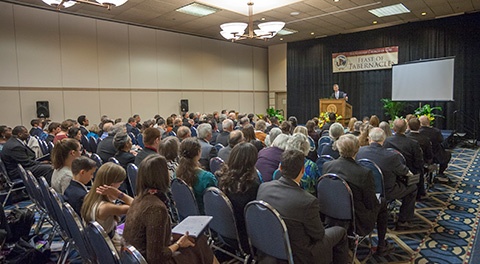
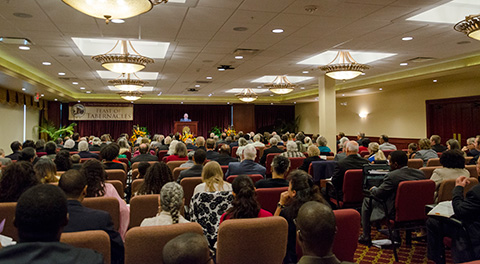
He would likely have a job, in the summer or year-round, to pay his way to attend Ambassador Youth Camp and save second tithe to use at the Feast of Tabernacles.
Timothy would read each issue of Ambassador Youth, view every live-streamed Teen Bible Study and even dive into The Pillar and other Church literature to better grasp the doctrines of God.
He would learn how to play sports and music, as well as develop a winning personality.
He would be a great help to his mother with day-to-day chores and preparing for the Sabbath.
He would show respect and chivalry. He would open the door for his mother and stand up for his grandmother when she entered the room (Lev. 19:32).
He would learn from his mistakes and strive to improve.
Timothy’s sense of humor would be clean and not at others’ expense. Instead, he would find ways to build up his friends.
He would know when to address conflicts with others and when to just let others’ mistakes fade into history, never to be brought up for the purpose of gossip or hurting them.
He would be well-rounded and balanced—a young man who both works hard and plays hard.
Yet understand there was nothing inherently special about Timothy. He was blessed because he sought God and lived His Way—and you can too. All these points can describe your life today if you apply the three keys we have examined. You too can be a New Testament success story. Now go out and be like Timothy!