
 ATTA KENARE/AFP VIA GETTY IMAGES
Article
Why do nations’ attempts to shape other nations keep failing—and what is the only solution that works?
Learn the why behind the headlines.
Subscribe to the Real Truth for FREE news and analysis.
Subscribe NowThe petrodollar system is a symbol of American influence. It arose from a series of agreements in the mid-1970s that ensured oil would be traded in U.S. dollars. This strengthened America’s influence across the Middle East and helped fuel regional economic growth.
Then, over time, American culture and political ideas also began to reshape parts of the region.
The United States used that influence to encourage governments to become more pro-American. Many nations accepted the changes—but Iran pushed back.
From 1978 to 1979, protests spread across Iran against the monarchy led by a shah. Many believed traditional Muslim values were being replaced too quickly. Wealth inequality grew, political repression increased and foreign influence made the government seem less independent. By early 1979, the unrest led to the government collapsing and being replaced by an Islamic theocracy.
Since then, Iran’s leaders have promoted their system of government and expressed a desire to expand it beyond their borders. The United States has done the same in different ways—using economic pressure, alliances, and at times, military force to influence other nations.
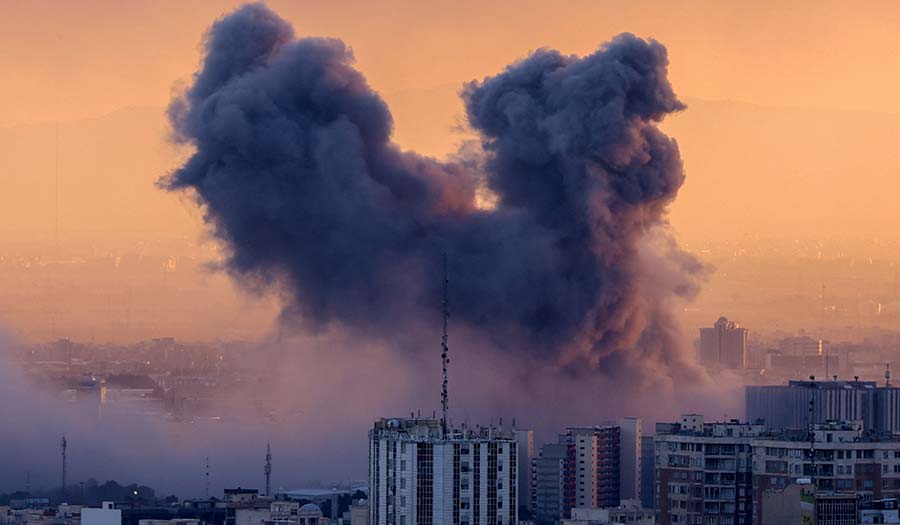
Those differences have been on full display during the clashes between the U.S. and Iran that are going on today.
The two nations have very different ideas about how a country should be governed—and both believe their system is right. Both have tried to shape other nations in their own image, with some success and many failures.
This is often called foreign intervention, in which one nation tries to influence or reshape another from the outside.
In such cases, who is right? Can one form of government truly work for every nation?
History shows that when nations try to reshape others, they fail—and yet the same foreign intervention tactics are tried again and again. As the Bible says, “the thing that has been, it is that which shall be…and there is no new thing under the sun” (Ecc. 1:9).
Why do nations keep trying if it does not work? Is there a better way?
Defining a Nation
To understand why foreign intervention fails, we must first understand what a nation is.
Paul explained that God made “of one blood all nations of men for to dwell on all the face of the earth, and has determined the times before appointed, and the bounds of their habitation” (Acts 17:26).
God sees nations as families grown large. He placed them in specific areas and set their boundaries.
After the Flood, all nations descended from Noah and his sons (Gen. 10). God divided the Earth among these families and gave each a place to live (Deut. 32:8). When nations rejected Him, God removed them from their land and gave it to others, as He did with the nations of Canaan and later with Israel (Deut. 9:4-5; II Kgs. 17:7, 18).
God made the “bounds of [national] habitation.” He put people where He wanted them to live. He never wanted people to flee their homes and land because of war, oppression or economic hardship. Rather, He wanted them to live in peace and prosperity that comes from following His Way.
Humanity, however, tends to define nations differently. Nations are seen as systems built on territory, government and citizenship.
Territory includes the land enclosed within a nation’s borders. Nations have fought wars and millions have died just to move national borders.
Consider the Alsace region in Europe. It changed hands four times between France and Germany from 1871 to 1945. During that time, the continent fought devastating wars that cost tens of millions of lives. Yet, for the region, the result was a border shifting back and forth only a short distance.
From this perspective, nations can appear interchangeable—as if one system of government could simply replace another.
But nations are not just systems. They are made up of people, cultures and history. What works in one nation does not always work in another.
This is where the problem begins.
God defined the nations and set their boundaries. But man keeps trying to change them.
Futility of Interventions
Mankind tends to believe that all people are the same and that all nations want the same things. Western democracies, for example, often assume people want to choose their own leaders and shape their own future—but that is not always the case.
Because of this thinking, nations often try to remake other nations in their own image. Sometimes this is done to protect their own interests. Other times, it comes from a genuine belief that their way is better.
Whatever the reason, nations try to impose their ideas on others when they have the opportunity and the power to do so. Yet this kind of forced change rarely lasts.
Again consider the U.S.-Iran conflict. In 1953, American and British intelligence helped overthrow Iran’s prime minister in an effort to limit the spread of communism. The shah was restored to power, but his rule lasted only 26 years before collapsing in the Islamic Revolution. The effects of that failure are still being felt today.
This is a common pattern. Foreign interventions often fail because they try to force change that does not fit the people and culture of the nation.
It is like one family trying to tell another family how to live. At first, it may cause tension and small arguments. Over time, resentment grows—and long-term conflict follows.
Nations are similar. But the problem goes deeper than large-scale family squabbles.
The Bible explains why. In Daniel 2, King Nebuchadnezzar of Babylon dreamed of a great statue made of different metals. The head was gold, the chest and arms were silver, the belly and thighs were bronze, the legs were iron, and the feet were a mixture of iron and clay (vs. 32-33).
God revealed through Daniel that the statue represented a sequence of world empires.
The head of gold was Babylon (vs. 38). It was followed by another kingdom, then another, and another—each powerful but temporary. History confirms this: The Babylonian Empire (625-539 BC) was conquered by the Medo-Persian Empire (558-330 BC), which was later overtaken by the Greco-Macedonian Empire (333-31 BC), and then by the Roman Empire (31 BC to AD 476).
The statue’s feet—part iron and part clay—show that even the strongest human systems are unstable.
Daniel told the king that “the dream is certain, and the interpretation thereof sure” (vs. 45). God brought the vision to pass just like He said!
This passage helps explain why foreign interventions ultimately fail. Human systems rise and fall. Even the strongest governments do not last. One unstable system cannot create lasting stability in another.
Most importantly, God alone directs the course of nations. As Daniel wrote, “He removes kings and sets up kings” (2:21).
When one nation tries to force another to change, it is stepping into a role that belongs to God. Human efforts will never produce lasting results.
Only God can truly change nations. And when He does, the results will be complete.
One Successful Foreign Intervention
Now notice this from Nebuchadnezzar’s dream. A stone “cut out…without hands” (vs. 34) strikes the statue and destroys it. The entire system is reduced to dust and blown away. The stone grows into a great mountain that fills the whole Earth (vs. 34-35).
Daniel explained what this means: “the God of heaven [shall] set up a Kingdom, which shall never be destroyed…and it shall stand forever” (vs. 44).
This describes a complete change in the world’s governments. The systems that exist today—as with those before them—will be removed. In their place will be a world ordered the way God intended.
But what will that world look like?
Jesus Christ will rule that government under God. Nations will no longer follow competing systems, but will be united under one authority.
Isaiah describes this future, saying that all nations will flow to God’s government and learn His ways (2:2-3). People will be taught how to live according to God’s commands.
Where human governments try to force change from the outside, God changes people from the inside. True peace cannot come through pressure or coercion. It comes from shared understanding and willing obedience.
This is why war will end. Nations “shall beat their swords into plowshares…neither shall they learn war any more” (vs. 4). Conflict will disappear because its causes are removed.
God’s coming government will also be marked by fairness. He commands people to “execute true judgment, and show mercy and compassions every man to his brother” (Zech. 7:9-10).
As people learn God’s Way, they will no longer be confused about how they should live.
When God intervenes in world affairs, everything will change. Nations try to change other nations from the outside and fail. God will change the world from within—and succeed.
To learn much more about what this will look like, read our book Tomorrow’s Wonderful World – An Inside View!

More on Related Topics:
- U.S. Removes Syria from Terrorism Sponsor List
- U.S. Unveils ‘Economic D-Day’ of Sanctions to Isolate Iran
- Saudi Arabia, Turkey and Pakistan Have Signed a Key Defense Agreement
- Ukraine and 9 Other Countries Announce a Coalition to Protect Europe from Ballistic Missiles
- Analysis: North Korea, China Claim Wins from Xi Visit, But Limits Remain
Latest News
-
October 9, 2026
- What Will the Next Leader of the UN Need to Get the Job Done in an Increasingly Complex World? October 8, 2026
- UN Health Agency Wants More Details from Russia on Suspected Pneumonic Plague Case
- Ukraine Claims to Have Taken Out More Than Half of Russia’s Oil Refining Capacity
- Violence Has Displaced Members of More Than Half a Million Mexican Households in Past 5 Years
- As Iran War Smolders, Shunned Eritrea Looks to Come in from the Cold September 15, 2026
- U.S. Acknowledges for the First Time that It Has Deployed Weapons in Space
- Some Russians Are Fleeing Abroad, Citing Draft Fears and a Loss of Freedom September 11, 2026
- Americans Mark 25 Years Since September 11 Attacks amid Enduring Grief, Reflection
- Yemen’s Iranian-Backed Houthis Seize an Island in a Key Strait, Opening a New Front in the Iran War September 10, 2026
- The Push to Remove Lead Pipes Is On. Thousands of Water Systems Still Don’t Know Where Theirs Are September 9, 2026
- Family Interest in Education Falls as Test Scores Drop
- The Poorest in the U.S. Can’t Find Housing Even as Low-Income Units Sit Empty September 1, 2026
- In U.S. West, Drought Pits Farms Against Industry
- Why Christians Must Watch the News
- Teach Your Children to Be Active
- What Comes After America 250? August 31, 2026
- How Brexit Broke British Politics
- How to Keep the Sabbath
- Aliens and the Bible?
- Building Character in a Crooked World