
 FADEL SENNA/AFP VIA GETTY IMAGES
Article
The ripple effects from the Iran war will continue long after the shooting stops, threatening farmers, harvests and families worldwide.
Learn the why behind the headlines.
Subscribe to the Real Truth for FREE news and analysis.
Subscribe NowOutside the United Nations headquarters in New York City stands a statue of a man beating a sword into a plowshare, bringing to life the words of Isaiah 2:4. The Bible verse pictures a hopeful future when war will be gone and humanity can focus all its efforts on peaceful pursuits.
That future has not yet arrived.
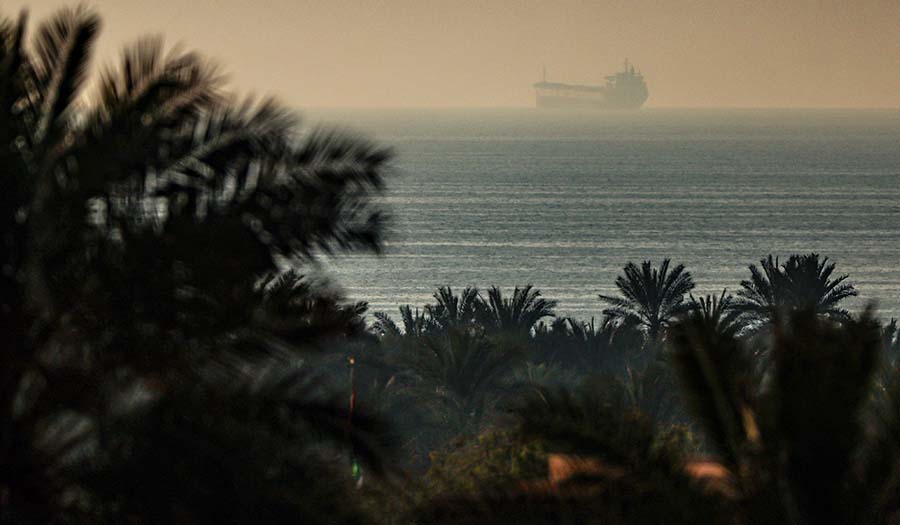
The conflict involving Iran, the United States and Israel has shown how quickly war can reach far beyond the battlefield. When the military clash began in late February, farmers around the world felt the squeeze almost immediately. Gas prices shot up and fertilizer supplies waned due to the near shutdown of the Strait of Hormuz.
These results are a sobering reminder: In a deeply interconnected world, military conflict can threaten harvests thousands of miles away.
The poorest farmers in the Northern Hemisphere rely on fertilizer imports from the Gulf, and the shortage came just as planting season began, said Carl Skau, deputy executive director of the UN’s World Food Program.
Fertilizer shortages put the livelihoods of farmers in developing countries—already troubled by higher temperatures and erratic weather systems—further at risk. It could also lead to people everywhere paying more for food.
Worse, it is pushing millions into acute hunger, the WFP reported.
An analysis in three vulnerable countries found that an additional 2.5 million people in Somalia, 2.3 million in Afghanistan and 1.3 million in Sri Lanka are struggling to meet their basic food needs.
In March, WFP predicted that 45 million people could be pushed into acute food insecurity by the end of June—on top of the 318 million people around the world who are already in the category.
“We remain by that prognosis,” Mr. Skau told UN reporters. “That’s mainly because the correlation between the prices of energy and food is so tight in many places, and also that in the poorest countries people are already spending all their money on food, and hence when food prices rise, they eat less.”
“These impacts are expected to intensify in the coming months, even if the crisis in the Middle East de-escalates,” WFP said.
“The food system is fragile, and it depends on stable fertilizer supply chains to ensure farmers can produce the food the world relies on,” said Hanna Opsahl-Ben Ammar of Yara International, one of the world’s largest fertilizer companies.
WFP has had to limit aid to millions of needy people because of funding cuts, and Mr. Skau urged donors to step up, especially for Somalia and Afghanistan, “because the human consequences of not doing more will be massive.”
More Than Fuel
The Iran war revealed that the Strait of Hormuz is more than an oil chokepoint. This narrow passage that usually handles about a fifth of the world’s oil shipments also handles nearly a third of global fertilizer trade.
When fighting broke out, the supply chain for nitrogen and phosphate—two major fertilizer nutrients—came under immediate threat.
Nitrogen supplies, including urea, the most widely traded fertilizer, were hit especially hard by shipping delays and the soaring price of liquefied natural gas, an essential ingredient in production.
The conflict restricted about 30 percent of global urea trade, said Chris Lawson of CRU Group, a London-based commodities consulting firm.
Some countries are already facing critical shortages, according to Raj Patel, a food systems economist at the University of Texas. Ethiopia, for example, gets over 90 percent of its nitrogen fertilizer from the Gulf through Djibouti, a supply route that was strained even before the war began.
“The planting season is now,” Mr. Patel said in March. “The fertilizer isn’t there.”
Phosphate supplies, which support root development, are also under pressure. Saudi Arabia exports about a fifth of the world’s phosphate fertilizer, and the region exports more than 40 percent of the world’s sulfur, a key ingredient and byproduct of oil and gas refining, Mr. Lawson said.
Even after the war ends, Gulf producers will need clear security guarantees before resuming shipments through the strait, and insurance costs would almost certainly rise, said Owen Gooch, an analyst with London-based Argus Consulting Services.
The timing is crucial. Fertilizers are generally applied just before or during planting. When deliveries are delayed, crops can miss key early growth stages, reducing yields even if supplies improve later.
For this year’s harvest, nothing can undo the damage that is already done.
In the United States and Europe, the main spring planting window has come and gone—so farmers have already had to make tough decisions. In much of Asia, the monsoon planting season is starting now, when timely fertilizer supplies are critical for crops such as rice and cotton.
Other nations have failed to make up the shortfall. China, the world’s largest producer of nitrogen and phosphate fertilizers, has begun allowing some urea exports again after holding supplies back to protect its own farmers earlier in the crisis. But the Asian nation is still limiting how much can leave the country and keeping export prices high. Russia, another major producer, is already operating near full capacity and faces its own export constraints.
Sudan: Compounding Crises
Sudan is among the nations most vulnerable to the fallout from the Iran conflict. Farmers there say rising fuel and fertilizer costs have forced them to cut back on planting this summer, restricting food production in a country where civil war between the Sudanese army and the paramilitary Rapid Support Forces has already caused acute hunger.
The nation relies on the Gulf for more than half of its fertilizer needs, according to UN data. At the same time, Sudan’s own war has left it entirely dependent on fuel imports. That makes the country exposed to both fertilizer shortages and rising diesel prices.
About 19.5 million people—more than 40 percent of Sudan’s population—are facing crisis levels of hunger, with some areas at risk of famine, according to a UN-backed monitor. About two-thirds of the population depend on farming for their livelihoods.
In Jamuia, an irrigation-based farming area in southern Omdurman, this planting season should have brought relief after the RSF was driven from the area near Khartoum last year. Instead, farmers face fertilizer prices up 67 percent year-on-year and fuel prices that have more than doubled.
“At that price we don’t make a profit, you spend your whole profit on the diesel,” said farmer Bashir Ismail.
Only 520 out of 10,400 acres had been planted about halfway into the planting season, said Omar al-Ebeid, secretary for the farmers’ committee in Jamuia.
The problems extend beyond prices. In Kordofan and Darfur, farmers say tractors have been looted, farmhands recruited to fight, and crops and supplies threatened at checkpoints. “There is no funding for farmers, no machinery for planting and plowing the land, and no security,” said Mohamed Adam, a farmer displaced from West Kordofan.
The regional war has added “salt to the wound,” said Sadig Elamin, the UN Food and Agriculture Organization’s senior food security analyst in Sudan. He warned that overall production could fall by “not less than 40%.”
Australia: A Global Exporter Under Pressure
In Australia, the crisis is not about famine, but it could still affect global food prices.
Australia is a major exporter of wheat and other crops. Its upcoming wheat harvest is expected to be the smallest in three years as high fertilizer costs and dry conditions reduce planting and yields, the government said in early June.
The Australian Bureau of Agricultural and Resource Economics and Sciences (ABARES) said the country should reap 26.7 million metric tons of wheat later this year. That would be about 9 million tons less than last season and roughly 8 million tons less than the five-year average.
High prices will likely cause farmers to fertilize less, reducing yield potential, ABARES said. At the same time, large parts of eastern Australia have faced months of low rainfall. Widespread rain in May improved crop conditions, but forecasts still pointed to below-median rainfall in the months ahead.
“It will be crucial that adequate and timely supply of fertilizer is available and adequate rainfall is received to meet current yield projections,” ABARES said.
For Australian farmers, the Iran war added another cost pressure to an already uncertain season. For the world, a smaller Australian harvest means less supply from a major exporter and more upward pressure on prices.
Brazil: Expansion Put on Hold
Brazil shows a different kind of vulnerability. Its cheap, abundant land has helped farmers build vast operations and compete aggressively in global export markets. But the country relies heavily on imported fertilizer, leaving its farmers exposed when prices rise.
Many Brazilian farmers are already carrying debt. Higher fertilizer, fuel, seed and equipment costs are forcing them to rethink expansion and delay purchases.
“Profitability just isn’t there,” said Murilo Rabelo Martins Pereira, a farmer in Goias state. “Expansion is something everyone is rethinking right now.”
Mr. Pereira farms soybeans, corn and tomatoes on nearly 2,000 acres. He said soaring production costs make it too risky to lease more land, even though he has received offers to do so.
Lower fertilizer use can mean lower yields and lower profits—or outright losses—for farmers already under pressure. “They are overleveraged,” said Bruno Fonseca, an analyst for Rabobank in Brazil.
For Mr. Pereira, the outlook has already forced practical decisions. “We had planned this year to replace our harvesters, which are quite old,” he said. “We decided not to go ahead.”
In Brazil, the fallout from the Iran war may not immediately empty plates. But it is squeezing the farmers who help feed global markets. If they plant less, fertilize less or stop expanding, the effects can ripple outward through export supplies and food prices.
Fragile System Exposed
The war in Iran exposed deep weaknesses in the global food system. Many now see the crisis as a warning that farming must change.
Less reliance on imported fertilizers could help protect farmers and consumers from energy price swings and geopolitical shocks, said Oliver Oliveros, executive coordinator of the Agroecology Coalition. “This could be a turning point,” he said.
Others point to the danger of concentrating so much food production in relatively few countries and trade corridors. Pratima Singh of Economist Impact told Reuters that just 15 countries produce 70 percent of the world’s food, while the top 15 exporters account for more than 60 percent of global food exports.
“A narrow set of countries and trade corridors is underwriting much of global food resilience,” she told the news outlet. “When they function well, they stabilize markets far beyond their borders. When they fall short, systemic vulnerability follows.”
The case for change is clear. More resilient farming methods, diversified supply chains and less dependence on imported fertilizer could help. But these changes are expensive, and many farmers facing higher costs and lower margins do not have the money to make them.
The Real Swords into Plowshares
There is a striking irony in all of this.
Modern nitrogen fertilizers can be seen as one of mankind’s great “swords into plowshares” achievements. The same industrial chemistry that helped produce explosives for war was turned toward farming, creating nitrogen-based fertilizers that dramatically increased yields.
While the fertilizers have helped feed billions, they come with significant downsides.
These fertilizers depend on enormous amounts of energy and stable trade routes. Their overuse can weaken soil health, pollute waterways and leave farmers locked into expensive systems they cannot easily escape.
When armed conflict threatens the Strait of Hormuz, mankind’s system built to grow more food is disrupted by the very thing mankind has never been able to stop: war.
That is why Isaiah 2:4’s promise of swords beaten into plowshares goes beyond better farming methods.
Read the broader context of the passage: “And it shall come to pass in the last days, that the mountain of the Lord’s house shall be established in the top of the mountains, and shall be exalted above the hills; and all nations shall flow unto it” (vs. 2).
Mountains in Bible prophecy often symbolize governments. This verse points to the Kingdom of God being established above all human governments. Verse 3 shows that nations will come to learn God’s way of life.
Then notice what follows: “And He [God] shall judge among the nations, and shall rebuke many people: and they shall beat their swords into plowshares, and their spears into pruninghooks: nation shall not lift up sword against nation, neither shall they learn war any more” (vs. 4).
Under God’s government, the tools of destruction will be turned into tools of production. But more than that, the causes of destruction will be removed. Nations will not merely pause from war. They will no longer even learn it.
Micah repeats the same prophecy and adds the result: “They shall sit every man under his vine and under his fig tree; and none shall make them afraid” (4:4).
Until that time comes, mankind will continue to seek peace in the Middle East and elsewhere. It may increase funding to address food insecurity. It may invest in regenerative farming, diversify supply chains and reduce dependence on imported fertilizers.
These are noble pursuits, and some may even help. But they will bring, as human efforts always do, mixed results.
Only God’s government can remove war from the equation. Only then will the world’s food problems be finally and completely solved.
This article contains information from The Associated Press and Reuters.
- Real Truth Magazine Articles
- SOCIETY & LIFESTYLES
 Does God Care How We Grow Our Food?
The Bible provides solutions to today’s farming problems in verses almost no one knows.
More on Related Topics:
- After Killing Hundreds in Boat Strikes, U.S. Military Expands Campaign on Land in Latin America
- Analysis: How Iran Is Widening Its Pressure Campaign to Force U.S. Concessions
- Analysis: Russia Pounds on the Gates of Ukraine’s ‘Fortress Belt’
- Analysis: ‘Breakneck’ Ebola Epidemic in Congo Outpaces World’s Response
- Mali at Risk of Splintering After Jihadi and Separatist Attacks
Suggested Reading
More on Related Topics
Latest News
-
October 20, 2026
- Japan Launches Spacecraft to Mysterious Moons of Mars in Bold Mission to Bring Home Soil Samples
- France Announces Nightly Curfews ‘For as Long as Necessary’ in Paris and Other Big Cities October 16, 2026
- Fundraising to Protect Oceans, Forests and Other Key Nature Sites Falling Short Ahead of UN Summit
- Drone Strikes in the Black Sea Raise Fears of Russian Escalation to Test NATO’s Response
- Nepal’s Devastating Flood Exposes the Risks of Resettling Disaster Survivors October 15, 2026
- Sudan’s Famine Risk Worsened by Conflict, Drought and Funding Shortages
- How the Houthis Are Helping Iran Turn Saudi Arabia into a Pressure Point October 9, 2026
- What Will the Next Leader of the UN Need to Get the Job Done in an Increasingly Complex World? October 8, 2026
- UN Health Agency Wants More Details from Russia on Suspected Pneumonic Plague Case
- Ukraine Claims to Have Taken Out More Than Half of Russia’s Oil Refining Capacity
- Violence Has Displaced Members of More Than Half a Million Mexican Households in Past 5 Years
- As Iran War Smolders, Shunned Eritrea Looks to Come in from the Cold September 15, 2026
- U.S. Acknowledges for the First Time that It Has Deployed Weapons in Space
- Some Russians Are Fleeing Abroad, Citing Draft Fears and a Loss of Freedom September 11, 2026
- Americans Mark 25 Years Since September 11 Attacks amid Enduring Grief, Reflection
- Yemen’s Iranian-Backed Houthis Seize an Island in a Key Strait, Opening a New Front in the Iran War September 10, 2026
- The Push to Remove Lead Pipes Is On. Thousands of Water Systems Still Don’t Know Where Theirs Are September 9, 2026
- Family Interest in Education Falls as Test Scores Drop
- The Poorest in the U.S. Can’t Find Housing Even as Low-Income Units Sit Empty September 1, 2026
- In U.S. West, Drought Pits Farms Against Industry