Located just off the coast of India, Sri Lanka, “The Pearl of the Indian Ocean,” is an island nation, which although little talked about, carries great significance to the eastern part of the world.
Aside from being a center of Buddhist pagan culture, as evidenced by the shrines and temples that cover the countryside, the nation—home to 20 million people and roughly the size of West Virginia—has long been thought of as a bridge between the nations of the West and Southeast Asia. Because of its positioning 20 miles off India’s coast, it is viewed as a port and trading post of great importance. Throughout the island’s history, Sri Lanka has endured a long trail of colonial imperialists who have tried, unsuccessfully, to gain control of its varied landscape because of its strategic location.
However, except for occasional ethnic conflicts, Sri Lanka has maintained its reputation as a relatively peaceful island since 1972, the year it officially acquired its formal name, the “Democratic Socialist Republic of Sri Lanka.” Before then, it was owned by the British and named “Ceylon.”
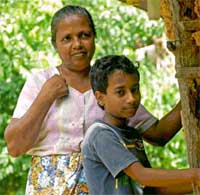
To visit Sri Lanka is to experience a land of several different countries tied into one. Because of its colonial roots, Sri Lanka is a diverse melting pot of Portuguese, Dutch and British culture, along with the indigenous culture. White-washed Portuguese fortresses line the country’s capital, complete with hanging Dutch lanterns and wooden furniture. Around town, Sri Lankans can be seen enjoying the famous British pastime, cricket, riding on the British-built railway system or sipping an afternoon tea.
Evidence of the country’s cultural landscape is also demonstrated in the national language. Although Sri Lankans speak Singhalese (and some Tamil), many still have Portuguese last names. The Singhalese language is infused with a mixture of Dutch and Portuguese words.
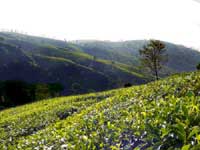
In addition to its cultural resources, Sri Lanka is a land of immense natural resources. Some of its major exports are tea, coffee, rubber and coconuts, along with valuable teak wood that comes from its tropical forests.
Sadly, some of its resources were damaged. Sri Lanka almost lost its reputation as a popular tourist destination when a disastrous tsunami struck in 2005, devastating the island’s serene beaches and killing over one million Sri Lankans. It was the most heavily damaged island in the Indian Ocean.
Although Sri Lankans were unsure how they were going to rebuild, the people have proved resilient in their ability to overcome and help their country regain its reputation as a tourist hotspot.
For more information about this intriguing country, visit your local library!
Source: ArtToday, Inc.
Source: ArtToday, Inc.
Source: ArtToday, Inc.