The South American country of Chile is long and thin, stretching almost 2,700 miles north to south. At its widest point, it is 217 miles, and at its most narrow, it is only 9.6 miles. In fact, its shape makes it easy to notice on a map, because it really does resemble—you guessed it—a chili pepper!
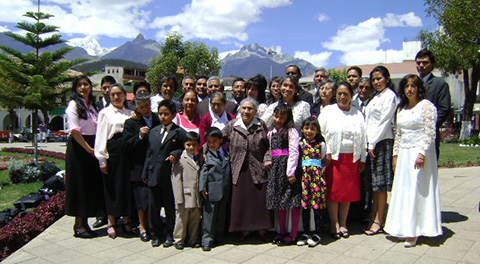
The people of Chile are mainly of mixed European and American Indian descent. It was colonized by the Spanish in the 1500s. The country declared its independence from Spain in 1810, and today is a South American Spanish-speaking country with a stable government and economy. It has maintained a democratic government for most of its history, with few disturbances. Its economic advantage over many other South American countries is linked to the stable government and large mineral deposits, which account for much of the industry.
Chile’s national borders have been defined by natural topography. The Andes Mountains lie to the east, with the highest peak, Ojos de Salado, at 22,614 feet. The Pacific Ocean lies to the west. In Chile’s northern region, the sparsely inhabited Atacama Desert is one of the driest areas in the world, while the southern tip of Chile is the cold, windy Cape Horn, separated from Antarctica by about 400 miles of treacherous ocean.
These natural borders have caused Chile to be relatively isolated throughout its history. This has caused its wildlife species to not be as diverse as other countries on the continent. One benefit of this isolation is that poisonous snakes have not yet managed to immigrate!
The variations in plant and animal life that do occur are due to the country’s wide range of latitudes and climates. The desert region in the north is barren, with spiny cacti, while the southern tip is so windy and inhospitable that most trees grow in miniature—the only way they can survive. However, the central region is more habitable, with the majority of the country’s 16 million citizens residing there. Its temperate climate fosters the widest range of animal life in the country.
The rodent, in its many varieties, is perhaps the best adapted to Chile’s array of climates. Many of these rodents are prized for their fur, like the chinchilla, which lives in mountainous areas. Others, such as the nutria, live in the streams and rivers. The nutria is able to remain underwater for five minutes.
Among the other animals is the smallest deer in the world, the pudu, which lives in the southern Andes. Even a full-grown adult of this species averages only a foot in height! These little deer have tiny spiked antlers, and are able to climb on fallen trees to forage for food. When alarmed or threatened, they make a barking sound before fleeing.
Another interesting animal in Chile’s central region is Darwin’s Frog, so named by its discoverer, Charles Darwin. It has a brooding habit that is unique among frogs, in which the male frog picks up the fertilized eggs as they are about to hatch, places them in his vocal pouch, and carries them around while they hatch and develop through the tadpole stage into little baby frogs. When the young frogs are fully able to take care of themselves (50-70 days later), they jump out of the father’s mouth and face life on their own.
In many ways, Chile is a land of extremes, with many remarkable aspects worth investigating and exploring. There is much more to learn about this intriguing land!
Sources: Encyclopedia Britannica; www.cia.gov; www.answers.com