Lucy is a teenager in God’s Church. She understands, to a certain degree, that she is unable to have great friendships with her associates in the world. “We just don’t have much in common,” she says. “I have friends in school, but there is no real depth to our relationships.”
When troubles come, these types of friendships never last, and Lucy has experienced this firsthand many times. Periodically, certain circumstances have forced her to make choices based upon her beliefs causing her to stand out among her peers. Afterwards, the friendships do not mean as much to her so-called “friends” anymore. In other instances, the friendships simply grew apart as time passed.
Like Lucy, you have probably had your share of struggles with building friendships. While growing up, striving to live God’s Way in a world completely cut off from its Creator, it can be extremely difficult to build true, genuine friendships.
Each of us was created with the desire and need for friendship and companionship. People without friends usually struggle with loneliness, sadness and isolation.
God certainly wants us to live the abundant, happy life, which involves great friendships and relationships with other people. Notice: “I wish above all things that you may prosper and be in health, even as your soul prospers” (III John 2). In addition, we should be able to say and feel what King David believed in his life: “This is the day which the Lord has made; we will rejoice and be glad in it” (Psa. 118:24). Friendships play a critical role in the ability to rejoice and be prosperous.
Types of Friends
One particular question that arose in Lucy’s mind, and that certainly applies to most teenagers, is, “How important is the type of friendships I build?” The answer is emphatic: EXTREMELY IMPORTANT! Friends can be great edifiers and builders in the development of your personality; or, they can be the opposite.
You have heard the old adage, “One rotten apple rots the whole barrel.” Like a rotten apple in a bushel that slowly rots all the apples around it, those who associate with others who do not live by correct laws, principles and values will themselves eventually adopt many of the same opinions, attitudes and behaviors.
The Bible clearly instructs us about the importance of choosing our friends wisely. The apostle Paul wrote, “Be not deceived: evil communications corrupt good manners” (I Cor. 15:33). And King Solomon said, “Make no friendship with an angry man; and with a furious man you shall not go” (Prov. 22:24).
As a teenager, understand that you are filled with a nature—a carnal nature that will have certain tendencies. “What kind of tendencies?” you may ask. Notice: “The carnal mind is enmity [hostile] against God: for it is not subject to the law of God, neither indeed can be” (Rom. 8:7). Your mind is naturally hostile toward God.
What does this have to do with rotten apples? With this analogy in mind, combined with the simple understanding of human nature, as a teenager striving to live God’s Way, you must understand the dangers of building friendships with those outside your belief and value system.
Choosing friends wisely is of the utmost importance in your life. If you allow yourself to compromise and spend time with the wrong crowd, you will slowly—and inevitably—take on their values and principles. It is critical to spend time, and to build friendships, with those sharing your values (Prov. 27:17; Amos 3:3).
God’s Word exhorts us to avoid friendships with those in the world. Notice just how frank our instruction is: “…know you not that the friendship of the world is enmity with God? Whosoever therefore will be a friend of the world is the enemy of God” (Jms. 4:4). Also consider another passage: “And be not conformed to this world: but be you transformed by the renewing of your mind, that you may prove what is that good, and acceptable, and perfect, will of God” (Rom. 12:2).
Your friendships must reflect the instruction of your Creator. Strive to keep your closest friends limited to those within God’s Church—not those of the world, who have different priorities and are cut off from God.
The Right Foundation
There is an important foundation to consider when building these close friendships, and it encompasses and is applicable to all relationships.
The Bible teaches that there are two different—and opposing—ways of life. One is best described as the “GIVE” way—the other is the way of “GET.”
The give way is outgoing concern for the needs, concerns and welfare of others. It is focused away from self! It is diametrically opposite from the get way, which is incoming and self-focused, with only one’s own interests and needs at heart.
The Bible teaches that God has a “Divine nature” (II Pet. 1:4). This nature is “natural” to God, but it is not natural to human beings. God practices the give way of life naturally (Jms. 1:17), while human beings naturally practice the opposite. Though most will never admit it, human nature is almost always preoccupied with gratifying, advancing, satisfying and elevating the self! Can you observe that in the superficial friendships you see out in the world?
Your perspective must be God’s perspective. Friendships, therefore, must always be based on giving—an outflowing, selfless concern for others! Notice Christ’s words regarding one of the two greatest commandments: “And the second is like, namely this, You shall love your neighbor as yourself. There is none other commandment greater than these” (Mark 12:31).
An interesting point is that even in the world, books dealing with human relations almost always explain this same principle in one form or another. For example, in Dale Carnegie’s best-selling book, How to Win Friends and Influence People, he states that the most important thing readers can extract from his book is that they should strive to always think in terms of the other person’s point of view.
This “Golden Rule” and great law of God—loving your neighbor as yourself—is the key to true and lasting friendships! Always analyze yourself to see if you are approaching your friendships in this way—the way of GIVE.
Building Friendships
To obtain and build lasting friendships, many principles must be applied. One very central point is found in Proverbs 18: “A man that has friends must show himself friendly…” (vs. 24). Make it a primary goal in your life to be friendly to all. This may be harder for some than others, but strive to develop the ability to be kind, warm and compassionate to those you see and meet.
Take the time, when you have a spare moment, to analyze the different human relations you face—especially those with acquaintances and friends. Ask yourself how you could have been friendlier, and determine to make those changes the next time you face those same circumstances.
Don’t be mistaken, however. “Being friendly” is not necessarily acting like those who talk a lot and make people laugh and who are considered “cool.” (We all have seen these.) Rather, friendliness is taking a genuine, sincere interest in others. Of course, the ability to speak well is certainly something to develop, but do not aspire to be like loud-mouthed “cool” people who only seem to be friendly. Instead, aspire to follow others with whom you come into contact within the Church—who exhibit a truly friendly personality.
People tend to have a hard time just listening to others. Be willing to sincerely listen to your friends and to concern yourself with their needs and thoughts. And, do not only listen, but also ask questions about what they are expressing to you—be genuinely interested! Listening will not only make your friends feel better, but it will also give you a good reputation among those who are not your friends—that you are a friendly, concerned person (Prov. 15:1).
Always give your undivided attention, and learn the interests, goals and aspirations of your friends and acquaintances. This may seem like a hard or unnatural thing to practice, but just start by making a habit of asking questions about the other person. Don’t drill him as if you are interviewing one for a job. As you ask more questions, and as the person becomes more familiar with you, before you know it, you will have a good understanding of his interests and goals—what makes him tick.
Another key to close friendships is trust. Strive to be a loyal friend who keeps things confidential, and seek those who are trustworthy as well. An easy method of determining someone’s trustworthiness is how he handles other friends’ secrets. If a “friend” tells you something that he was told in confidence, how much of a friend is he to the person whose trust he just violated? Consider this when deciding with whom to associate yourself, and always be careful that you do not gossip (Prov. 11:13; 17:9).
(However, there are special circumstances in which it would do more harm than good to keep certain sensitive information to yourself, such as if someone tells you he is contemplating suicide.)
On a different but related note, be sure not to flatter
your friends. In the long run, this does not work, and it is also dishonest. In time, your friend will recognize your flattery for what it is and will doubt your sincerity at other times.
Friends in the 21st Century
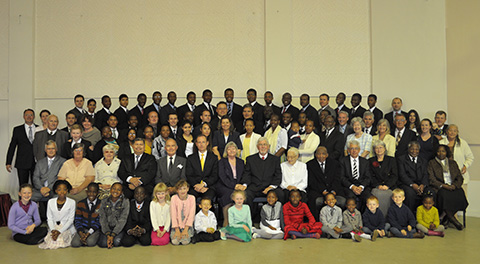
Finally, perhaps the biggest question and concern among teenagers in the Church is: “How can I avoid friendships in the world and build friendships within God’s Church when the Church is so scattered and teenagers are so far apart?” This most certainly may seem insurmountable, but the technology exists that can make it possible.
Recall that teenagers today are facing what has been called “the perfect storm.” As the end of the age draws closer, society continues to grow darker. Weathering all the pulls, trials and tests of each day becomes harder and harder. The ability to make strong friendships, bound by similar values, is also becoming increasingly difficult.
As a teenager, you must face this world and those in it whose lives, conduct, principles and values continue to move in the opposite direction from yours—and God’s. Remember, the perfect storm can be defined as you in the middle of a hurricane-force wind, striving, fighting and struggling to go “head-on” into and against the current—the ways of this world.
In an ironic twist, it has become more necessary than ever before to build friendships with those who share and deal with the same difficulties you face, while it may in many ways have become harder to make friends within God’s Church due to number and distance constraints.
In the 21st century, most teenagers can email others in the Church. While this can sometimes be tough to keep up for long periods of time, make diligent effort to do so. This will definitely build friendships at the same time you are getting to know more about each other. Within these emails, attempt to take a big picture approach. Don’t limit yourselves to simply talking about day-to-day occurrences. Instead, go above and beyond. Talk about the problems you face, the lessons you learned and what you are planning to do with your lives.
The Restored Church of God will post an online message board within the next two months. This will provide Church teens an opportunity to get to know one another and to get involved in discussions hosted by the Youth team at headquarters. Its success will be contingent on each individual’s enthusiasm and participation. You will grow stronger and more prepared for what you face out in the world as you take advantage of the opportunity to join discussions with other teens and to comment on news and trends in the world. Most important, this message board has the wonderful potential to build friendships if utilized often and correctly!
Two of the most vital elements you must include to build a successful relationship are time and commitment. Try to give enough of both to each new person you meet within the Church. Be whole-heartedly involved in the programs that are available. And, most importantly, remember the all-important and all-encompassing way to live—the GIVE way of life. The opportunity is available—you can build friendships around the world!