He was a salesman, an advertising executive, and he owned and managed his own business. At one time, he was personally acquainted with the movers and shakers of U.S. commerce, a virtual “Who’s Who” list of top business leaders and captains of industry.
He was a dynamic public speaker who informed, captivated and challenged his many listeners. He was a widely-known radio and television broadcaster, whose voice reached into millions of homes across the planet.
He was a prolific writer, authoring five books, more than fifty booklets, two massive volumes of his autobiography, and well over a hundred magazine articles. As a journalist, he witnessed and reported the formation of the United Nations. He was also publisher and editor of four magazines—one of which had more than 8 million monthly subscribers and an estimated total readership of approximately 25 million readers!
He was a world traveler who routinely visited countries across Europe, the Middle East, Asia, Africa and the Americas. He met and grew to know about one third of the world’s kings, queens, prime ministers, and other dignitaries and heads of state. For years, he led the largest multi-site convention the world has ever seen. He was even the founder and chancellor of three colleges.
And in his spare time (which was little), he enjoyed playing the piano. Herbert W. Armstrong (1892-1986) accomplished all these and much more—yet he never even attended college!
Today, there aren’t many people like Mr. Armstrong—people who challenge themselves, who routinely expand their minds in order to keep the big picture
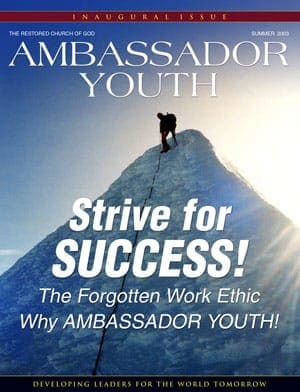
of their life’s purpose ever before them. People who drive themselves forward and onward, never looking back or letting setbacks keep them down. People who strive for success!
What about you?
Why So Many Unfulfilled Dreams?
Since the people of this world are cut off from God, they do not have the privilege of knowing and understanding His ways. The result?—they do not know how to live. Nor do they understand His laws of true, lasting success.
Groping in darkness, most people blindly choose to let life “happen” to them rather than making life “happen” for them. From their youth, they wander aimlessly through life, allowing circumstances and events to guide them and dictate their paths. They settle for minimal education (perhaps barely finishing high school, or maybe taking a few college courses or technical training programs), and end up accepting whatever job they stumble upon.
Though their paychecks may be steady, opportunities to tap into and expand their creativity are lost. Instead of reaching beyond personal expectations, driving themselves to grow and take on new challenges, they find themselves trapped in dead-end jobs, doing the same boring tasks over and over and over again.
Look around you. There are plenty of examples of people in their twenties, thirties, forties and older who once said, “When I grow up, I’m going to make my mark—I’m going to make something of myself!”
Yet few ever achieve their dreams. Why?
Because they never set the right goals early in life. Employment, housing, marriage, starting a family, etc., just “happened” to them. They failed to regularly expand their minds to see the big picture, to remind themselves why God created them in the first place. Today, countless people wake up each morning and ask, “How did my life come to this?”
In this modern age of apathy, the era of “I Don’t Care,” most people are disgruntled, dissatisfied and indifferent—and a new generation of teens is blindly following their footsteps.
Will you be the exception?
Prepare Now For Your Ultimate Future
A certain mindset has quietly sprouted among the youth in God’s Church. It goes something like this: “We only have a few short years before Christ returns and the millennium begins—so why bother going to college or planning for a career when the whole world is going to change anyway?”
Yes, it is true that mankind’s 6,000-year rule will soon be over. It will be replaced by the wonderful world tomorrow, an unprecedented time of worldwide peace, joy and prosperity.
However, God has not revealed exactly when man’s world will end. It could be in five years, 15 years or 25 years—if it was God’s will. The point is, He has not revealed to us the exact date.
Also, consider this: The Church is filled with people who, when they were in their teens or early twenties, “just knew” that Christ would return before they would ever become 30 years old. Those same people are now in their thirties, forties and older.
There is a valuable lesson to glean from this: We should prepare our spiritual lives and fervently seek God as though Christ could come at any time—but carefully and diligently plan out our physical lives (higher education, career, marriage, etc.) in the possible event that we may have more years than we realize. God does not expect His people to have a “the Lord delays His coming” attitude. On the other hand, He certainly does not want them to be idle and unproductive. The key is to be balanced.
Let’s suppose that Christ did return and set up God’s kingdom on earth before you were baptized. There are things that you can now do to prepare for the millennium later. The world tomorrow will need human leaders to help, serve and guide a shell-shocked mankind that will be crawling out from beneath the war-torn aftermath of World War III. Frightened, exhausted and on edge, these survivors will need human leaders to help them adjust to living under Christ’s authority.
Here’s what you can do now: Pray, study your Bible, and strive to “live the Book”—do not bend to peer pressure from the world—build character. Though you may not have God’s Holy Spirit working within you, God can use His Comforter to work with you (John 14:16-17), just as He did with Christ’s disciples before they were converted on Pentecost in A.D. 31.
In addition, get practical training and experience. Discover and develop hidden talents (you won’t know that they exist until you actively look for them). Challenge yourself by taking on newer and greater responsibilities.
Along with human leaders, the millennium will need architects, carpenters, plumbers, etc., to build homes and other structures. Since the world tomorrow will largely be an agricultural society, humanity will need farms and ranches to grow food and raise livestock.
Teachers will be needed to instruct and guide millions of happy students. Accountants and bookkeepers will be needed to manage the bountiful treasures that will circulate within God’s worldwide economy. Journalists could be used to accurately report the good news and events that will be occurring around the globe. Urban planners will be needed to design roads, villages, towns and small cities so that people do not live in close, crowded quarters, “join[ed] house to house” (Isa. 5:8) like today.
Think about all the occupations that will need to be filled in tomorrow’s world of peace. Get a head start and prepare yourself now!
What You Can Do
Armed with the knowledge of God’s truth and His ways, you have potential access to His personal, divine intervention and guidance in your life—IF you put God first. Doing so sets you apart from your peers, and gives you an awesome, supreme advantage that the teens of this world do not have—use it! Make God your partner in setting, planning and achieving your goals.
Most people choose jobs or career paths based on how much money can be earned. Like the proverbial “square peg in a round hole,” many stumble into professions that don’t fit their natural talents and gifts. No wonder there are countless complainers and grumblers on all rungs of the workforce. Dissatisfied, frustrated and fed up, they feel trapped in dead-end jobs that limit their creativity and ultimately stamp out their desire to grow.
Don’t let this happen to you!
Understand the difference between a job and a career. A job is something you do because you get paid to do it. A career is something you do because you love to do it—it’s like being paid to pursue your favorite hobby! Yet, too many people settle for jobs instead of planning and preparing for careers.
Here’s what you can do to avoid falling into this trap:
Know yourself. Recognize and understand your talents, skills and gifts, your strengths and even your weaknesses. You have more to offer than you may realize. Take an aptitude test to discover whether you are creative or logical, etc. (Books like What Color Is Your Parachute? can help you.)
When he was 18, Mr. Armstrong studied the book Choosing a Vocation, which challenged readers “through a searching self-analysis, and a survey of vocations, occupations and professions” (Autobiography of Herbert W. Armstrong, Vol. 1). The book indicated that he was best suited for, and would most likely succeed in, journalism and advertising. Mr. Armstrong did not want to waste his life (like so many people do) striving to succeed in occupations he was not best-suited for.
Set goals. Set short, medium and long-term goals. Establish which goal takes priority. Be realistic, and seek wise counsel (Prov. 11:14; 15:22). Visualize what your goals will be like if you achieve them.
Learn to play a musical instrument, like piano, guitar, trumpet, etc. Don’t psyche yourself out into believing that you “must” be the best among your peers. Just focus on being the best you can be. Participate in sports. Learn to run medium and long distance. Take up dancing (but not the suggestive, worldly, MTV-style gyrations). Learn another language. Learn how to draw, paint or sculpt. Start a part-time business, like cleaning yards, running errands, etc. Start a vegetable garden. Keep a creative journal—a sort of idea book. Write plays and short stories. Learn how to give a speech. Learn how to fix a flat tire.
Whatever your goals are, don’t get frustrated by trials and obstacles—expect them. Use them to build perseverance, patience, drive—your character! Always remember why God created you; this is especially vital when things go wrong. It will help you set the right goals and point you along the right path, keeping you from blindly trampling upon the spiritual minefields of life.
Strive for excellence and quality. Grow, expand—refuse to remain pigeon-holed or limited by your own low expectations, or those of others. Make Ecclesiastes 9:10 your mission in life: “Whatsoever your hand finds to do, do it with your might.” Strive for excellence in everything that you do.
This alone will set you apart from those who settle for “just getting by.” It will also make you marketable to prospective employers, leading to an increase in your income. (Generally, employers appreciate and tend to pay more for employees who are known to routinely rise above and beyond their job descriptions.)
Never settle for mediocrity—give every project your personal best. Be willing to learn and take on every task, no matter how small or dirty. And when you start something, resolve to finish it.
Serve. Put others first, ahead of you. Practicing the give
way of life will set you apart from employees who think only of themselves.
If you strive to make life better for others, not just for yourself, people will learn to trust you with better and greater responsibilities.
Learn from the examples of others. Learn from other people’s triumphs and mistakes. You can learn from everyone and just about everything, if you keep an open mind. King Solomon, the wisest man who ever lived, wrote that you can even learn valuable life lessons from the example of ants! (Read it for yourself in Proverbs 6:6-11.)
The pages of God’s Word are filled with examples—both good and bad—of God’s greatest servants. Think of these real life experiences as a vast reservoir of knowledge, understanding and wisdom, just waiting for you to tap into it.
The Time Is Now!
There are those who virtually live life “by accident,” who settle for whatever comes their way and do not strive for success.
There are those who want success, but don’t know how to get it.
And then there are those who do gain physical, material achievement and accomplishment—but not the kind of success that lasts!
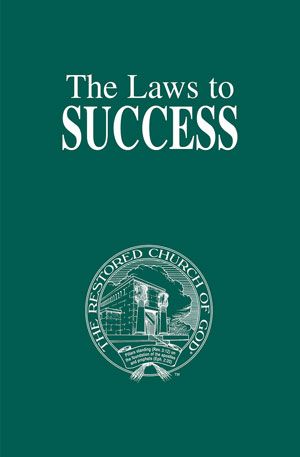
However, you can gain true success, IF you apply its seven laws. (To learn more, read our free booklet The Laws to Success.)
Now is the time to strive to achieve and excel—to push yourself to reach for more. But temper your drive with careful consideration of God’s way of life: “Rejoice, O young man, in your youth; and let your heart cheer you in the days of your youth, and walk in the ways of your heart, and in the sight of your eyes: but know you, that for all these things God will bring you into judgment” (Ecc. 11:9).
Consider where you will be five or ten years from now. Will you then, like the vast majority today, regret not tapping into your awesome potential—regret that you didn’t strive to discover your talents, and passed up opportunity upon opportunity to expand and grow—that you sat on the sidelines when you could have done more?
You have the potential to be far more than what you may realize. Seize the moment! Strive for success!